第 4/27 课
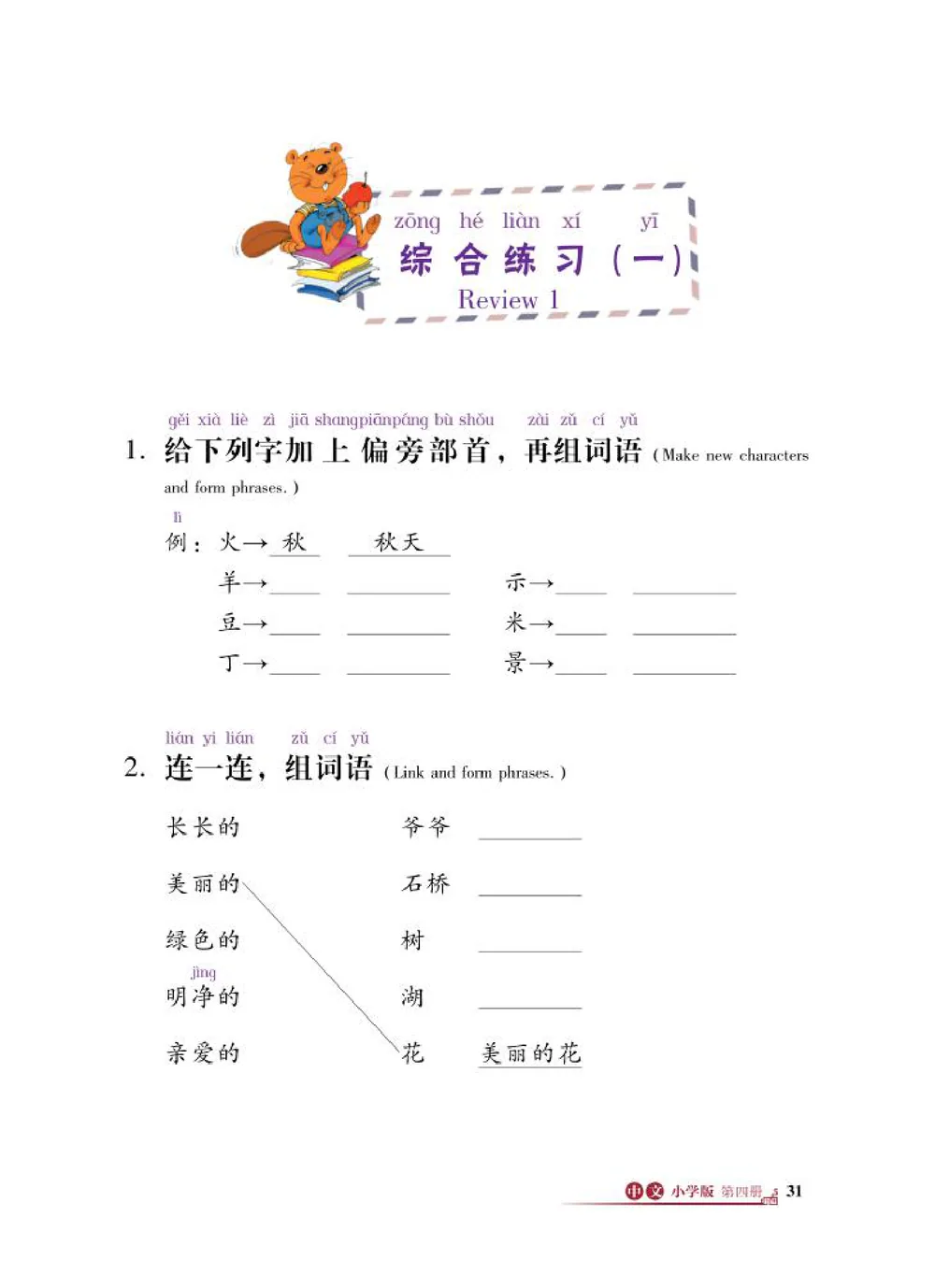
综合练习(一)
Review 1
综合练习 Review
1gěi给xià下liè列zì字jiā加shàng上piān偏páng旁bù部shǒu首,zài再zǔ组cí词yǔ语(Make new characters
lì例:huǒ火yī一→qiū秋
qiū秋tiān天
mǐ米yī一→
jǐng景→
2.lián连yī一lián连,zǔ组cí词yǔ语(Link and form phrases.)
cháng长cháng长de的
yé爷yé爷
shí石qiáo桥
měi美lì丽de的
lǜ绿sè色de的
míng明jìng净de的
qīn亲ài爱de的
měi美lì丽de的huā花
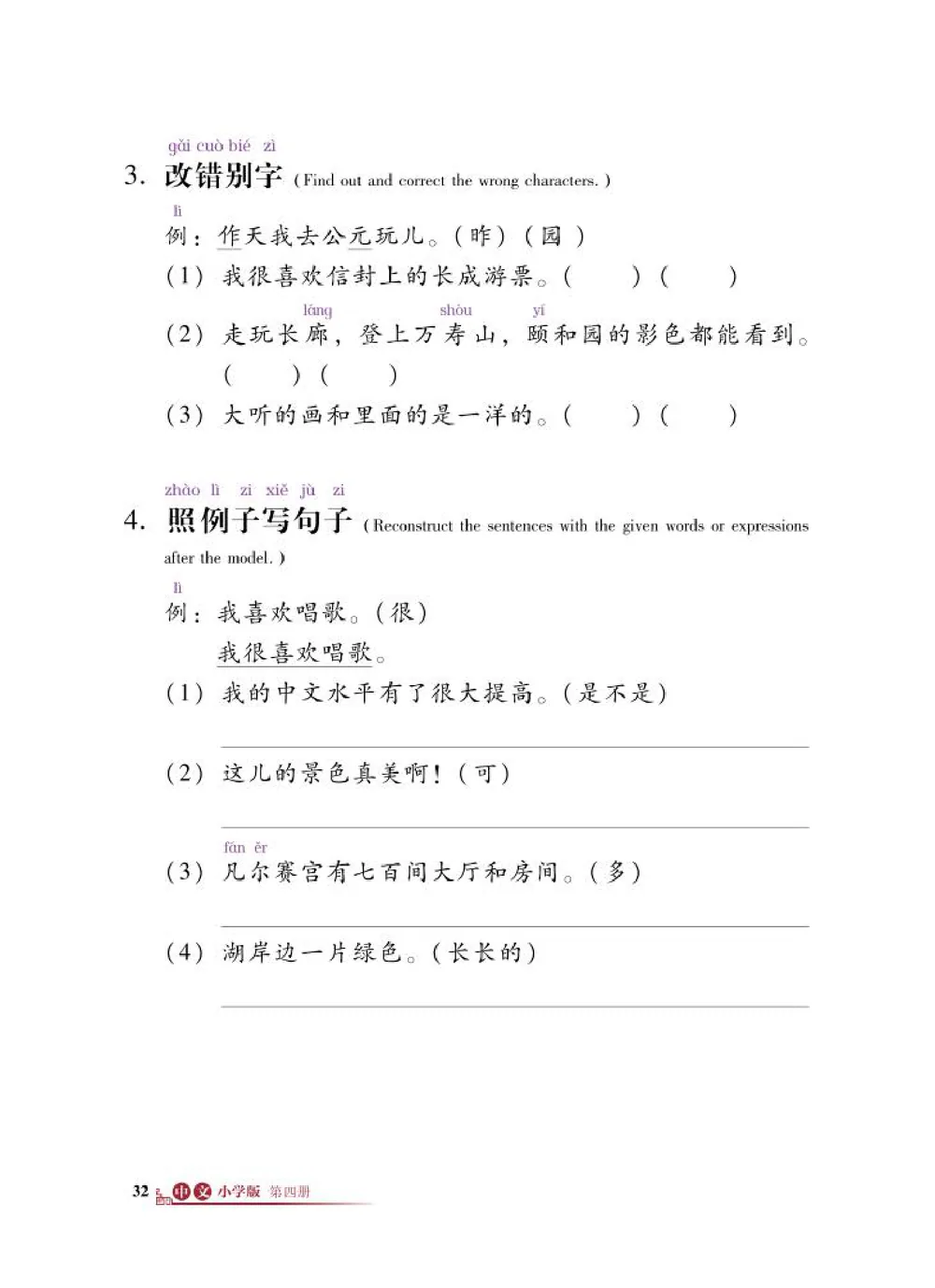
3.gǎi改cuò错bié别zì字(Find out and corect thewrong characters.)
lì例:zuò作tiān天wǒ我qù去gōng公yuán元wán玩ér儿。(zuó昨)(yuán园)
(1)wǒ我hěn很xǐ喜huān欢xìn信fēng封shàng上de的zhǎng长chéng成yóu游piào票。(
(2)zǒu走wán玩cháng长láng廊,dēng登shàng上wàn万shòu寿shān山,yí颐hé和yuán园de的yǐng影sè色dōu都néng能kàn看dào到。
(3)dà大tīng听de的huà画hé和lǐ里miàn面de的shì是yī一yáng洋de的。(
4.zhào照lì例zi子xiě写zi子(Reconstruct the sentences with the given words or expresions
lì例:wǒ我xǐ喜huān欢chàng唱gē歌。(hěn很)
wǒ我hěn很xǐ喜huān欢chàng唱gē歌
(1)wǒ我de的zhōng中wén文shuǐ水píng平yǒu有le了hěn很dà大tí提gāo高。(shì是bú不shì是)
(2)zhè这ér儿de的jǐng景sè色zhēn真měi美a啊!(kě可)
(3)fán凡ěr尔sài赛gōng宫yǒu有qī七bǎi百jiān间dà大tīng厅hé和fáng房jiān间。(duō多)
(4)hú湖àn岸biān边yī一piàn片lǜ绿sè色。(cháng长cháng长de的)
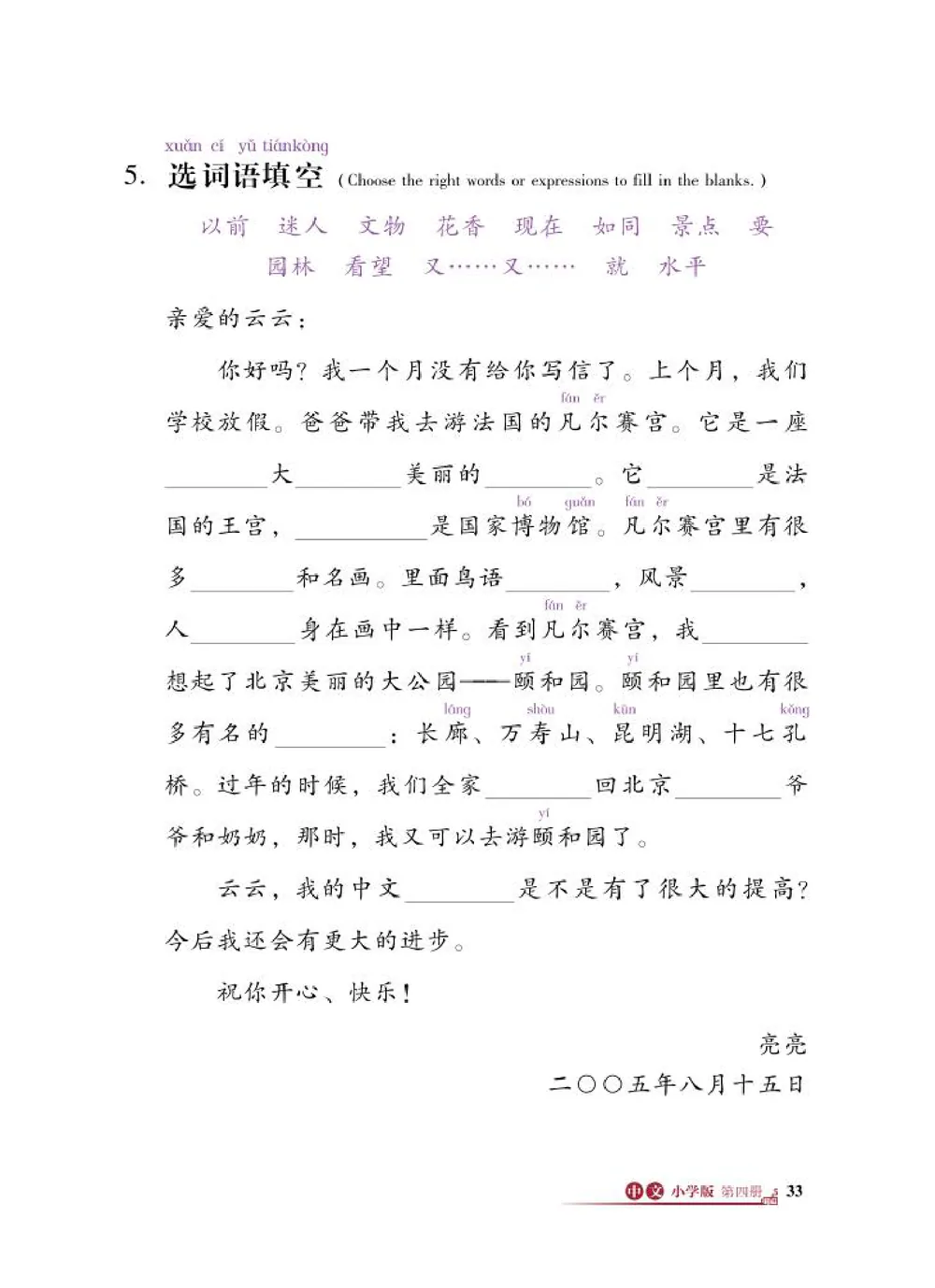
5.xuǎn选cí词yǔ语tián填kòng空(Choose the right words or expressions to fill in theblanks.)
mí迷rén人
wén文wù物huā花xiāng香
yǐ以qián前
xiàn现zài在rú如tóng同
jǐng景diǎn点yào要
yuán园lín林
kàn看wàng望
jiù就shuǐ水píng平
qīn亲ài爱de的yún云yún云:
nǐ你hǎo好ma吗?wǒ我yí一gè个yuè月méi没yǒu有gěi给nǐ你xiě写xìn信le了。shàng上gè个yuè月,wǒ我men们
xué学xiào校fàng放jià假。bà爸bà爸dài带wǒ我qù去yóu游fǎ法guó国de的fán凡ěr尔sài赛gōng宫。tā它shì是yī一zuò座
měi美lì丽de的
guó国de的wáng王gōng宫,
shì是guó国jiā家bó博wù物guǎn馆。fán凡ěr尔sài赛gōng宫lǐ里yǒu有hěn很
hé和míng名huà画。lǐ里miàn面niǎo鸟yǔ语
,fēng风jǐng景
shēn身zài在huà画zhōng中yī一yàng样。kàn看dào到fán凡ěr尔sài赛gōng宫,wǒ我
xiǎng想qǐ起le了běi北jīng京měi美lì丽de的dà大gōng公yuán园yī一yí颐hé和yuán园。yí颐hé和yuán园lǐ里yě也yǒu有hěn很
duō多yǒu有míng名de的
:cháng长láng廊、wàn万shòu寿shān山、kūn昆míng明hú湖、shí十qī七kǒng孔
qiáo桥。guò过nián年de的shí时hòu候,wǒ我men们quán全jiā家
huí回běi北jīng京
qiān签hé和nǎi奶nǎi奶,nà那shí时,wǒ我yòu又kě可yǐ以qù去yóu游yí颐hé和yuán园le了
yún云yún云,wǒ我de的zhōng中wén文
shì是bú不shì是yǒu有le了hěn很dà大de的tí提gāo高?
jīn今hòu后wǒ我hái还huì会yǒu有gèng更dà大de的jìn进bù步。
zhù祝nǐ你kāi开xīn心,kuài快lè乐!
liàng亮liàng亮
èr二wǔ〇nián〇bā五yuè年shí八wǔ月rì十五日
课本的生字表没能从扫描件上读出来,下面是这一课第一次出现的字。 The book's own 生字 list could not be read for this lesson; these are the characters it introduces.
测验 Quiz — 18 questions
做完这些题就算学完这一课。 Finish these to complete the lesson.
-
给 Choose the pinyin
-
下 Choose the pinyin
-
列 Choose the pinyin
-
加 Choose the pinyin
-
上 Choose the pinyin
-
偏 Choose the pinyin
-
páng Choose the character
-
bù Choose the character
-
shǒu Choose the character
-
zài Choose the character
-
huǒ Choose the character
-
qiū Choose the character
-
给(gěi) What does it mean?
-
下(xià) What does it mean?
-
列(liè) What does it mean?
-
加(jiā) What does it mean?
-
上(shàng) What does it mean?
-
偏(piān) What does it mean?
-
把汉字和拼音连起来 Match each character to its pinyin
-
Listen and choose the character you hear
-
Listen and choose the character you hear
-
Listen and choose the character you hear
-
Listen and choose the character you hear
-
生字卡片 Flashcards for this lesson's characters
给 gěi
to; for; for the benefit of下 xià
down; downwards; below列 liè
to arrange; to line up; file加 jiā
to add; (math.) plus; to increase; to augment上 shàng
(bound form) up; upper; above; previous; first (of multiple parts); to climb; to get onto; to go up偏 piān
to lean; to slant; oblique旁 páng
one side; other; different部 bù
ministry; department; section首 shǒu
head; chief; first (occasion, thing etc)再 zài
again; once more; re-; further; beyond this point of time; (before an adjective) more火 huǒ
fire; urgent; ammunition秋 qiū
autumn; fall; harvest time天 tiān
day; sky; heaven米 mǐ
uncooked rice; meter (unit of length); (slang) Chinese yuan长 zhǎng
chief; head; elder的 de
of; ~'s (possessive particle); (used after an attribute when it modifies a noun); (used at the end of a declarative sentence for emphasis)爷 yé
grandpa; old gentleman石 shí
rock; stone; stone inscription绿 lǜ
used in names明 míng
bright; opposite: dark 暗[an4]; (of meaning) clear净 jìng
variant of 淨|净[jing4]亲 qīn
parent; one's own (flesh and blood); relative爱 ài
to love; to be fond of; to like; affection; to be inclined (to do sth); to tend to (happen)花 huā
flower; blossom错 cuò
mistake; wrong; bad别 bié
to leave; to part (from); (literary) to differentiate; to distinguish; (dialect) to turn away; to turn aside; to avert (one's face, gaze etc)作 zuò
to do; to engage in; to write; to compose; to pretend; to feign我 wǒ
I; me; my去 qù
to go; to go to (a place); (of a time etc) last公 gōng
public; collectively owned; common玩 wán
to play; to have fun; to trifle with儿 ér
child; son昨 zuó
yesterday园 yuán
land used for growing plants; site used for public recreation; abbr. for a place ending in 園|园, such as a botanical garden 植物園|植物园, kindergarten 幼兒園|幼儿园 etc很 hěn
very; quite; (also, often used before an adjective without intensifying its meaning, i.e. as a meaningless syntactic element)喜 xǐ
to be fond of; to like; to enjoy
课本原页,点图看大图。 The printed pages this lesson comes from — tap to enlarge.