Lesson 10 / 28
唐人街
The Chinatown



课文 Text
zài在zhōng中guó国lì历shǐ史shàng上,táng唐dài代shì是hěn很fán繁róng荣hěn很fù富qiáng强
In Chinese history the Tang was a prosperous and powerful
de的,suǒ所yǐ以hǎi海wài外huá华qiáo侨hé和huá华rén人cháng常cháng常bǎ把zì自jǐ己jiào叫zuò做
…so overseas Chinese often call themselves
“táng唐rén人”;“táng唐rén人”jí集zhōng中shēng生huó活de的dì地fāng方jiù就jiào叫
…"Tang people", and the place where they live together is called
táng唐rén人jiē街”
…Chinatown"
zài在shì世jiè界shàng上,hěn很duō多chéng城shì市dōu都yǒu有táng唐rén人jiē街měi美
Many cities in the world have a Chinatown
guó国jiù旧jīn金shān山de的táng唐rén人jiē街jiù就hěn很yǒu有míng名zuì最zǎo早shēng生huó活zài在
…San Francisco's Chinatown is well known. The earliest to live in
jiù旧jīn金shān山táng唐rén人jiē街de的shì是dāng当nián年kāi开fā发měi美guó国xī西hǎi海àn岸de的
…San Francisco's Chinatown were the Chinese who opened up America's west coast
huá华gōng工tā他men们hé和měi美guó国rén人mín民yì一qǐ起,wèi为měi美guó国de的dú独
…Chinese labourers. Together with the American people they, for America's independ…
lì立hé和fán繁róng荣lì立xià下le了hěn很dà大de的gōng功láo劳。
…did a great deal for its founding and its prosperity.
dāng当shí时,tā他men们yǒu有de的rén人zài在táng唐rén人jiē街kāi开zhōng中guó国cān餐
At the time some of them kept Chinese restaurants in Chinatown
guǎn馆hé和shāng商diàn店,yǒu有de的rén人hái还zuò做bié别de的mǎi买mài卖。hòu后lái来,
…restaurants and shops, and some went into other trades. Later,
tā他men们bàn办qǐ起le了zhōng中wén文xué学xiào校chéng成lì立le了tóng同xiāng乡huì会。zhè这
They started Chinese schools and founded hometown associations. In this
yàng样,táng唐rén人jiē街shàng上de的huá华rén人yuè越lái来yuè越duō多jiē街dào道yě也yuè越
…so the Chinese in Chinatown grew more and more numerous, and the streets
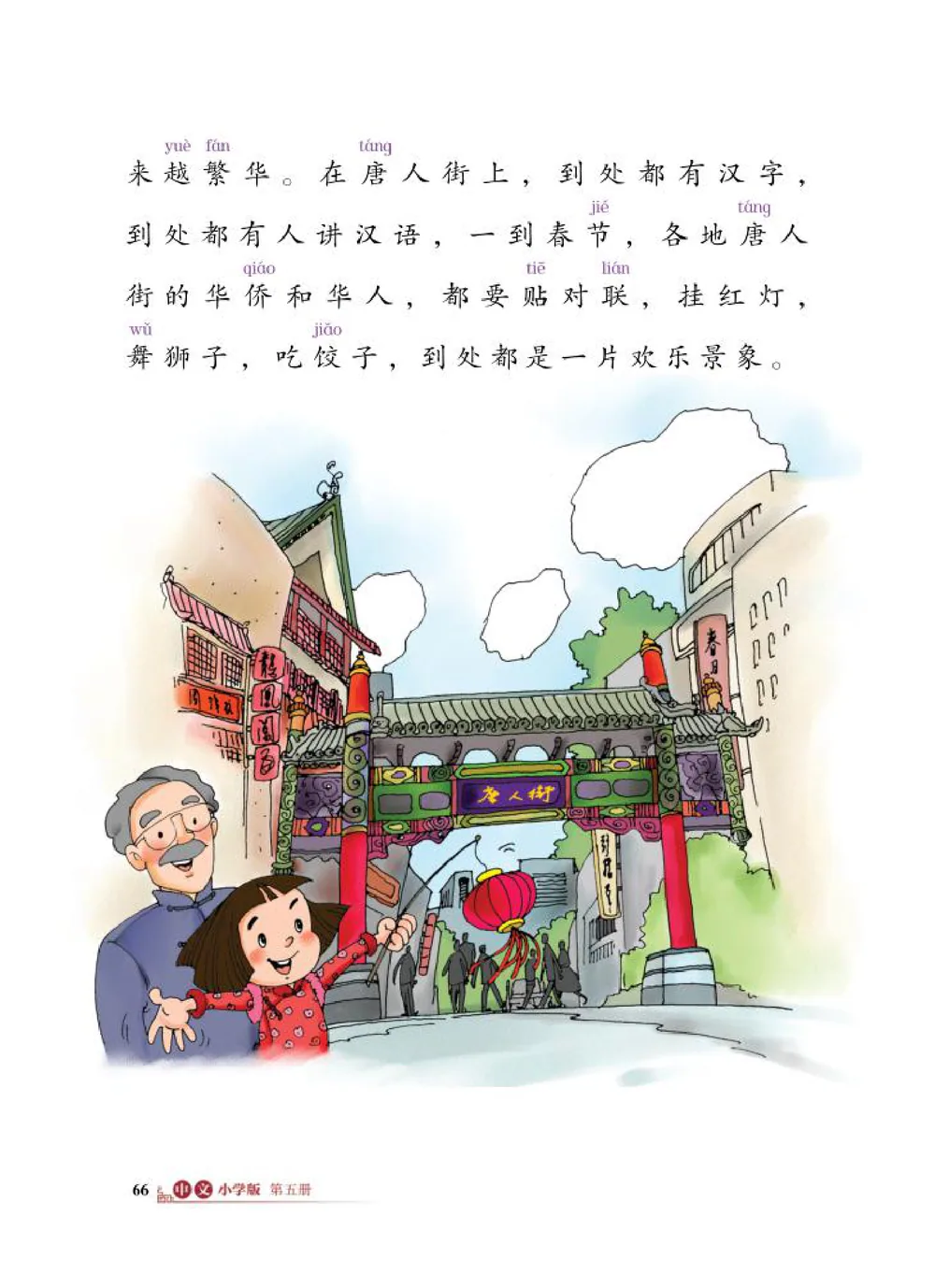
lái来yuè越fán繁huá华。zài在táng唐rén人jiē街shàng上,dào到chù处dōu都yǒu有hàn汉zì字,
…grew busier and busier. In Chinatown there are Chinese characters everywhere,
dào到chù处dōu都yǒu有rén人jiǎng讲hàn汉yǔ语,yī一dào到chūn春jié节,gè各dì地táng唐rén人
…everywhere people speak Chinese, and as soon as Spring Festival comes, Chinatowns
jiē街de的huá华qiáo侨hé和huá华rén人,dōu都yào要tiē贴duì对lián联,guà挂hóng红dēng灯,
…the overseas Chinese put up couplets and hang red lanterns,
wǔ舞shī狮zi子,chī吃jiǎo饺zi子,dào到chù处dōu都shì是yī一piàn片huān欢lè乐jǐng景xiàng象
…lion dances and dumplings, and everywhere a scene of rejoicing
shēng生xué学(Characters)
Characters
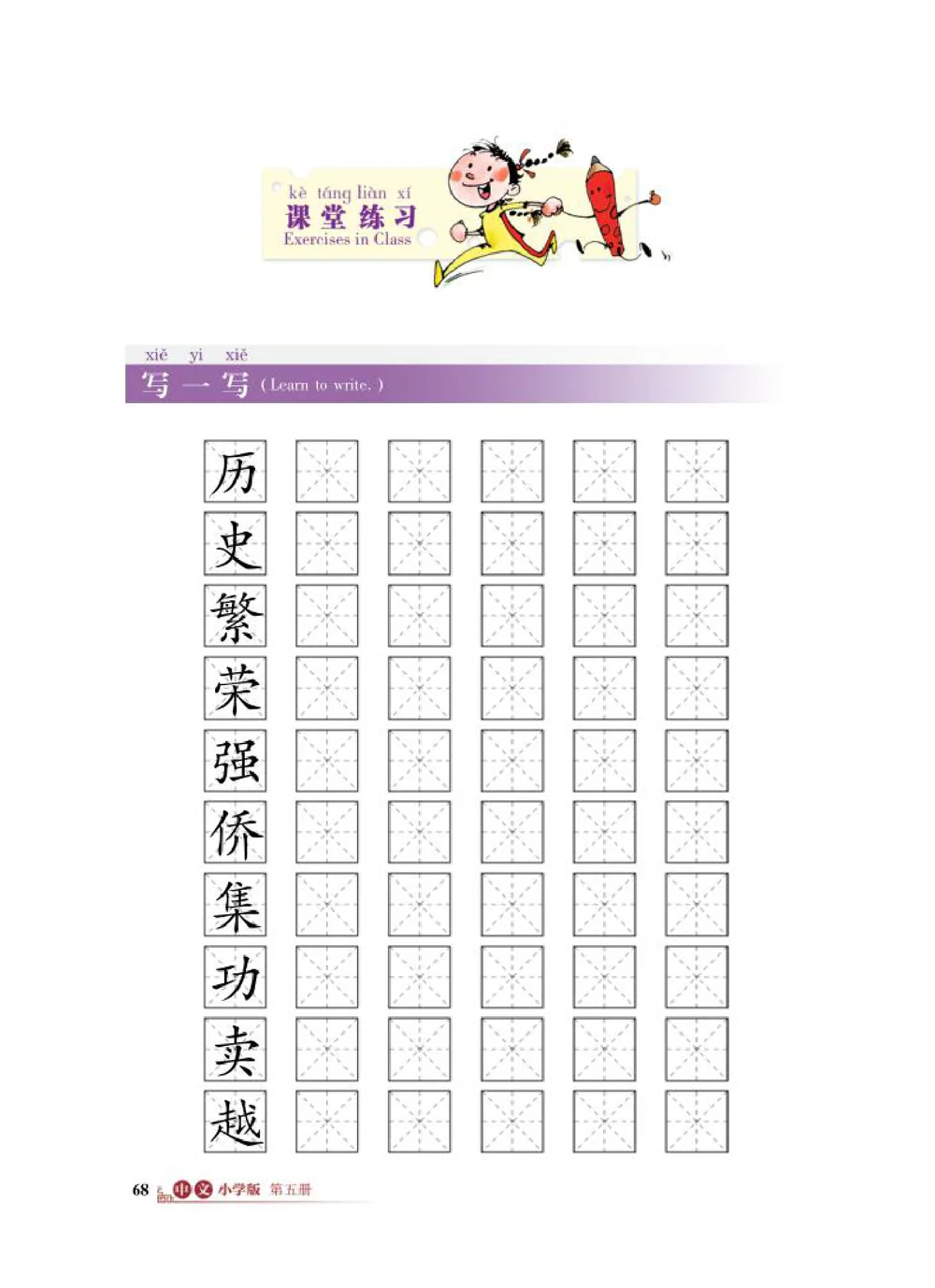
lì历shǐ史fán繁róng荣qiáng强qiáo侨jí集
gōng功mài卖
jié节tiē贴wǔ舞
词语 Words
hǎi海wài外
overseas
huá华qiáo侨
overseas Chinese
jí集zhōng中
to concentrate; to gather
lì历shǐ史
history
huá华rén人
ethnic Chinese
dāng当nián年
in those years
dāng当shí时
at that time
mǎi买mài卖
buying and selling; business
chéng成lì立
to be founded
chūn春jié节
Spring Festival
zhuān专yǒu有míng名cí词
Proper nouns
jiù旧jīn金shān山
San Francisco
wèi为le了měi美guó国de的dú独lì立hé和fán繁róng荣,tā他men们lì立xià下le了hěn很dà大de的
They did a great deal for America's independence and prosperity
gōng功láo劳。
…the credit.
nà那ér儿de的jiē街dào道yuè越lái来yuè越fán繁huá华。
The streets there grew busier and busier.
课堂练习 Exercises in Class
xiě写yī一xiě写(Leam to wite)
lì历shǐ史fán繁
róng荣qiáng强qiáo侨jí集gōng功mài卖yuè越
dú读dú读
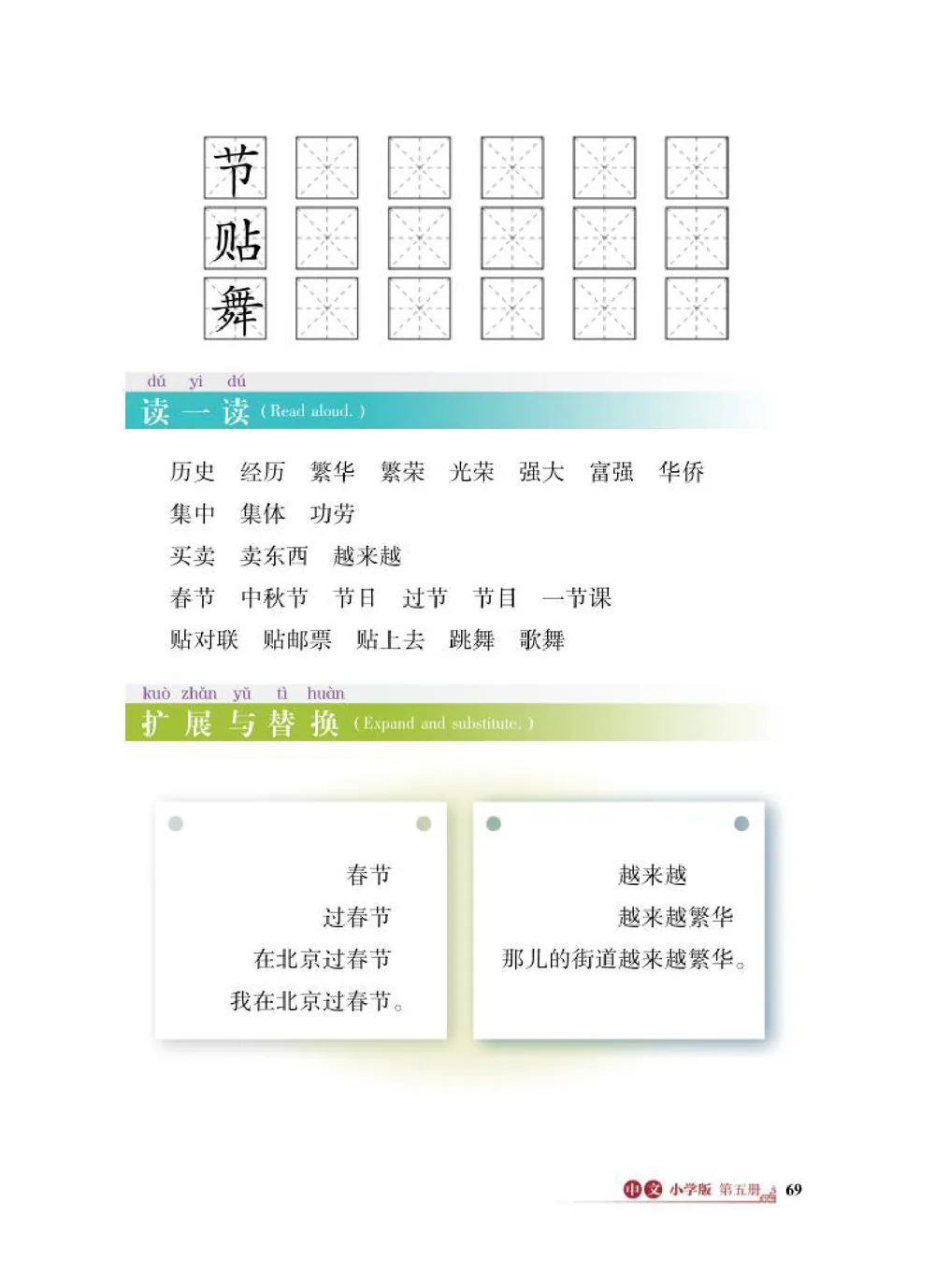
lì历shǐ史
history
jīng经lì历
fán繁huá华
fán繁róng荣
guāng光róng荣qiáng强dà大
fù富qiáng强
huá华qiáo侨
overseas Chinese
jí集zhōng中
to concentrate; to gather
gōng功láo劳
mǎi买mài卖
buying and selling; business
mài卖dōng东xī西
yuè越lái来yuè越
chūn春jié节zhōng中qiū秋jié节jié节rì日guò过jié节
yī一jié节kè课
jié节mù目
tiē贴duì对lián联tiē贴yóu邮piào票tiē贴shàng上qù去tiào跳wǔ舞gē歌wǔ舞
kuò扩zhǎn展yǔ与tì替huàn换ixpind and ubstituteo
chūn春jié节
Spring Festival
yuè越lái来yuè越
guò过chūn春jié节
Celebrating Spring Festival
yuè越lái来yuè越fán繁huá华
zài在běi北jīng京guò过chūn春jié节
nà那ér儿de的jiē街dào道yuè越lái来yuè越fán繁huá华。
The streets there grew busier and busier.
wǒ我zài在běi北jīng京guò过chūn春jié节。
wèi为le了měi美guó国de的dú独lì立hé和fán繁róng荣,tā他men们lì立xià下le了hěn很dà大de的gōng功láo劳
xué学hǎo好hàn汉yǔ语
tā他měi每zhōu周dōu都qù去zhōng中wén文xué学xiào校xué学xí习
shēn身tǐ体jiàn健kāng康
wǒ我tiān天tiān天dōu都dǎ打qiú球
mǎi买nà那běn本shū书
yún云yún云pǎo跑le了hǎo好ér儿jiā家shū书diàn店
nà那ér儿de的jiē街dào道yuè越lái来yuè越fán繁huá华
tiān天qì气
rè热le了
yún云yún云shuō说hàn汉yǔ语shuō说dé得
hǎo好le了
wǒ我de的xiǎo小gǒu狗
kě可ài爱le了
duì对huà话(Dialogue)
fāng方fāng方:yún云yún云,nǐ你men们qù去nǎ哪ér儿?
yún云yún云:wǒ我hé和bà爸bà爸、mā妈mā妈qù去táng唐rén人jiē街。mā妈mā妈yào要qù去kàn看èr二gè个lǎo老péng朋yǒu友,wǒ我men们yě也
xiǎng想qù去kàn看kàn看。
fāng方fāng方:shàng上xīng星qī期wǒ我hé和yé爷yé爷qù去le了táng唐rén人jiē街,nà那ér儿yǒu有hěn很duō多huá华rén人。
yún云yún云:wǒ我hái还méi没qù去guò过ne呢。táng唐rén人jiē街shén什me么yàng样?
fāng方fāng方:zài在táng唐rén人jiē街,yǒu有hěn很duō多huá华rén人kāi开de的cān餐guǎn馆hé和shāng商diàn店,yǒu有hěn很duō多zhōng中guó国de的
dōng东xī西。
yún云yún云:tīng听bà爸bà爸shuō说,chūn春jié节de的shí时hòu候,nà那ér儿de的huá华rén人dōu都yào要wǔ舞shī狮zi子、tiē贴duì对lián联、
guà挂hóng红dēng灯,kě可rè热nào闹le了。bù不guò过wǒ我hái还méi没qù去kàn看guò过。
fāng方fāng方:wǒ我yě也méi没kàn看guò过。bù不guò过,bà爸bà爸shuō说jīn今nián年chūn春jié节yào要dài带wǒ我qù去。wǒ我zhēn真xiǎng想qù去kàn看
kàn看wǔ舞shī狮zi子。
yún云yún云:hǎo好a啊,dào到shí时wǒ我men们yì一qǐ起qù去ba吧
xiǎng想yī一xiǎng想,shuō说shuō说
(1)wèi为shén什me么yǒu有de的jiē街dào道jiào叫táng唐rén人jiē街?
(2)chūn春jié节shí时táng唐rén人jiē街de的huá华qiáo侨hé和huá华rén人dōu都yào要zuò做shén什me么?
(3)nǐ你qù去guò过táng唐rén人jiē街ma吗?gěi给tóng同xué学men们jiǎng讲jiǎng讲táng唐rén人jiē街shì是shén什me么yàng样de的。
阅读 Reading
guò过chūn春jié节
Celebrating Spring Festival
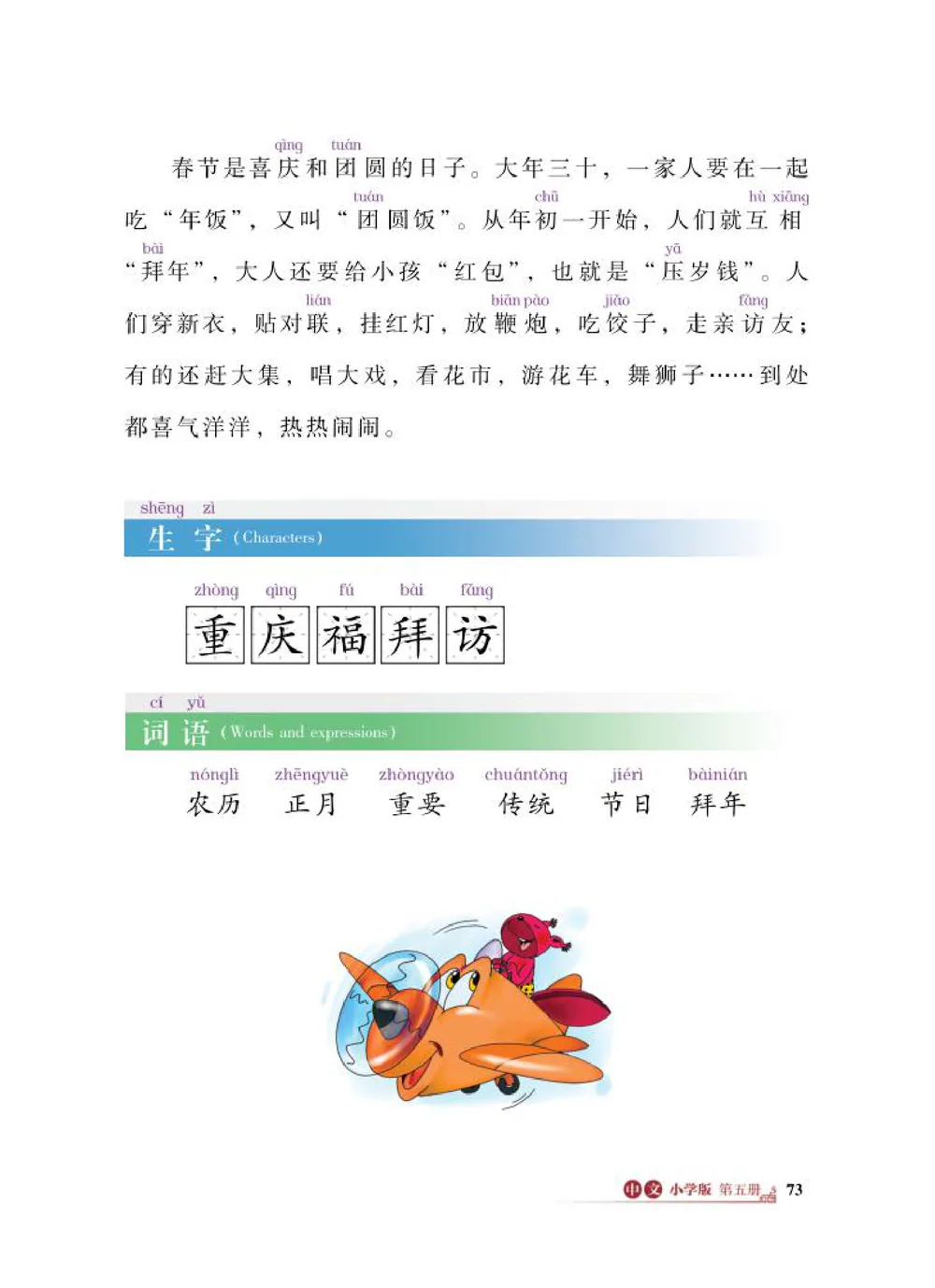
zhōng中guó国nóng农lì历de的zhēng正yuè月chū初yī一jiào叫“chūn春jié节”,tā它shì是zhōng中guó国zuì最zhòng重yào要de的
The first day of the first lunar month is called Spring Festival, China's most important
chuán传tǒng统jié节rì日,yǐ已jīng经yǒu有jǐ几qiān千nián年de的lì历shǐ史le了。
…a traditional festival with a history of several thousand years.
guò过chūn春jié节yòu又jiào叫“guò过nián年”。zài在chūn春jié节qián前hòu后de的shí十ér儿tiān天lǐ里,rén人men们yòng用gè各
Keeping the Spring Festival is also called passing the year. In the ten-odd days around it people use all
zhǒng种gè各yàng样de的huó活dòng动lái来qìng庆fēng丰shōu收,yíng迎xīn新chūn春,zhù祝fú福rén人men们zài在xīn新de的yī一nián年lǐ里shēng生
…sorts of activities to celebrate the harvest, greet the spring, and wish everyone a good
huó活dé得gèng更jiā加měi美hǎo好。
…live better still.
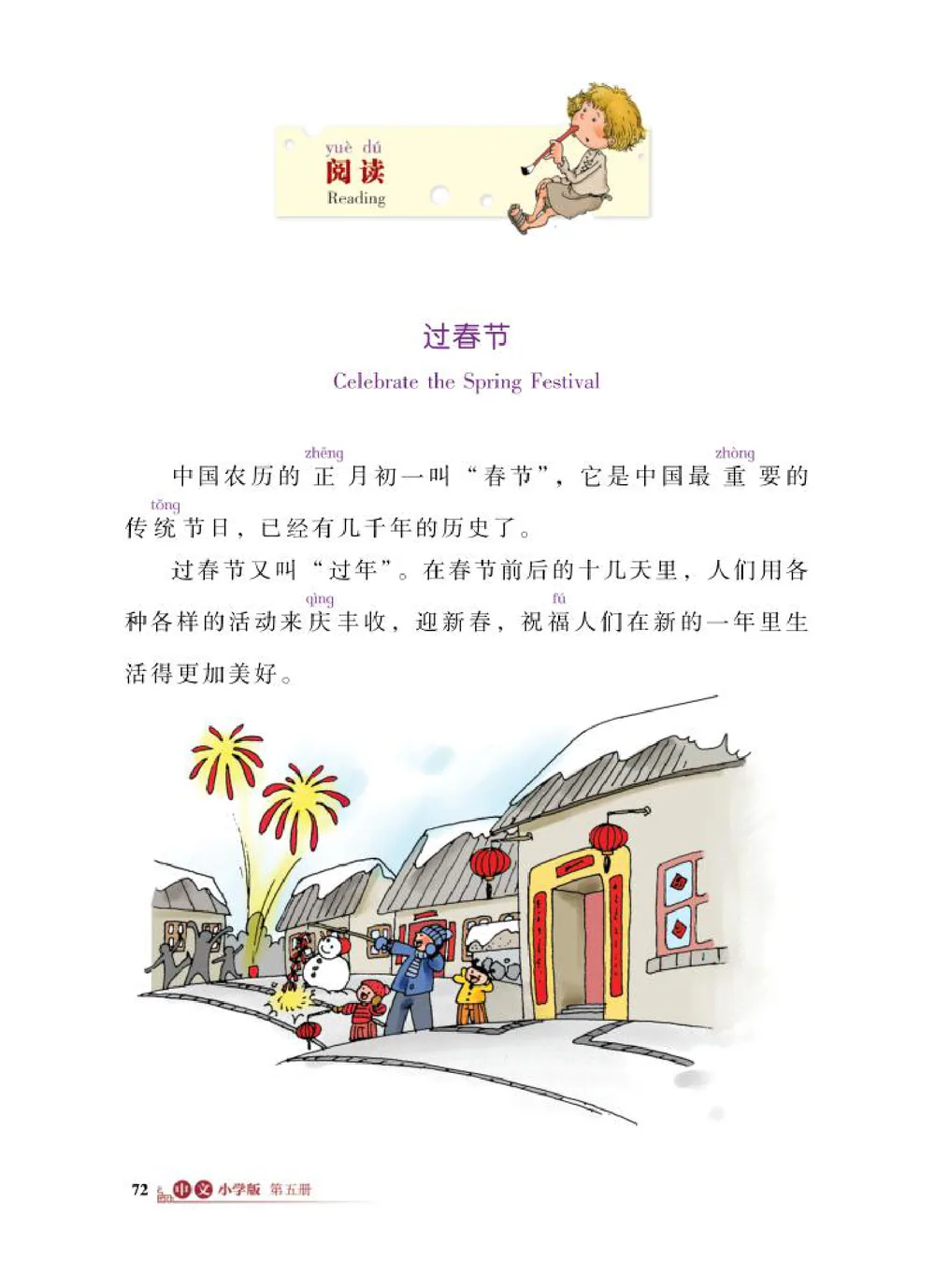
chūn春jié节shì是xǐ喜qìng庆hé和tuán团yuán圆de的rì日zi子。dà大nián年sān三shí十,yī一jiā家rén人yào要zài在yì一qǐ起
Spring Festival is a time of joy and reunion. On New Year's Eve the whole family
chī吃“nián年fàn饭”,yòu又jiào叫“tuán团yuán圆fàn饭”。cóng从nián年chū初yī一kāi开shǐ始,rén人men们jiù就hù互xiāng相
…eat the New Year meal, the reunion dinner. From the first day of the year people
“bài拜nián年”,dà大rén人hái还yào要gěi给xiǎo小hái孩“hóng红bāo包”,yě也jiù就shì是“yā压suì岁qián钱”。rén人
…pay New Year calls, and grown-ups give children a red packet of lucky money. People
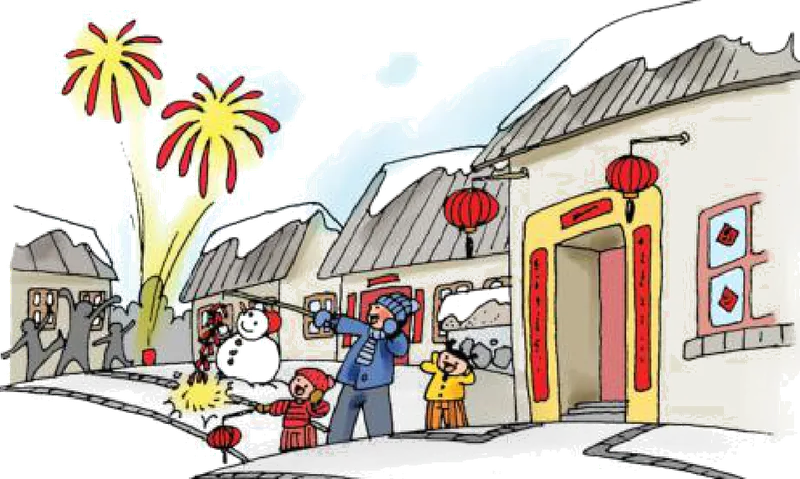
men们chuān穿xīn新yī衣,tiē贴duì对lián联,guà挂hóng红dēng灯,fàng放biān鞭pào炮,chī吃jiǎo饺zi子,zǒu走qīn亲fǎng访yǒu友;
…people wear new clothes, put up couplets, hang red lanterns, set off firecrackers, eat dumplings and visit family and friends;
yǒu有de的hái还gǎn赶dà大jí集,chàng唱dà大xì戏,kàn看huā花shì市,yóu游huā花chē车,wǔ舞shī狮zi子···dào到chù处
…some go to the fair, watch opera, visit the flower market, follow the float parade, watch lion dances — everywhere
dōu都xǐ喜qì气yáng洋yáng洋,rè热rè热nào闹nào闹。
…all cheerful and full of life.
生字 Characters
chóng重qìng庆fú福bài拜fǎng访
词语 Words
nóng农lì历
the lunar calendar
zhēng正yuè月
the first month of the lunar year
zhòng重yào要
important
chuán传tǒng统
tradition; traditional
jié节rì日
festival
bài拜nián年
to pay a New Year call
测验 Quiz — 19 questions
做完这些题就算学完这一课。 Finish these to complete the lesson.
-
重 Choose the pinyin
-
庆 Choose the pinyin
-
福 Choose the pinyin
-
拜 Choose the pinyin
-
访 Choose the pinyin
-
zhòng Choose the character
-
qìng Choose the character
-
fú Choose the character
-
bài Choose the character
-
重(zhòng) What does it mean?
-
庆(qìng) What does it mean?
-
福(fú) What does it mean?
-
拜(bài) What does it mean?
-
访(fǎng) What does it mean?
-
中国农历的正月初一叫“春节”,它是中国最_要的 Which character belongs in the blank?
-
种各样的活动来庆丰收,迎新春,祝_人们在新的一年里生 Which character belongs in the blank?
-
春节是喜_和团圆的日子。大年三十,一家人要在一起 Which character belongs in the blank?
-
“_年”,大人还要给小孩“红包”,也就是“压岁钱”。人 Which character belongs in the blank?
-
们穿新衣,贴对联,挂红灯,放鞭炮,吃饺子,走亲_友; Which character belongs in the blank?
-
把汉字和拼音连起来 Match each character to its pinyin
-
Listen and choose the character you hear
-
Listen and choose the character you hear
-
Listen and choose the character you hear
-
Listen and choose the character you hear
-
生字卡片 Flashcards for this lesson's characters
重 zhòng
heavy; serious; to attach importance to庆 qìng
to celebrate福 fú
good fortune; happiness; luck拜 bài
to bow to; to pay one's respects; (bound form) to extend greetings (on a specific occasion); to make a courtesy call访 fǎng
(bound form) to seek by inquiry; (bound form) to visit; to call on
课本原页,点图看大图。 The printed pages this lesson comes from — tap to enlarge.