Lesson 16 / 28
综合练习(四)
Review 4

综合练习 Review
1.dú读pīn拼yīn音,xiě写cí词yǔ语(Write oneword foreachPinyin.)
2.bǐ比yī一bǐ比,zài再zǔ组cí词yǔ语(Compareandform phrases.)
3.xuǎn选zì字tián填kòng空(Choose theright characters to fllin the blanks.)
zhù住wǎng往qíng情qīng清kuài块kuài快
(1)bù不zhī知
de的rén人hái还yǐ以wéi为tā他men们shì是yé爷yé爷hé和sūn孙nǚ女ne呢!
(2)gēn跟xiǎo小nǚ女hái孩zài在yì一qǐ起,ài爱yīn因sī斯tǎn坦gǎn感dào到hěn很yú愉
(3)tā他qǐng请rén人men们
chuán船shàng上fàng放shí石tou头。
(4)měi每tiān天
chén晨,lǎo老rén人dōu都zài在duàn锻liàn炼shēn身tǐ体。
(5)wǒ我zài在zhōng中guó国
le了sān三nián年。
(6)zhè这dùn顿fàn饭huā花le了sān三shí十
qián钱。
4.xuǎn选cí词yǔ语tián填kòng空(Choosethe right words to fll in the blanks.)
tán谈huà话
xǐ喜huān欢
tǎo讨lùn论
gāo高xìng兴
yǐ以wéi为
fā发xiàn现
(1)lǎo老shī师zhǎo找yún云yún云
(2)yé爷yé爷jīn今tiān天cóng从zhōng中guó国guǎng广zhōu州lái来,wǒ我zhēn真
(3)wǒ我men们jīn今tiān天shàng上wǔ午yì一zhí直zài在
zhè这ge个wèn问tí题。
wǒ我zuì最
dú读tóng童huà话gù故shì事。
(5)tiān天wén文xué学jiā家zuì最jìn近yòu又
le了yī一kē颗xīn新xīng星。
(6)tā他men们
wǒ我men们shì是jiě姐mèi妹,qí其shí实wǒ我men们shì是tóng同xué学。
5.zào造jù句(Make sentences with the given words and expressions.)
)jiù就.
(2)kàn看bù不qǐ起
(3)chēng称zàn赞
(4)dù度guò过
(5)yīn因wèi为
6.dú读kè课wén文,pàn判duàn断jù句zi子,duì对de的dǎ打“V”,cuò错de的dǎ打
(1)dà大jiā家dōu都shuō说cáo曹chōng冲shì是gè个cōng聪míng明de的hái孩zi子。
(2)guān官yuán员men们xiǎng想chū出le了yí一gè个hǎo好zhǔ主yì意,chēng称chū出le了dà大xiàng象de的zhòng重liàng量。
ài爱yīn因sī斯tǎn坦bù不xiǎng想gěi给xiǎo小nǚ女hái孩jiǎng讲jiě解shù数xué学tí题。
(4)lǐ李shí时zhēn珍shì是zhōng中guó国míng明dài代zhù著míng名de的wén文xué学jiā家
(5)běn《cǎo本gāng草mù纲shì目》lǐ是shí李zhēn时xiě珍de写的。
7.gǎi改bìng病jù句(Correet the following sentences.)
(1)nà那shí时tā他yīn因wèi为fù父qīn亲bù不tóng同yì意,dàn但shì是tā他de的jué决xīn心yì一zhí直méi没yǒu有
gǎi改biàn变。
(2)nà那ge个xiǎo小nǚ女hái孩qǐng请lǎo老rén人hái还chī吃qiān千guǒ果。
(3)yī一tiān天,yǒu有rén人yùn运lái来yī一tóu头dà大xiàng象cóng从nán南fāng方yòng用chuán船。
(4)zěn怎me么néng能tiān天tiān天ràng让nín您gěi给wǒ我jiǎng讲shù数xué学tí题ma吗?
(5)zhè这bù部zhù著zuò作,bèi被yì译le了duō多guó国wén文zì字。
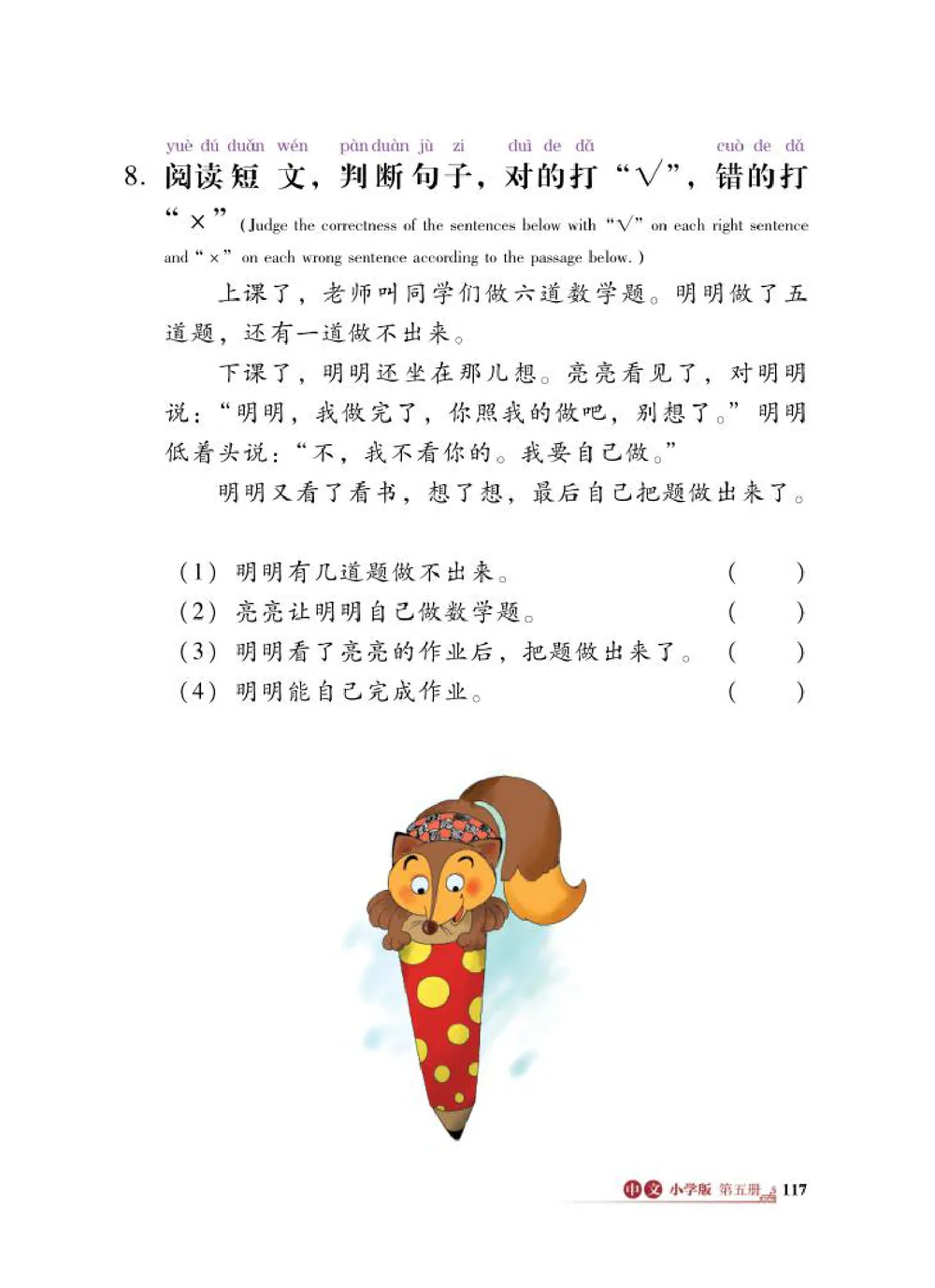
8.yuè阅dú读duǎn短wén文,pàn判duàn断jù句zi子,duì对de的dǎ打“V”,cuò错de的dǎ打
shàng上kè课le了,lǎo老shī师jiào叫tóng同xué学men们zuò做liù六dào道shù数xué学tí题。míng明míng明zuò做le了wǔ五
dào道tí题,hái还yǒu有yī一dào道zuò做bù不chū出lái来。
xià下kè课le了,míng明míng明hái还zuò坐zài在nà那ér儿xiǎng想。liàng亮liàng亮kàn看jiàn见le了,duì对míng明míng明
shuō说:“míng明míng明,wǒ我zuò做wán完le了,nǐ你zhào照wǒ我de的zuò做ba吧,bié别xiǎng想le了。”míng明míng明
dī低zhe着tóu头shuō说:“bù不,wǒ我bù不kàn看nǐ你de的。wǒ我yào要zì自jǐ己zuò做。”
míng明míng明yòu又kàn看le了kàn看shū书,xiǎng想le了xiǎng想,zuì最hòu后zì自jǐ己bǎ把tí题zuò做chū出lái来le了。
(1)yòng用
míng明míng明yǒu有jǐ几dào道tí题zuò做bù不chū出lái来。
liàng亮liàng亮ràng让míng明míng明zì自jǐ己zuò做shù数xué学tí题。
míng明míng明kàn看le了liàng亮liàng亮de的zuò作yè业hòu后,bǎ把tí题zuò做chū出lái来le了。
(4)míng明míng明néng能zì自jǐ己wán完chéng成zuò作yè业。
课本的生字表没能从扫描件上读出来,下面是这一课第一次出现的字。 The book's own 生字 list could not be read for this lesson; these are the characters it introduces.
测验 Quiz — 18 questions
做完这些题就算学完这一课。 Finish these to complete the lesson.
-
住 Choose the pinyin
-
往 Choose the pinyin
-
情 Choose the pinyin
-
清 Choose the pinyin
-
爷 Choose the pinyin
-
孙 Choose the pinyin
-
nǚ Choose the character
-
gēn Choose the character
-
sī Choose the character
-
tǎn Choose the character
-
yú Choose the character
-
qǐng Choose the character
-
住(zhù) What does it mean?
-
往(wǎng) What does it mean?
-
情(qíng) What does it mean?
-
清(qīng) What does it mean?
-
爷(yé) What does it mean?
-
孙(sūn) What does it mean?
-
把汉字和拼音连起来 Match each character to its pinyin
-
Listen and choose the character you hear
-
Listen and choose the character you hear
-
Listen and choose the character you hear
-
Listen and choose the character you hear
-
生字卡片 Flashcards for this lesson's characters
住 zhù
to live; to reside; to stay; to stop; to cease; (result complement indicating firmness or a stable achieved state)往 wǎng
to go (in a direction); to; towards情 qíng
(bound form) feelings; emotion; sentiment; passion; (bound form) situation; condition清 qīng
(of water etc) clear; clean; quiet; still; pure; uncorrupted爷 yé
grandpa; old gentleman孙 sūn
grandson; descendant女 nǚ
female; woman; daughter跟 gēn
heel; to follow closely; to go with斯 sī
(phonetic); this坦 tǎn
flat; open-hearted; level愉 yú
pleased请 qǐng
to ask; to invite; please (do sth)放 fàng
to put; to place; to release石 shí
rock; stone; stone inscription每 měi
each; every晨 chén
morning; dawn; daybreak老 lǎo
prefix used before the surname of a person or a numeral indicating the order of birth of the children in a family or to indicate affection or familiarity; old (of people); venerable (person)锻 duàn
to forge; to discipline; wrought炼 liàn
to refine; to smelt三 sān
three; 3话 huà
dialect; language; spoken words喜 xǐ
to be fond of; to like; to enjoy欢 huān
variant of 歡|欢[huan1]讨 tǎo
to invite; to provoke; to demand or ask for论 lùn
opinion; view; theory师 shī
teacher; master; expert今 jīn
now; the present time; current广 guǎng
wide; numerous; to spread州 zhōu
prefecture; (old) province; (old) administrative division午 wǔ
7th earthly branch: 11 a.m.-1 p.m., noon, 5th solar month (6th June-6th July), year of the Horse; ancient Chinese compass point: 180° (south)最 zuì
variant of 最[zui4]故 gù
happening; instance; reason事 shì
matter; thing; item近 jìn
near; close to; approximately星 xīng
star; heavenly body; satellite姐 jiě
older sister
课本原页,点图看大图。 The printed pages this lesson comes from — tap to enlarge.