Lesson 17 / 28
总练习
Exercises
课文 Text
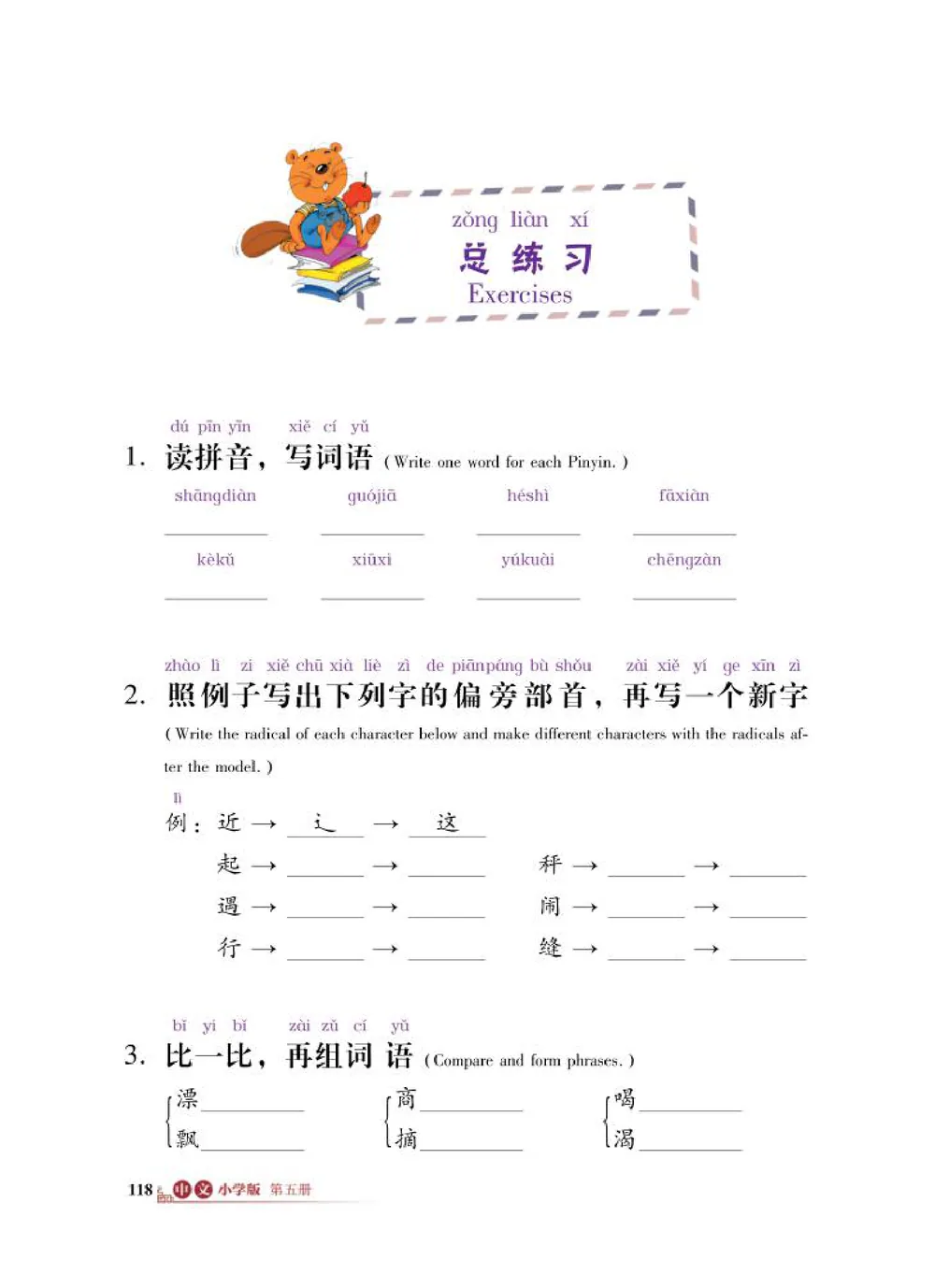
1.dú读pīn拼yīn音,xiě写cí词yǔ语
1. Read the pinyin and write the words
2.zhào照lì例zi子xiě写chū出xià下liè列zì字de的piān偏páng旁bù部shǒu首,zài再xiě写yí一gè个xīn新zì字
2. Follow the example: write the radical of each character, then write a new character
lì例:jìn近→
Example: 近 →
qǐ起→
chèng秤yī一
nào闹→
3.bǐ比yī一bǐ比,zài再zǔ组cí词yǔ语(Compareandformphrases.)
3. Compare, then form phrases.
4.zhào照lì例zi子xiě写yī一xiě写(Wniteafterthemodel.)
4. Follow the example and write.
lì例:hóng红sè色de的shū书bāo包
Example: a red schoolbag
gè各zhǒng种
all kinds of
gān干jìng净de的
clean
piào漂liàng亮de的
pretty
lí离kāi开
to leave
gǎn感dào到
to feel
tóng同yì意
to agree
cuò错wù误
mistake
tiān天qì气
weather
gāo高sù速gōng公lù路
motorway
5.dú读kè课wén文,xuǎn选zé择tián填kòng空(Choose therght sentencesaccording tothe text.)
5. Read the text and choose the right sentences to fill in the blanks.
(1)tā他shì是
(1) he is
A.zhōng中guó国míng明dài代zhù著míng名de的yī医xué学jiā家
B.míng明dài代zhōng中guó国zhù著míng名de的yī医xué学jiā家
C.zhù著míng名de的míng明dài代de的zhōng中guó国yī医xué学jiā家
D.zhōng中guó国zhù著míng名míng明dài代yī医xué学jiā家
(2)tā他
(2) he
A:gěi给yí一gè个xiǎo小nǚ女hái孩tiān天tiān天qīng清chén晨jiǎng讲jiě解shù数xué学tí题
B.tiān天tiān天qīng清chén晨jiǎng讲jiě解gěi给yí一gè个xiǎo小nǚ女hái孩shù数xué学tí题
C.jiǎng讲jiě解shù数xué学tí题gěi给yí一gè个xiǎo小nǚ女hái孩tiān天tiān天qīng清chén晨
D.tiān天tiān天qīng清chén晨gěi给yí一gè个xiǎo小nǚ女hái孩jiǎng讲jiě解shù数xué学tí题
D. explaining maths problems to a little girl every morning
(3)yī一tiān天,yǒu有rén人
(3) one day someone
yī一tóu头dà大xiàng象。
…an elephant.
A.cóng从nán南fāng方yùn运yòng用chuán船lái来
B.yòng用chuán船yùn运cóng从nán南fāng方
C:yòng用chuán船yùn运lái来cóng从nán南fāng方
D.cóng从nán南fāng方yòng用chuán船yùn运lái来
D. brought by boat from the south
(4)nǐ你
(4) you
Abǎ把wǒ我hē喝de的shuǐ水zāng脏le了
B.nòng弄zāng脏le了bǎ把wǒ我de的hē喝shuǐ水
C.bǎ把wǒ我hē喝de的shuǐ水nòng弄zāng脏le了
C. dirtied the water I drink
D.bǎ把nòng弄zāng脏le了wǒ我hē喝de的shuǐ水
6.dú读jù句zi子,yòng用huà画xiàn线de的cí词zào造jù句(Make sentences with the underlined
6. Read the sentences and make new ones with the underlined words
(1)fàn饭cài菜de的wèi味dào道hǎo好chī吃jí极le了
(1) the food tasted wonderful
(2)wǒ我men们zuò坐xià下lái来,yào要le了chá茶,jiē接zhe着diǎn点le了sān三cài菜yī一tāng汤。
(2) We sat down, ordered tea, then three dishes and a soup.
(3)wǒ我cóng从lái来méi没jiàn见guò过zhè这me么dà大、zhè这me么hǎo好de的pú葡táo萄。
(3) I have never seen such big, fine grapes.
(4)yīn因wèi为nà那shí时rén人men们kàn看bù不qǐ起dāng当yī医shēng生de的,suǒ所yǐ以fù父qīn亲bù不tóng同yì意。
(4) Because people looked down on doctors in those days, his father would not agree.
(5)yào要shì是nǐ你xǐ喜huān欢,jiù就gěi给nǐ你mǎi买yí一gè个ba吧!
(5) If you like it, I will buy you one!
7.gǎi改bìng病jù句(Correct the following sentences.)
7. Correct these sentences.
(1)wǒ我mǎi买le了jǐ几zhī支liàn练xí习běn本piào漂liàng亮de的。
(2)wǒ我men们diǎn点le了hěn很duō多cài菜,hěn很bǎo饱chī吃le了。
(3)nǐ你nòng弄wǒ我de的hē喝shuǐ水zāng脏le了。
(4)tā她tiào跳wǔ舞le了yī一cì次yòu又yī一cì次。
(4) She danced again and again.
(5)wǒ我de的jiàn剑shì是diào掉xià下qù去de的cóng从zhè这ér儿
(6)zhè这me么dà大de的xiàng象yǒu有jǐ几zhòng重ne呢?
(6) How much does an elephant this big weigh?
8.yuè阅dú读xià下miàn面de的duǎn短wén文,tián填kòng空
8. Read the passage below and fill in the blanks
wǒ我qù去zhǎo找yún云yún云。wǒ我dào到tā她jiā家
I went to find Yunyun. When I got to her house
shí时hòu候,tā她zhèng正dài戴zhe着ěr耳
…at the time she was wearing ear
gē歌ne呢。
…singing.
wǒ我wèn问tā她:“yún云yún云,
I asked her, "Yunyun,
?”tā她shuō说:“wǒ我
…?" She said, "I
xià下wǔ午méi没yǒu有shì事。wǒ我shuō说:
…nothing on this afternoon. I said:
wǒ我yì一qǐ起qù去shū书diàn店,hǎo好ma吗?”
…come to the bookshop with me?"
tā她shuō说:“hǎo好a啊。nǐ你
She said, "All right. You
?”wǒ我shuō说:“wǒ我yào要mǎi买yī一
…?" I said, "I want to buy a
ér儿tóng童huà画bào报。
…a children's picture magazine.
yún云yún云wèn问wǒ我:“wǒ我men们
Yunyun asked me, "Shall we
?”wǒ我shuō说:“wǒ我men们zuò坐chē车
…?" I said, "Shall we take the bus
qù去。”yún云yún云shuō说:“zhè这lǐ里
…go." Yunyun said, "It is
shū书diàn店bù不yuǎn远,wǒ我men们hái还shì是zǒu走zhe着
The bookshop is not far, so let's walk
qù去ba吧。”wǒ我shuō说:“wǒ我men们zuò坐chē车qù去,zài再zǒu走huí回lái来,hǎo好bù不hǎo好?”yún云
…go then." I said, "Shall we take the bus there and walk back?" Yun
yún云xiào笑
shuō说:“hǎo好!”
…said, "Good!"
xià下wǔ午wǒ我men们
in the afternoon we
zuò坐chē车qù去le了shū书diàn店。
…took the bus to the bookshop.
课本的生字表没能从扫描件上读出来,下面是这一课第一次出现的字。 The book's own 生字 list could not be read for this lesson; these are the characters it introduces.
测验 Quiz — 23 questions
做完这些题就算学完这一课。 Finish these to complete the lesson.
-
偏 Choose the pinyin
-
部 Choose the pinyin
-
首 Choose the pinyin
-
闹 Choose the pinyin
-
离 Choose the pinyin
-
择 Choose the pinyin
-
jiǎng Choose the character
-
jiě Choose the character
-
shù Choose the character
-
zào Choose the character
-
zuò Choose the character
-
jiē Choose the character
-
偏(piān) What does it mean?
-
部(bù) What does it mean?
-
首(shǒu) What does it mean?
-
闹(nào) What does it mean?
-
离(lí) What does it mean?
-
择(zé) What does it mean?
-
2.照例子写出下列字的偏旁_首,再写一个新字 Which character belongs in the blank?
-
A:给一个小女孩天天清晨讲_数学题 Which character belongs in the blank?
-
B.天天清晨讲_给一个小女孩数学题 Which character belongs in the blank?
-
C.讲_数学题给一个小女孩天天清晨 Which character belongs in the blank?
-
D.天天清晨给一个小女孩讲_数学题 Which character belongs in the blank?
-
把汉字和拼音连起来 Match each character to its pinyin
-
Listen and choose the character you hear
-
Listen and choose the character you hear
-
Listen and choose the character you hear
-
Listen and choose the character you hear
-
生字卡片 Flashcards for this lesson's characters
偏 piān
to lean; to slant; oblique部 bù
ministry; department; section首 shǒu
head; chief; first (occasion, thing etc)闹 nào
variant of 鬧|闹[nao4]离 lí
to leave; to part from; to be away from择 zé
to select; to choose; to pick over讲 jiǎng
to speak; to explain; to negotiate解 jiě
to divide; to break up; to split数 shù
number; figure; several; a few造 zào
to make; to build; to manufacture坐 zuò
to sit; to take a seat; to take (a bus, airplane etc)接 jiē
to receive; to answer (the phone); to meet or welcome sb过 guò
to cross; to go over; to pass (time)葡 pú
used in 葡萄[pu2 tao5]萄 táo
used in 葡萄[pu2 tao5]吧 ba
(modal particle indicating suggestion or surmise); ...right?; ...OK?她 tā
she跳 tiào
to jump; to hop; to skip over短 duǎn
short; brief; to lack候 hòu
to wait; to inquire after; to watch戴 dài
to put on or wear (glasses, hat, gloves etc); to respect; to bear耳 ěr
ear; handle (archaeology); and that is all (Classical Chinese)歌 gē
song; (bound form) to sing店 diàn
inn; old-style hotel; (bound form) shop; store吗 ma
(question particle for "yes-no" questions)啊 a
modal particle ending sentence, showing affirmation, approval, or consent报 bào
to report; to inform; to announce; to respond; to reply; to sign up for; to register for (abbr. for 報名|报名[bao4 ming2])笑 xiào
old variant of 笑[xiao4]
课本原页,点图看大图。 The printed pages this lesson comes from — tap to enlarge.