Lesson 3 / 28
加油站
Gas Station



课文 Text
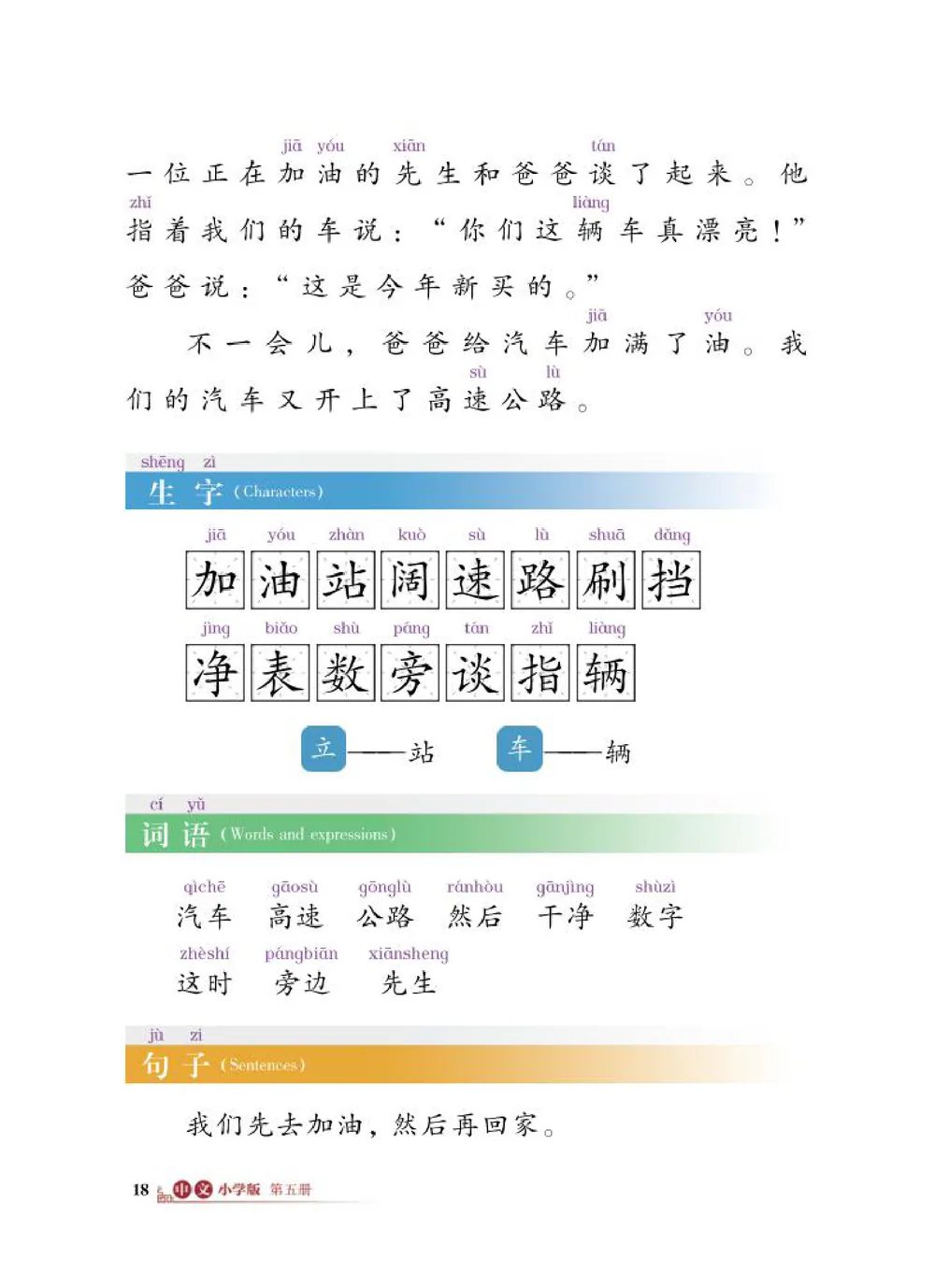
qì汽chē车zài在kuān宽kuò阔de的gāo高sù速gōng公lù路shàng上fēi飞pǎo跑bà爸bà爸
The car sped along the wide motorway. Dad
yī一biān边kāi开chē车yī一biān边shuō说“wǒ我men们xiān先qù去jiā加yóu油rán然hòu后
…said as he drove, "We'll fill up first and then
zài再huí回jiā家。”
…and then go home."
bà爸bà爸bǎ把qì汽chē车kāi开jìn进le了jiā加yóu油zhàn站。bà爸bà爸gěi给qì汽
Dad drove into the filling station. He
chē车jiā加yóu油。mā妈mā妈qù去ná拿le了yī一bǎ把shuā刷zi子lái来,bǎ把qì汽chē车
…filled the tank. Mum fetched a brush and the car's
de的dǎng挡fēng风bō玻lí璃shuā刷dé得gān干gān干jìng净jìng净。wǒ我kàn看zhe着jiā加yóu油jī机
…cleaned the windscreen till it shone. I watched the pump
shàng上yóu油biǎo表de的shù数zì字fēi飞kuài快dì地tiào跳dòng动zhe着。zhè这shí时,páng旁biān边
…the numbers on the pump flicked round quickly. Just then, beside us
yī一wèi位zhèng正zài在jiā加yóu油de的xiān先shēng生hé和bà爸bà爸tán谈le了qǐ起lái来。tā他
A man filling up his car struck up a conversation with Dad. He
zhǐ指zhe着wǒ我men们de的chē车shuō说:“nǐ你men们zhè这liàng辆chē车zhēn真piào漂liàng亮!”
…pointed at our car and said, "What a fine car you have!"
bà爸bà爸shuō说:“zhè这shì是jīn今nián年xīn新mǎi买de的。”
Dad said, "We bought it new this year."
bù不yī一huì会er儿bà爸bà爸gěi给qì汽chē车jiā加mǎn满le了yóu油。wǒ我
Before long Dad had filled the tank. I
men们de的qì汽chē车yòu又kāi开shàng上le了gāo高sù速gōng公lù路。
…our car went back onto the motorway.
shēng生(Churaclers)
Characters
shuā刷dǎng挡
jìng净biǎo表shù数
páng旁tán谈zhǐ指chē车
yī一liàng辆
词语 Words
qì汽chē车
car
gāo高sù速
high-speed
gōng公lù路
road; highway
rán然hòu后
then; afterwards
qiān千jìng净
clean
shù数zì字
number; figure
zhè这shí时
at this moment
句子 Sentences
wǒ我men们xiān先qù去jiā加yóu油,rán然hòu后zài再huí回jiā家。
We'll fill up with petrol first and then go home.
课堂练习 Exercises in Class
xiě写yī一xiě写(Leam to wite)
yóu油zhàn站gé阁sù速lù路shuā刷dǎng挡jìng净biǎo表
páng旁tán谈zhǐ指
dú读yī一dú读
jiā加yóu油jiā加kuài快jiā加gōng工
jiā加yóu油zhàn站qì汽chē车zhàn站huǒ火chē车zhàn站
kuān宽kuò阔
zhōu周guǎng广kuò阔hǎi海kuò阔tiān天kōng空
gāo高sù速
high-speed
gāo高sù速gōng公lù路jiā加sù速
fēng风sù速
chē车sù速shí时sù速
gōng公lù路
road; highway
dà大lù路
mǎ马lù路
yī一tiáo条lù路
shuā刷zi子
shuā刷xié鞋
dǎng挡fēng风bō玻lí璃
dǎng挡zhù住
gān干jìng净
hěn很gān干jìng净
gān干gān干jìng净jìng净
yóu油biǎo表
shǒu手biǎo表diàn电biǎo表
shù数zì字
number; figure
shù数mù目
rén人shù数
suì岁shù数
cì次shù数páng旁biān边
tán谈huà话
tán谈tiān天
tán谈xīn心
miàn面tán谈
zhǐ指diǎn点
zhǐ指chū出
zhǐ指dìng定
yī一liàng辆xiǎo小qì汽chē车
liǎng两liàng辆dà大kǎ卡chē车
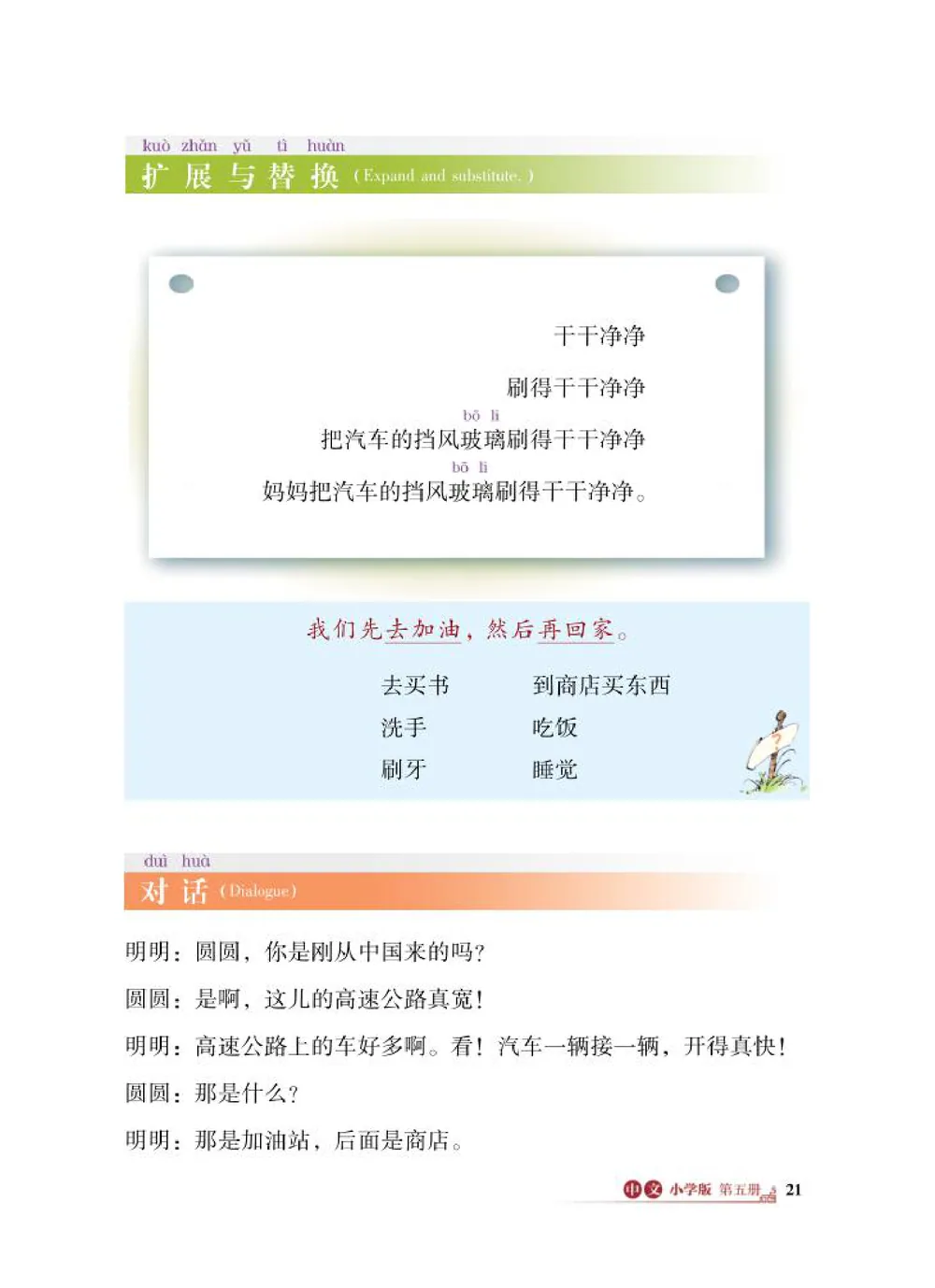
gān干gān干jìng净jìng净
shuā刷dé得gān干gān干jìng净jìng净
bǎ把qì汽chē车de的dǎng挡fēng风bō玻lí璃shuā刷dé得gān干gān干jìng净jìng净
mā妈mā妈bǎ把qì汽chē车de的dǎng挡fēng风bō玻lí璃shuā刷dé得gān干gān干jìng净jìng净
wǒ我men们xiān先qù去jiā加yóu油,rán然hòu后zài再huí回jiā家
qù去mǎi买shū书
dào到shāng商diàn店mǎi买dōng东xī西
chī吃fàn饭
shuā刷yá牙
shuì睡jiào觉
duì对huà话(Dialogue)
míng明míng明:yuán圆yuán圆,nǐ你shì是gāng刚cóng从zhōng中guó国lái来de的ma吗?
yuán圆yuán圆:shì是a啊,zhè这ér儿de的gāo高sù速gōng公lù路zhēn真kuān宽!
míng明míng明:gāo高sù速gōng公lù路shàng上de的chē车hǎo好duō多a啊。kàn看!qì汽chē车yī一liàng辆jiē接yī一liàng辆,kāi开dé得zhēn真kuài快!
yuán圆yuán圆:nà那shì是shén什me么?
míng明míng明:nà那shì是jiā加yóu油zhàn站,hòu后miàn面shì是shāng商diàn店。
yuán圆yuán圆:ó哦,gēn跟zhōng中guó国de的yī一yàng样。
míng明míng明:wǒ我men们cháng常cháng常xiān先jiā加yóu油,rán然hòu后zài再kāi开chē车chū出qù去wán玩ér儿
yuán圆yuán圆:nà那bǎ把shuā刷zi子shì是zuò做shén什me么yòng用de的?
míng明míng明:shuā刷bō玻lí璃de的。jiā加yóu油zhàn站dōu都yǒu有shuā刷zi子,yào要shì是qì汽chē车bō玻lí璃bù不gàn干jìng净,kě可yǐ以yòng用
shuā刷zi子bǎ把tā它shuā刷yī一shuā刷。
yuán圆yuán圆:kàn看!qián前miàn面nà那piàn片shān山lín林duō多hǎo好kàn看a啊!
míng明míng明:wǒ我jiā家jiù就zài在nà那ér儿,kuài快dào到le了。
xiǎng想yī一xiǎng想shuō说yī一shuō说
(1)nǐ你jiā家lǐ里yǒu有jǐ几liàng辆qì汽chē车?shì是shén什me么shí时hòu候mǎi买de的?shén什me么yán颜sè色de的?
(2)dà大rén人gěi给qì汽chē车jiā加yóu油shí时,nǐ你zài在zuò做shén什me么?
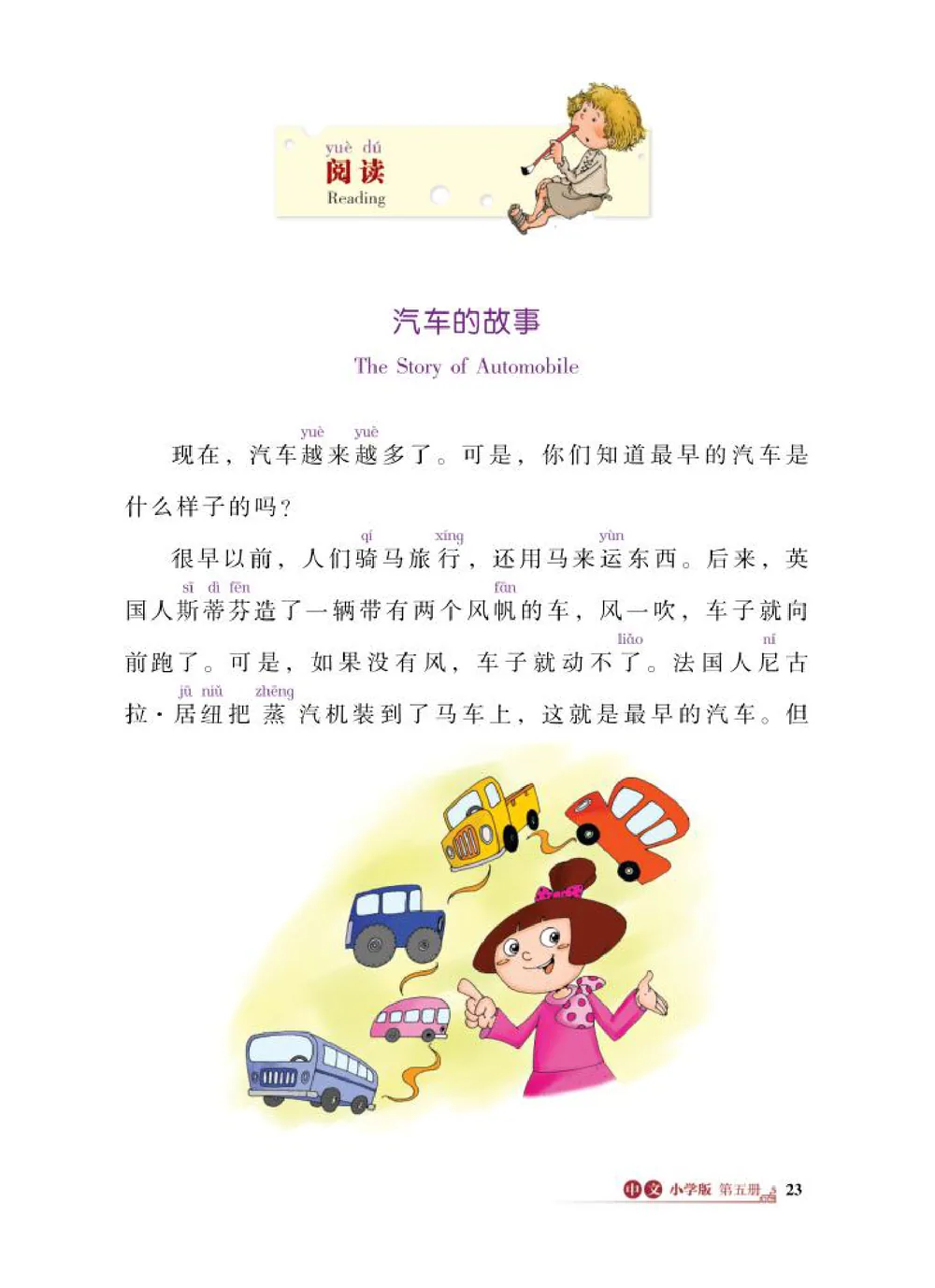
阅读 Reading
qì汽chē车de的gù故shì事
The story of the motor car
xiàn现zài在,qì汽chē车yuè越lái来yuè越duō多le了。kě可shì是,nǐ你men们zhī知dào道zuì最zǎo早de的qì汽chē车shì是
There are more and more cars now. But do you know what the first car
shén什me么yàng样zi子de的ma吗?
…what it looks like?
hěn很zǎo早yǐ以qián前,rén人men们qí骑mǎ马lǚ旅xíng行,hái还yòng用mǎ马lái来yùn运dōng东xī西。hòu后lái来,yīng英
Long ago people travelled on horseback and used horses to carry goods. Later, an English
guó国rén人sī斯dì蒂fēn芬zào造le了yī一liàng辆dài带yǒu有liǎng两gè个fēng风fān帆de的chē车,fēng风yī一chuī吹,chē车zi子jiù就xiàng向
…man Stephen built a cart with two sails, and when the wind blew the cart
qián前pǎo跑le了。kě可shì是,rú如guǒ果méi没yǒu有fēng风,chē车zi子jiù就dòng动bù不liǎo了。fǎ法guó国rén人ní尼gǔ古
…moved forward. But without wind the car would not move. The Frenchman Nico
lā拉·jū居niǔ纽bǎ把zhēng蒸qì汽jī机zhuāng装dào到le了mǎ马chē车shàng上,zhè这jiù就shì是zuì最zǎo早de的qì汽chē车。dàn但
…las Cugnot fitted a steam engine to a carriage, and that was the first car. But
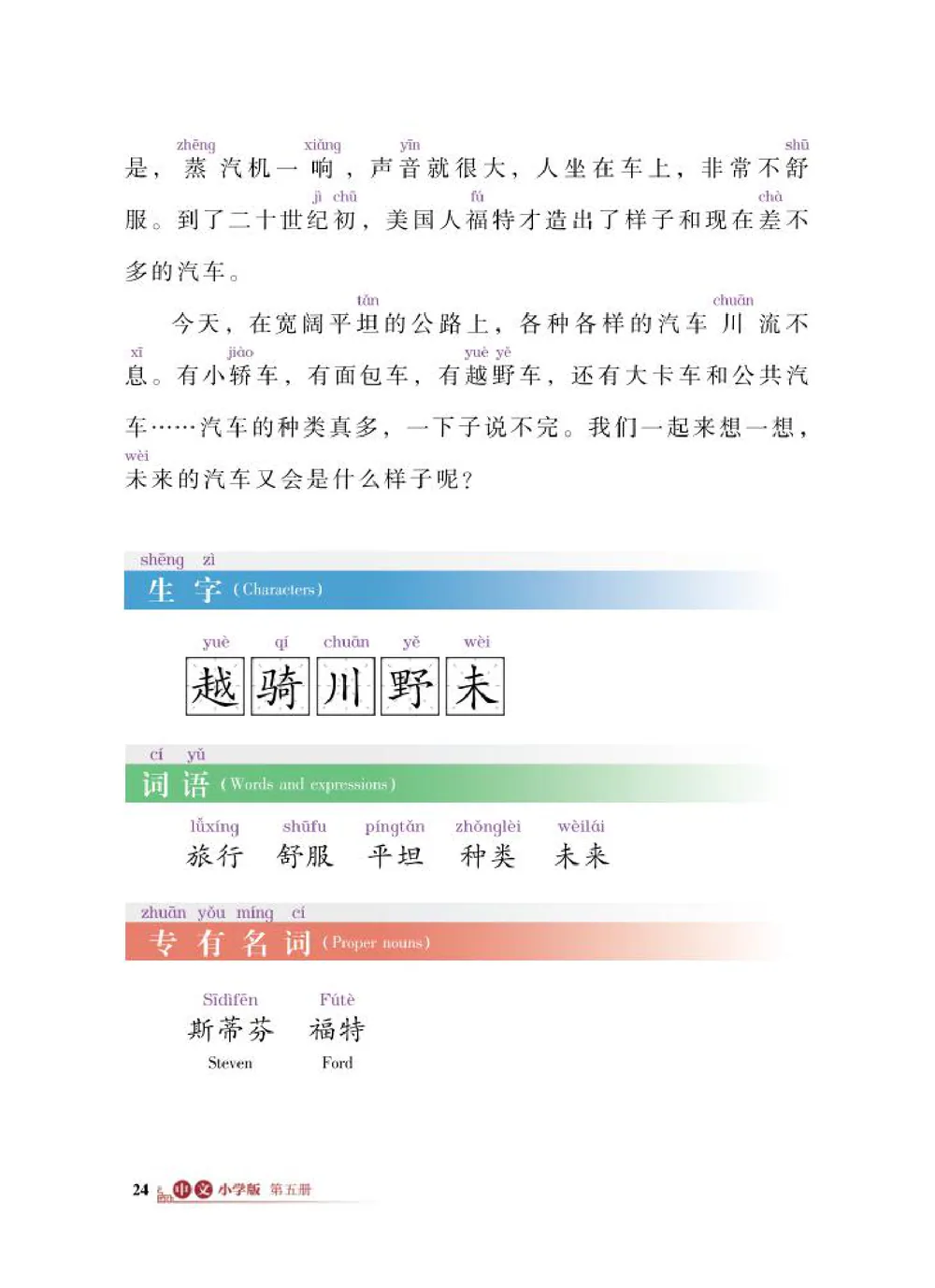
shì是,zhēng蒸qì汽jī机yī一xiǎng响,shēng声yīn音jiù就hěn很dà大,rén人zuò坐zài在chē车shàng上,fēi非cháng常bù不shū舒
…but the steam engine was very loud, and riding in the car was most uncomfort
fú服。dào到le了èr二shí十shì世jì纪chū初,měi美guó国rén人fú福tè特cái才zào造chū出le了yàng样zi子hé和xiàn现zài在chà差bù不
…able. In the early twentieth century the American Ford built one that looked much like
duō多de的qì汽chē车。
…more cars.
jīn今tiān天,zài在kuān宽kuò阔píng平tǎn坦de的gōng公lù路shàng上,gè各zhǒng种gè各yàng样de的qì汽chē车chuān川liú流bù不
Today, on wide flat roads, cars of every kind stream past
xī息。yǒu有xiǎo小jiào轿chē车,yǒu有miàn面bāo包chē车,yǒu有yuè越yě野chē车,hái还yǒu有dà大kǎ卡chē车hé和gōng公gòng共qì汽
…without stopping: saloons, vans, off-roaders, lorries and buses
chē车qì汽chē车de的zhǒng种lèi类zhēn真duō多,èr二xià下zi子shuō说bù不wán完。wǒ我men们yì一qǐ起lái来xiǎng想yī一xiǎng想,
…There are so many kinds of car you could not name them all at once. Let us think together,
wèi未lái来de的qì汽chē车yòu又huì会shì是shén什me么yàng样zi子ne呢?
And what will the car of the future look like?
shēng生Characters)
Characters
yuè越qí骑chuān川yě野wèi未
词语 Words
shū舒fú服
comfortable
píng平tǎn坦
flat; level
zhǒng种lèi类
kind; sort
wèi未lái来
the future
zhuān专yǒu有míng名cí词
Proper nouns
sī斯dì蒂fēn芬
Stephen
fú福tè特
Ford
课本的生字表没能从扫描件上读出来,下面是这一课第一次出现的字。 The book's own 生字 list could not be read for this lesson; these are the characters it introduces.
测验 Quiz — 23 questions
做完这些题就算学完这一课。 Finish these to complete the lesson.
-
汽 Choose the pinyin
-
车 Choose the pinyin
-
在 Choose the pinyin
-
宽 Choose the pinyin
-
阔 Choose the pinyin
-
高 Choose the pinyin
-
sù Choose the character
-
gōng Choose the character
-
lù Choose the character
-
shàng Choose the character
-
fēi Choose the character
-
pǎo Choose the character
-
汽(qì) What does it mean?
-
车(chē) What does it mean?
-
在(zài) What does it mean?
-
宽(kuān) What does it mean?
-
阔(kuò) What does it mean?
-
高(gāo) What does it mean?
-
汽车在宽阔的高速_路上飞跑爸爸 Which character belongs in the blank?
-
一边开车一边说“我们_去加油然后 Which character belongs in the blank?
-
再_家。” Which character belongs in the blank?
-
爸爸把汽车开进了_油站。爸爸给汽 Which character belongs in the blank?
-
车加油。妈妈去拿了一把_子来,把汽车 Which character belongs in the blank?
-
把汉字和拼音连起来 Match each character to its pinyin
-
Listen and choose the character you hear
-
Listen and choose the character you hear
-
Listen and choose the character you hear
-
Listen and choose the character you hear
-
生字卡片 Flashcards for this lesson's characters
汽 qì
steam; vapor车 chē
car; vehicle在 zài
to exist; to be alive; (of sb or sth) to be (located) at; (used before a verb to indicate an action in progress)宽 kuān
wide; broad; loose阔 kuò
variant of 闊|阔[kuo4]高 gāo
high; tall; above average速 sù
fast; rapid; quick公 gōng
public; collectively owned; common路 lù
road; journey; route上 shàng
(bound form) up; upper; above; previous; first (of multiple parts); to climb; to get onto; to go up飞 fēi
to fly跑 pǎo
to run; to run away; to escape爸 bà
father; dad; pa边 biān
side; edge; margin们 men
plural marker for pronouns, and nouns referring to individuals先 xiān
beforehand; first; earlier; at first; originally; for the time being; for now加 jiā
to add; (math.) plus; to increase; to augment油 yóu
oil; fat; grease然 rán
correct; right; so后 hòu
empress; queen; (archaic) monarch再 zài
again; once more; re-; further; beyond this point of time; (before an adjective) more回 huí
to go back; to return; to turn back; to turn around; to reply; to answer; classifier for literary divisions (acts of a play, sections or chapters of a classic book)家 jiā
used in 傢伙|家伙[jia1 huo5] and 傢俱|家俱[jia1 ju4]把 bǎ
to hold; to grasp; to hold a baby in position to help it urinate or defecate; handlebar进 jìn
to go forward; to advance; to go in站 zhàn
station; to stand; to halt给 gěi
to; for; for the benefit of拿 ná
old variant of 拿[na2]刷 shuā
a brush; to paint; to daub; to brush; to scrub来 lái
to come; (used as a substitute for a more specific verb); hither (directional complement for motion toward the speaker, as in 回來|回来[hui2 lai5])挡 dǎng
to resist; to obstruct; to hinder风 fēng
wind; news; style璃 lí
(phonetic character used in transliteration of foreign names); Taiwan pr. [li4]; variant of 璃[li2]得 dé
to obtain; to get; to gain干 gàn
tree trunk; main part of sth; to manage
课本原页,点图看大图。 The printed pages this lesson comes from — tap to enlarge.