第 13/28 课
曹冲称象
Cao Chong Weighed an Elephant
课文 Text
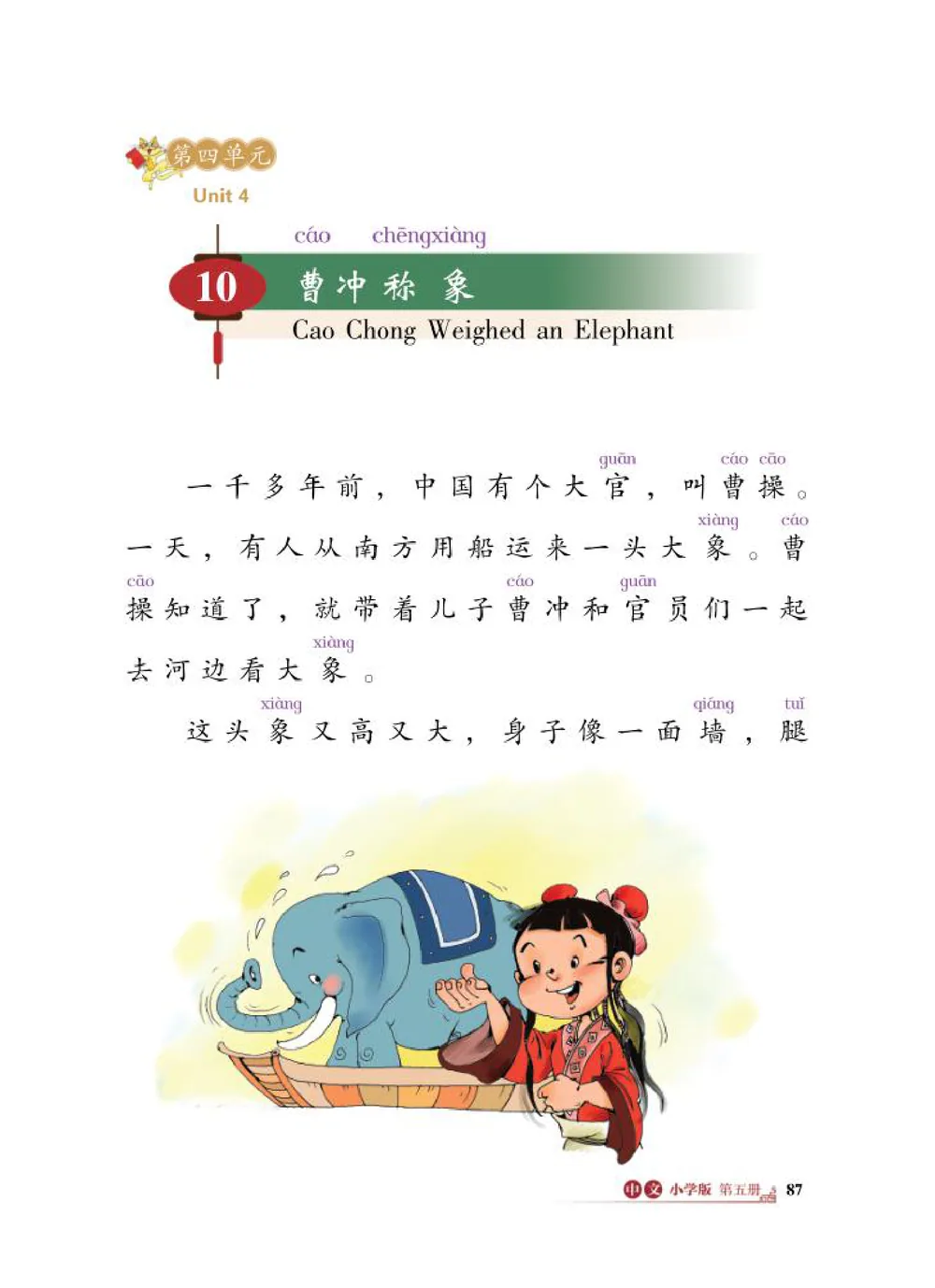
yī一qiān千duō多nián年qián前,zhōng中guó国yǒu有gè个dà大guān官,jiào叫cáo曹cāo操
More than a thousand years ago there was a great official in China called Cao Cao
yī一tiān天,yǒu有rén人cóng从nán南fāng方yòng用chuán船yùn运lái来yī一tóu头dà大xiàng象。cáo曹
One day someone brought an elephant by boat from the south. Cao
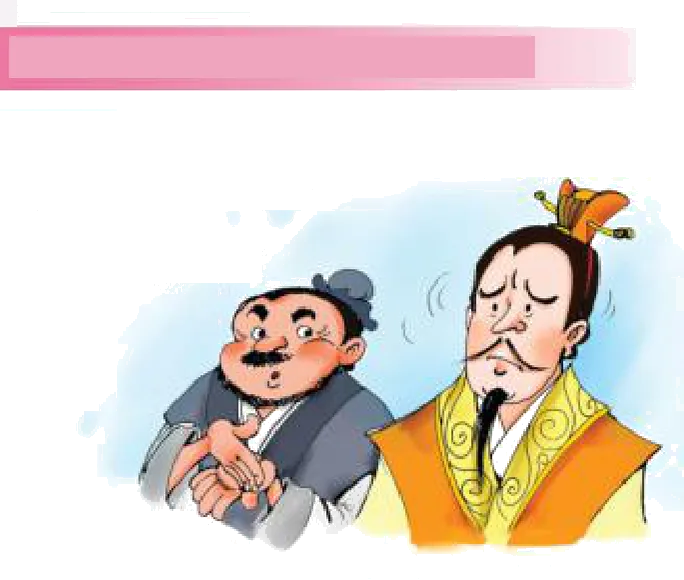
cāo操zhī知dào道le了,jiù就dài带zhe着ér儿zi子cáo曹chōng冲hé和guān官yuán员men们yì一qǐ起
…Cao heard of it and took his son Cao Chong and his officials together
qù去hé河biān边kàn看dà大xiàng象kǒu口
…went to the river to see the elephant
zhè这tóu头xiàng象yòu又gāo高yòu又dà大,shēn身zi子xiàng像yí一miàn面qiáng墙,tuǐ腿
The elephant was tall and huge, its body like a wall and its legs
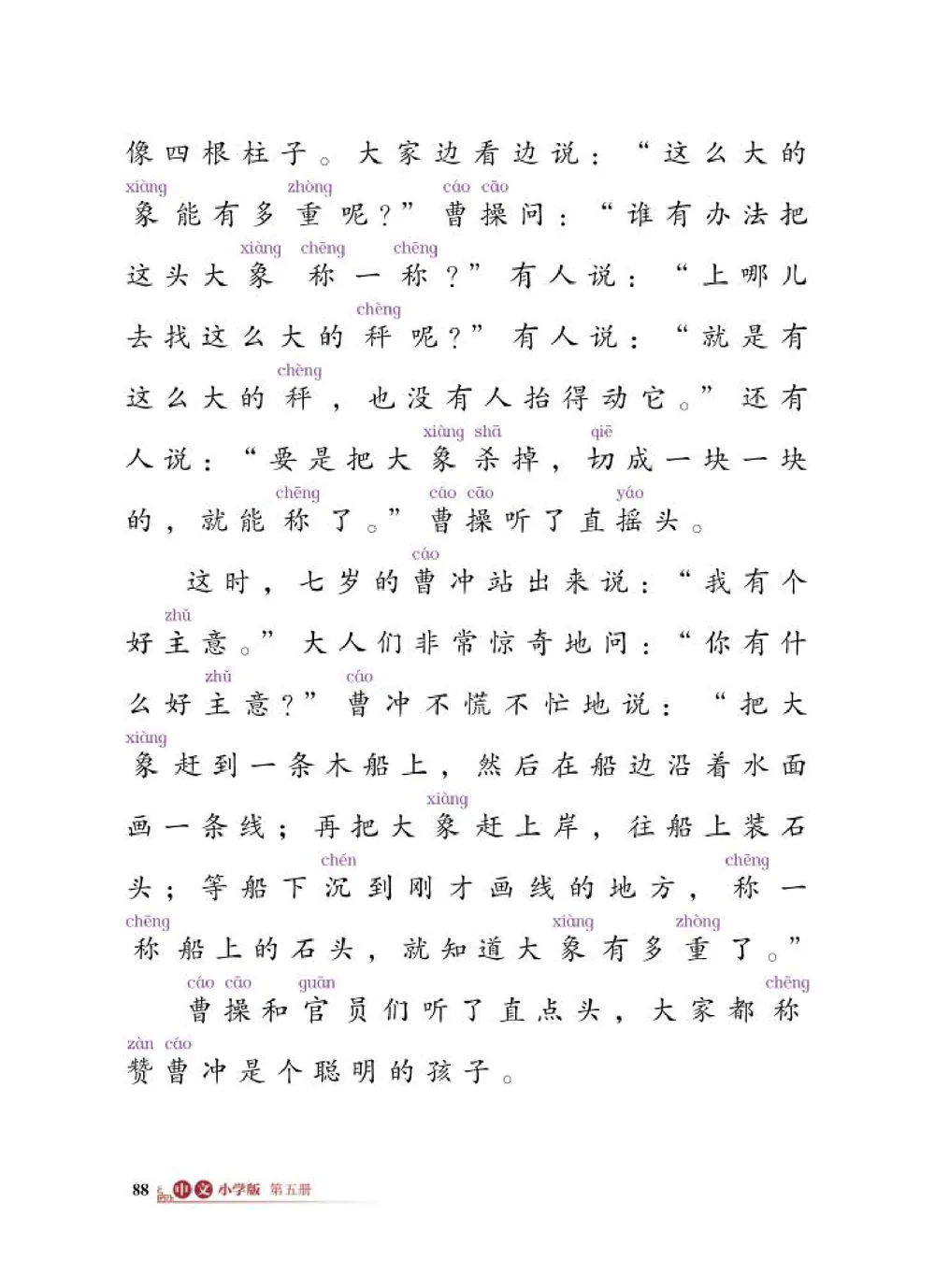
xiàng像sì四gēn根zhù柱zi子。dà大jiā家biān边kàn看biān边shuō说:“zhè这me么dà大de的
…like four pillars. Everyone looked and said, "How much can
xiàng象néng能yǒu有duō多zhòng重ne呢?”cáo曹cāo操wèn问:“shuí谁yǒu有bàn办fǎ法bǎ把
…elephant weigh?" Cao Cao asked, "Who has a way to
zhè这tóu头dà大xiàng象chēng称yī一chēng称?”yǒu有rén人shuō说:“shàng上nǎ哪ér儿
…weigh this elephant?" Someone said, "Where would you
qù去zhǎo找zhè这me么dà大de的chèng秤ne呢?”bù不
…find a scale that big?" No
yǒu有rén人shuō说:“jiù就shì是yǒu有
Someone said, "Even if there were
zhè这me么dà大de的chèng秤,yě也méi没yǒu有rén人tái抬dé得dòng动tā它。”hái还yǒu有
…a scale that big, and nobody could lift it." Another
rén人shuō说:“yào要shì是bǎ把dà大xiàng象shā杀diào掉,qiè切chéng成yī一kuài块yī一kuài块
…said, "If we killed the elephant and cut it into pieces
de的,jiù就néng能chēng称le了。”#
…and then it can be weighed."
cáo曹cāo操tīng听le了zhí直yáo摇tóu头。
Cao Cao shook his head at this.
zhè这shí时,qī七suì岁de的cáo曹chōng冲zhàn站chū出lái来shuō说:“wǒ我yǒu有gè个
Just then seven-year-old Cao Chong stepped forward and said, "I have an
hǎo好zhǔ主yì意。”dà大rén人men们fēi非cháng常jīng惊qí奇dì地wèn问:“nǐ你yǒu有shén什
…a good idea." The grown-ups asked in astonishment, "What
me么hǎo好zhǔ主yì意?”cáo曹chōng冲bù不huāng慌bù不máng忙dì地shuō说:“bǎ把dà大
…a good idea?" Cao Chong said calmly, "Take the
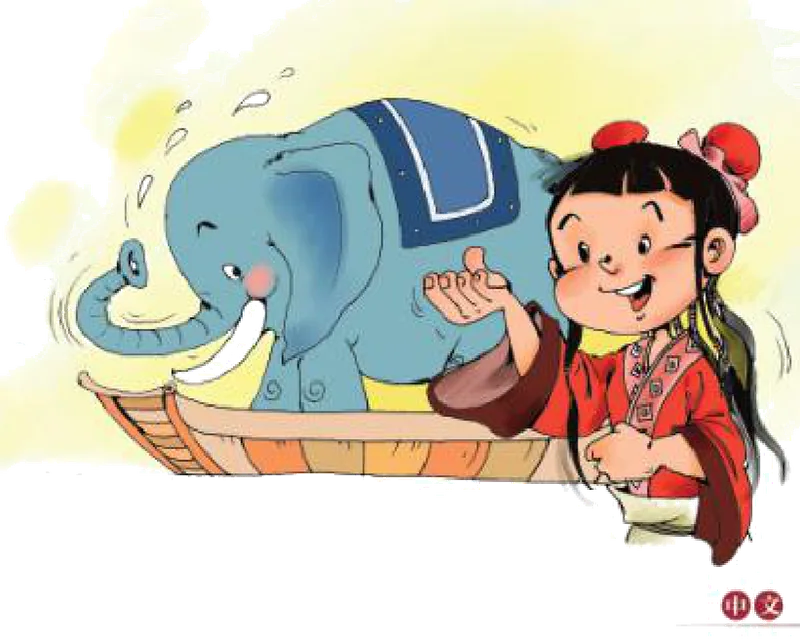
xiàng象gǎn赶dào到yī一tiáo条mù木chuán船shàng上,rán然hòu后zài在chuán船biān边yán沿zhe着shuǐ水miàn面
…lead the elephant onto a wooden boat, then along the waterline on its side
huà画yī一tiáo条xiàn线:zài再bǎ把dà大xiàng象gǎn赶shàng上àn岸,wǎng往chuán船shàng上zhuāng装shí石
…draw a line; then lead the elephant ashore and load stones into the boat
tóu头;děng等chuán船xià下chén沉dào到gāng刚cái才huà画xiàn线de的dì地fāng方,chēng称yī一
…stones; when the boat sinks to the line you drew, weigh
chēng称chuán船shàng上de的shí石tou头,jiù就zhī知dào道dà大xiàng象yǒu有duō多zhòng重le了。
…weigh the stones in the boat, and you know how heavy the elephant is.
cáo曹cāo操hé和guān官yuán员men们tīng听le了zhí直diǎn点tóu头,dà大jiā家dōu都chēng称
Cao Cao and the officials nodded, and everyone praised
zàn赞cáo曹chōng冲shì是gè个cōng聪míng明de的hái孩zi子。
…praised Cao Chong as a clever boy.
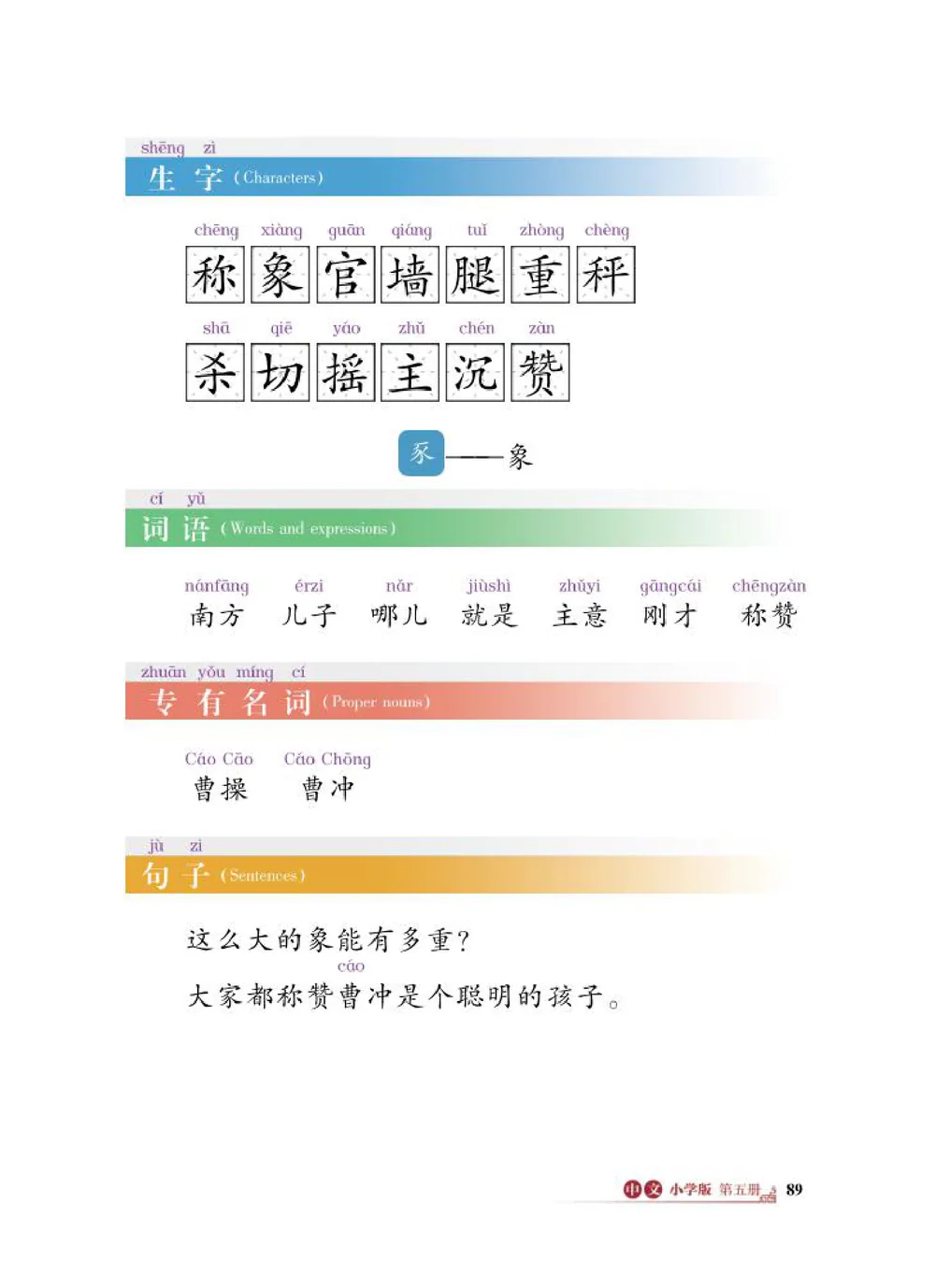
shēng生xué学(Characters)
Characters
chēng称xiàng象guān官qiáng墙tuǐ腿
zhòng重chèng秤
shā杀qiè切yáo摇zhǔ主huàn浣
diào调cí词yǔ语(Wards and expressions)
Words and expressions
chēng称zàn赞
to praise
nán南fāng方
the south
ér儿zi子
son
nǎ哪ér儿
where
zhǔ主yì意
an idea
gāng刚cái才
just now
zhuān专yǒu有míng名cí词
Proper nouns
cáo曹cāo操
Cao Cao
cáo曹chōng冲
Cao Chong
zhè这me么dà大de的xiàng象néng能yǒu有duō多zhòng重?
How much can an elephant this big weigh?
dà大jiā家dōu都chēng称zàn赞cáo曹chōng冲shì是gè个cōng聪míng明de的hái孩zi子。
Everyone praised Cao Chong as a clever boy.
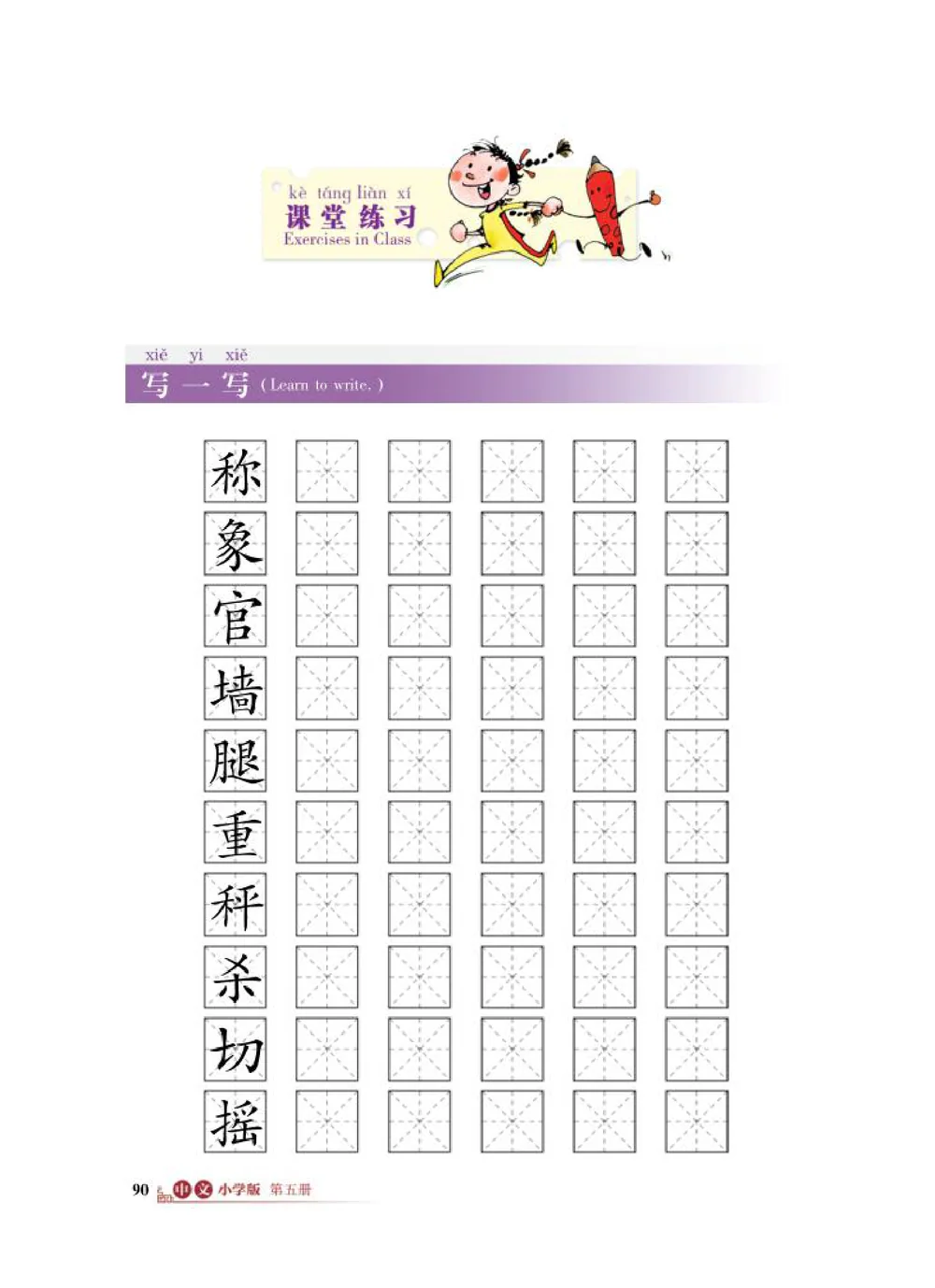
课堂练习 Exercises in Class
xiě写yī一xiě写(Leam to wite)
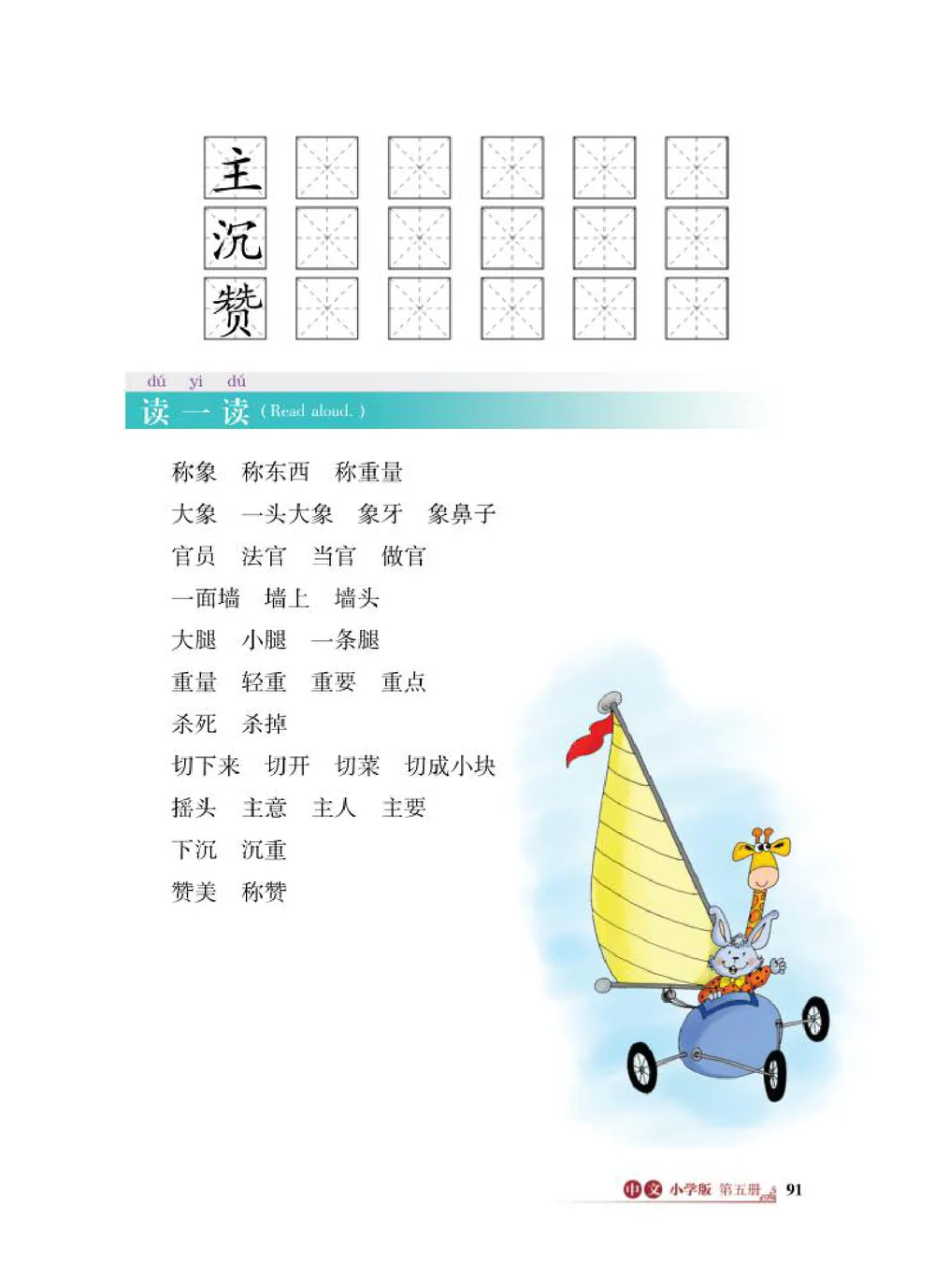
chēng称
xiàng象guān官qiáng墙
tuǐ腿zhòng重chèng秤shā杀qiè切yáo摇
zhǔ主chén沉zàn赞
dú读dú读
chēng称xiàng象chēng称dōng东xī西
chēng称zhòng重liàng量
dà大xiàng象yī一tóu头dà大xiàng象
xiàng象yá牙
xiàng象bí鼻zi子
guān官yuán员fǎ法guān官dāng当guān官zuò做guān官
yí一miàn面qiáng墙qiáng墙shàng上qiáng墙tóu头
dà大tuǐ腿
xiǎo小tuǐ腿
yī一tiáo条tuǐ腿
zhòng重liàng量
qīng轻zhòng重
zhòng重yào要
zhòng重diǎn点
shā杀sǐ死shā杀diào掉
qiè切xià下lái来qiè切kāi开
qiè切cài菜
qiè切chéng成xiǎo小kuài块
yáo摇tóu头zhǔ主yì意
zhǔ主rén人zhǔ主yào要
xià下chén沉chén沉zhòng重
zàn赞měi美
chēng称zàn赞
to praise
zhǔ主yì意
an idea
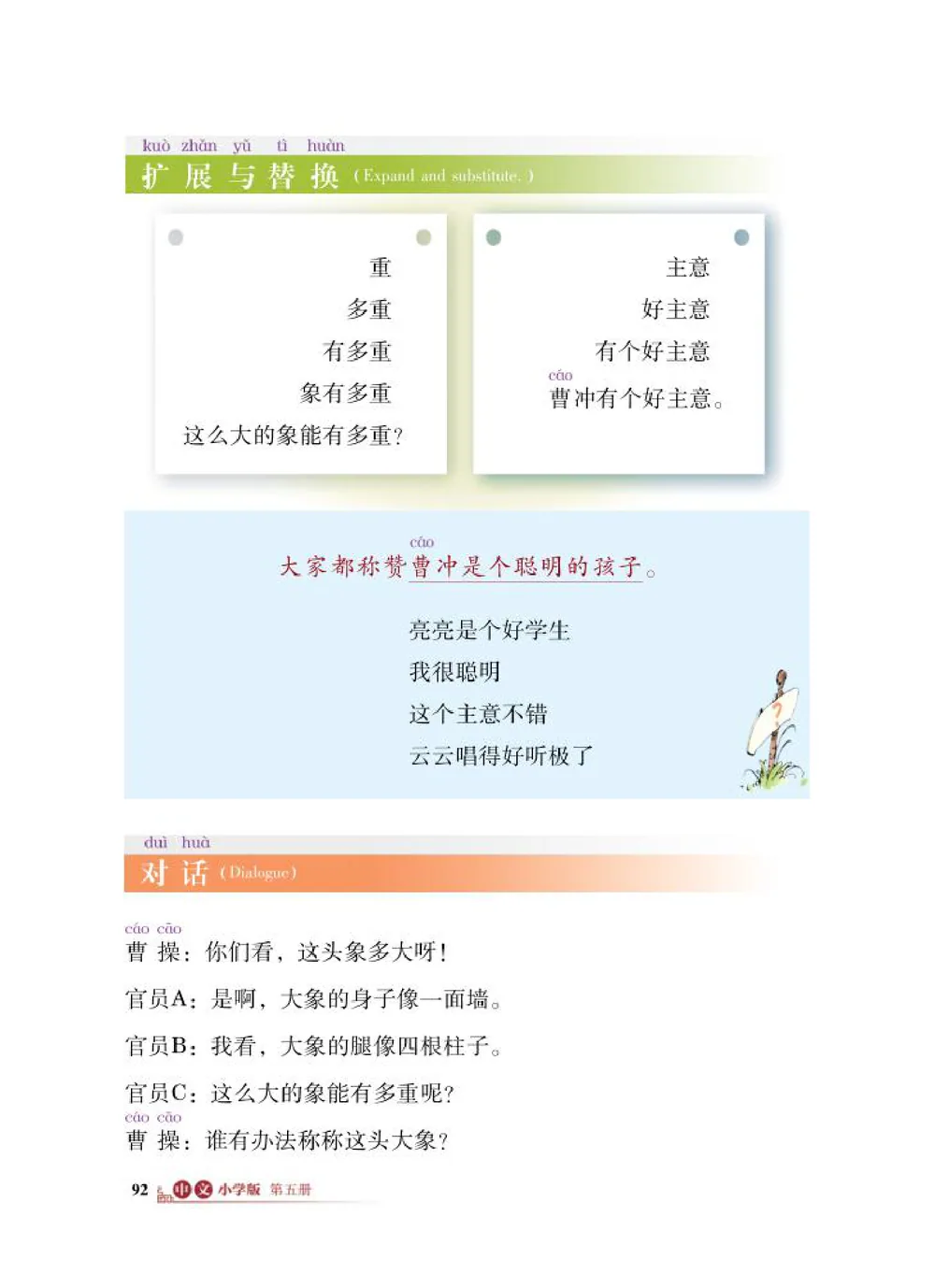
duō多zhòng重
hǎo好zhǔ主yì意
yǒu有duō多zhòng重
yǒu有gè个hǎo好zhǔ主yì意
xiàng象yǒu有duō多zhòng重
cáo曹chōng冲yǒu有gè个hǎo好zhǔ主yì意。
zhè这me么dà大de的xiàng象néng能yǒu有duō多zhòng重?
How much can an elephant this big weigh?
dà大jiā家dōu都chēng称zàn赞cáo曹chōng冲shì是gè个cōng聪míng明de的hái孩zi子
liàng亮liàng亮shì是gè个hào好xué学shēng生
wǒ我hěn很cōng聪míng明
zhè这ge个zhǔ主yì意bù不cuò错
yún云yún云chàng唱dé得hǎo好tīng听jí极le了
duì对huà话
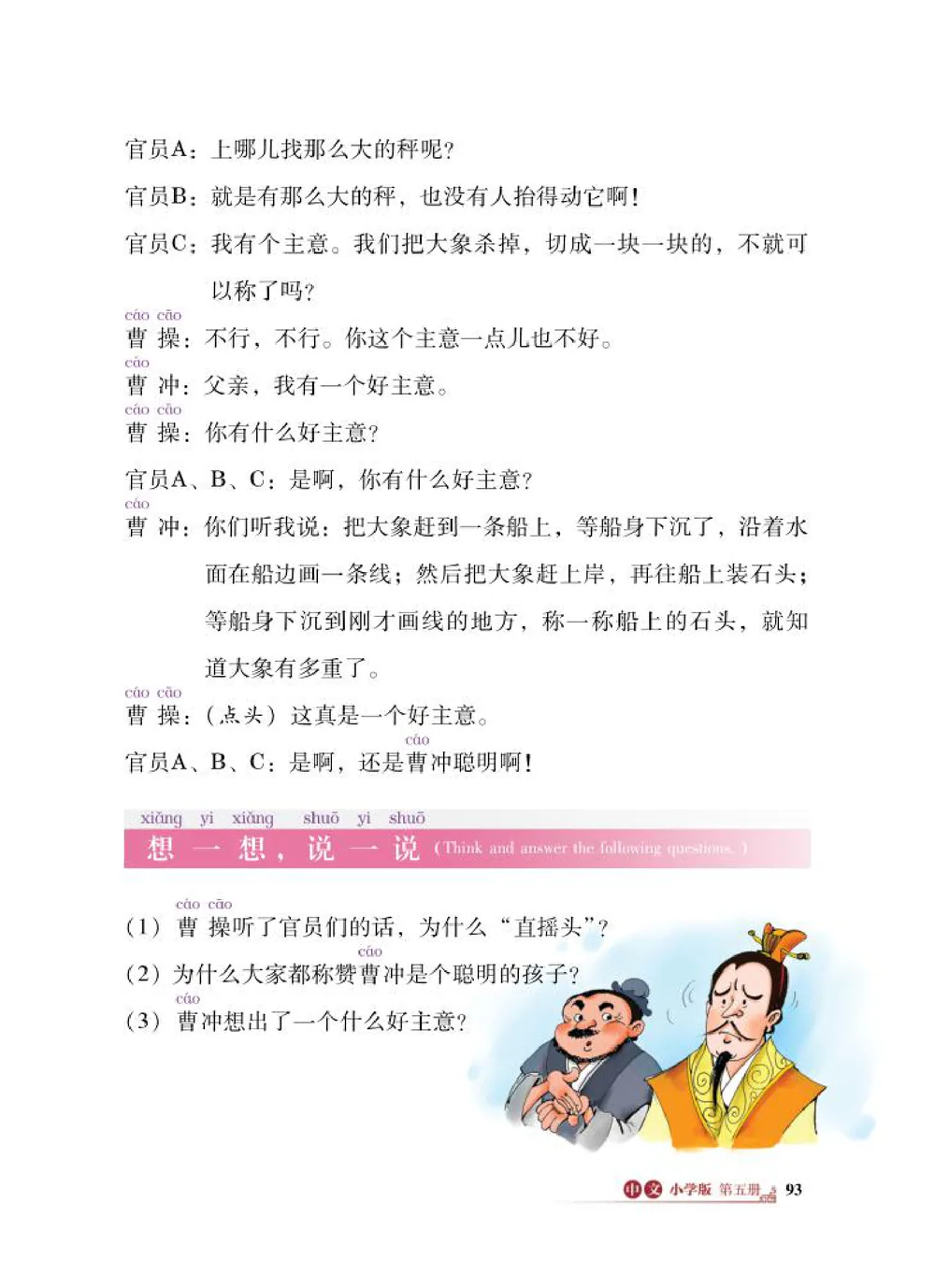
cáo曹cāo操:nǐ你men们kàn看,zhè这tóu头xiàng象duō多dà大ya呀!
guān官yuán员A:shì是a啊,dà大xiàng象de的shēn身zi子xiàng像yí一miàn面qiáng墙
guān官yuán员B:wǒ我kàn看,dà大xiàng象de的tuǐ腿xiàng像sì四gēn根zhù柱zi子。
guān官yuán员C:zhè这me么dà大de的xiàng象néng能yǒu有duō多zhòng重ne呢?
cáo曹cāo操:shuí谁yǒu有bàn办fǎ法chēng称chēng称zhè这tóu头dà大xiàng象?
guān官yuán员A:shàng上nǎ哪ér儿zhǎo找nà那me么dà大de的chèng秤ne呢?
guān官yuán员B:jiù就shì是yǒu有nà那me么dà大de的chèng秤,yě也méi没yǒu有rén人tái抬dé得dòng动tā它a啊!
guān官yuán员C:wǒ我yǒu有gè个zhǔ主yì意。wǒ我men们bǎ把dà大xiàng象shā杀diào掉,qiè切chéng成yī一kuài块yī一kuài块de的,bù不jiù就kě可
yǐ以chēng称le了ma吗?
cáo曹cāo操:bù不xíng行,bù不xíng行。nǐ你zhè这ge个zhǔ主yì意yì一diǎn点ér儿yě也bù不hǎo好。
cáo曹chōng冲:fù父qīn亲,wǒ我yǒu有yí一gè个hǎo好zhǔ主yì意。
cáo曹cāo操:nǐ你yǒu有shén什me么hǎo好zhǔ主yì意?
guān官yuán员Ashì、Ba、C:nǐ是yǒu啊,shén你me有hǎo什zhǔ么yì好主意?
cáo曹chōng冲:nǐ你men们tīng听wǒ我shuō说:bǎ把tiān天xiàng象gǎn赶dào到yī一tiáo条chuán船shàng上,děng等chuán船shēn身xià下chén沉le了,yán沿zhe着shuǐ水
miàn面zài在chuán船biān边huà画yī一tiáo条xiàn线:rán然hòu后bǎ把dà大xiàng象gǎn赶shàng上àn岸,zài再wǎng往chuán船shàng上zhuāng装shí石tou头:
děng等chuán船shēn身xià下chén沉dào到gāng刚cái才huà画xiàn线de的dì地fāng方,chēng称yī一chēng称chuán船shàng上de的shí石tou头,jiù就zhī知
dào道dà大xiàng象yǒu有duō多zhòng重le了。
cáo曹cāo操:(diǎn点tóu头)zhè这zhēn真shì是èr二gè个hǎo好zhǔ主yì意。
guān官yuán员Ashì、Ba、C:hái是shì啊,cáo还chōng是cōng曹míng冲a聪明啊!
xiǎng想yī一xiǎng想,shuō说yī一shuō说
(1)cáo曹cāo操tīng听le了guān官yuán员men们de的huà话,wèi为shén什me么“zhí直yáo摇tóu头”?
(2)wèi为shén什me么dà大jiā家dōu都chēng称zàn赞cáo曹chōng冲shì是gè个cōng聪míng明de的hái孩zi子?
(3)cáo曹chōng冲xiǎng想chū出le了yí一gè个shén什me么hǎo好zhǔ主yì意?
阅读 Reading
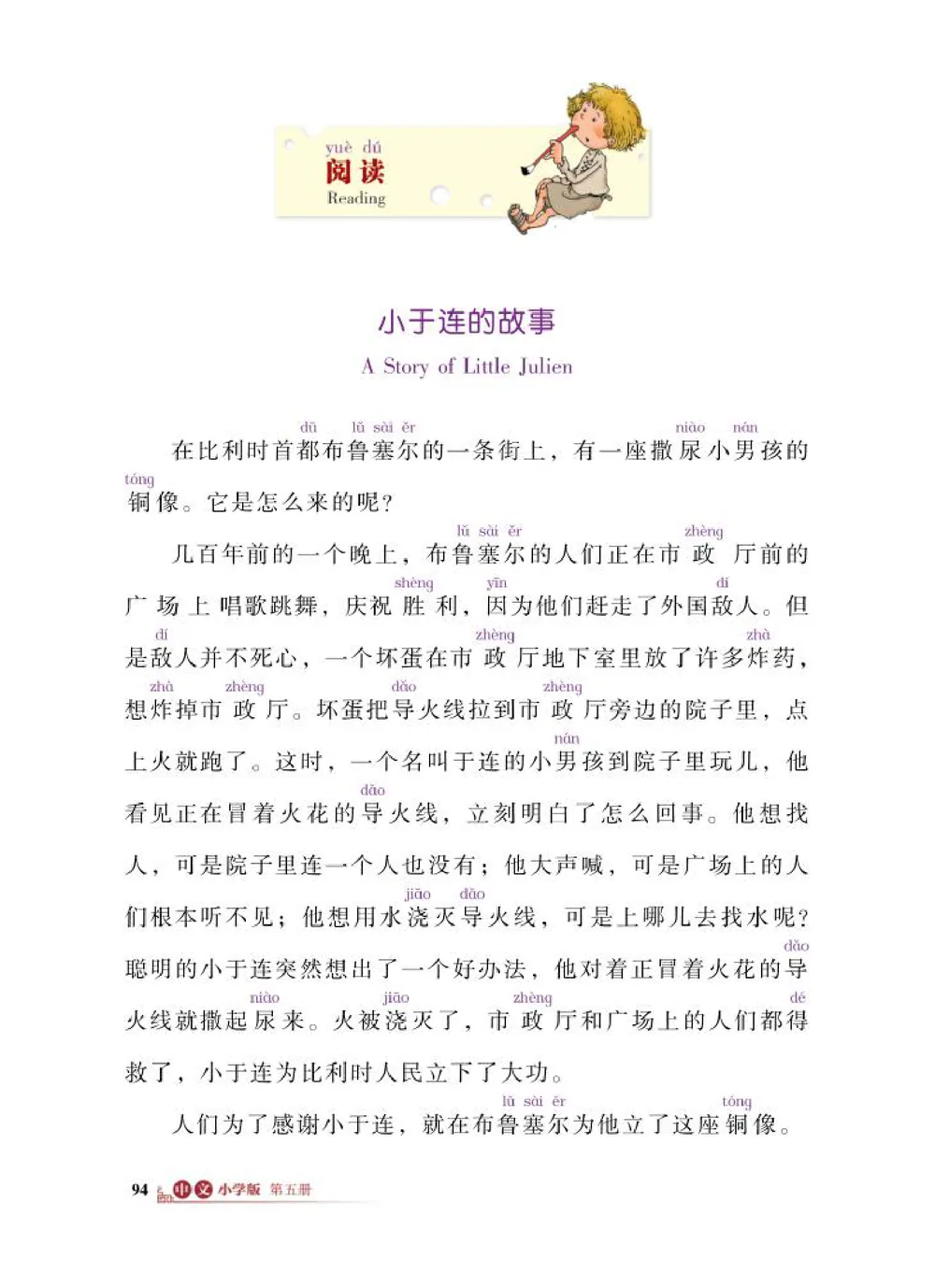
xiǎo小yú于lián连de的gù故shì事
The story of little Julien
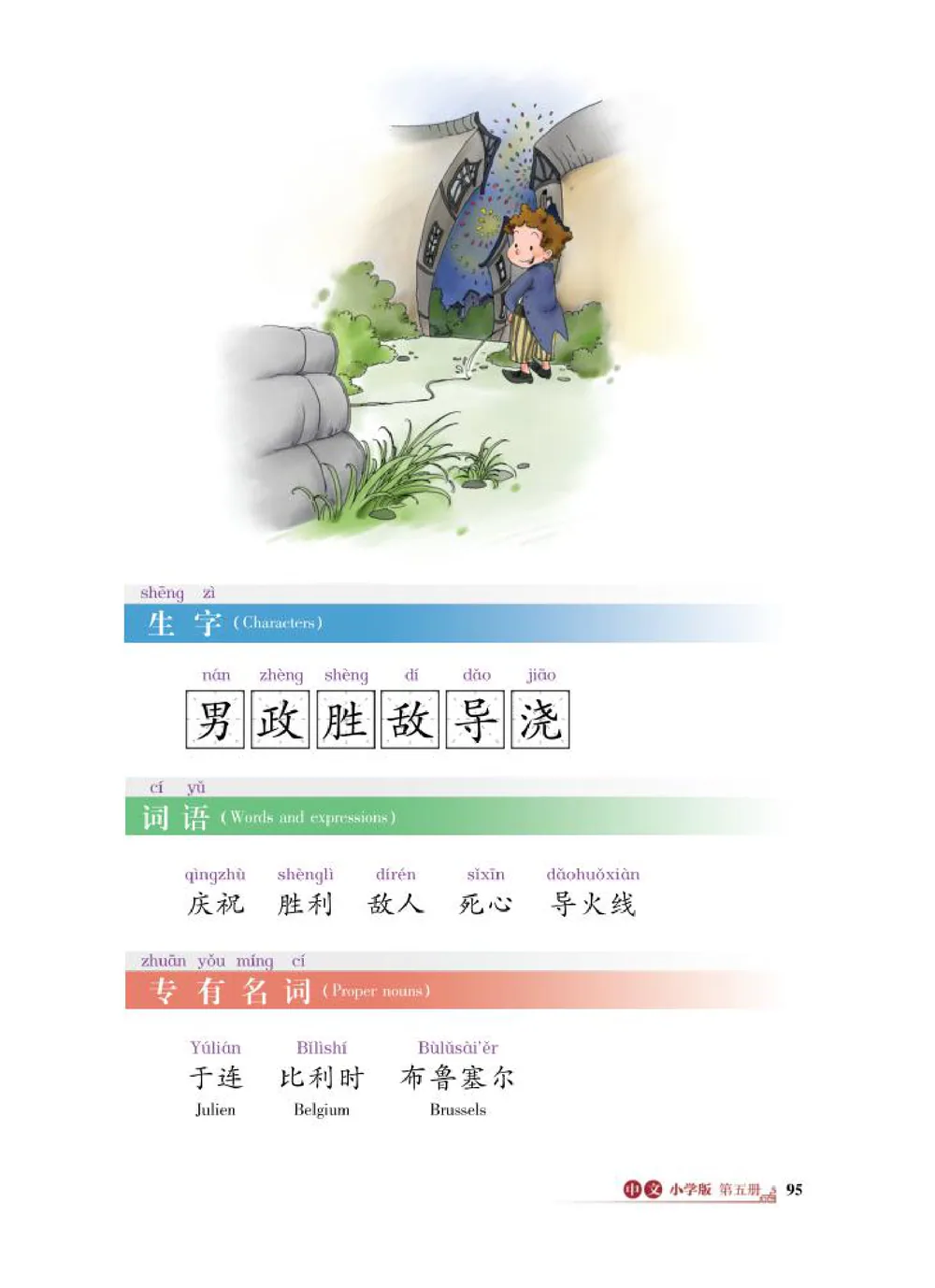
zài在bǐ比lì利shí时shǒu首dū都bù布lǔ鲁sài塞ěr尔de的yī一tiáo条jiē街shàng上yǒu有yī一zuò座sā撒niào尿xiǎo小nán男hái孩de的
In a street in Brussels, the capital of Belgium, stands a statue of a little boy making water
tóng铜xiàng像。tā它shì是zěn怎me么lái来de的ne呢?
…a bronze statue. How did it come to be there?
jǐ几bǎi百nián年qián前de的yí一gè个wǎn晚shàng上,bù布lǔ鲁sài塞ěr尔de的rén人men们zhèng正zài在shì市zhèng政tīng厅qián前de的
One evening hundreds of years ago the people of Brussels were in front of the town hall
guǎng广chǎng场shàng上chàng唱gē歌tiào跳wǔ舞,qìng庆zhù祝shèng胜lì利,yīn因wèi为tā他men们gǎn赶zǒu走le了wài外guó国dí敌rén人。dàn但
…singing and dancing in the square to celebrate their victory, for they had driven out the foreign enemy. But
shì是dí敌rén人bìng并bù不sǐ死xīn心,yí一gè个huài坏dàn蛋zài在shì市zhèng政tīng厅dì地xià下shì室lǐ里fàng放le了xǔ许duō多zhà炸yào药,
…but the enemy had not given up: a villain had put a great deal of gunpowder in the town hall cellar,
xiǎng想zhà炸diào掉shì市zhèng政tīng厅。huài坏dàn蛋bǎ把dǎo导huǒ火xiàn线lā拉dào到shì市zhèng政tīng厅páng旁biān边de的yuàn院zi子lǐ里,diǎn点
…meant to blow up the town hall. The villain ran the fuse into the yard beside it and lit
shàng上huǒ火jiù就pǎo跑le了。zhè这shí时,yí一gè个míng名jiào叫yú于lián连de的xiǎo小nán男hái孩dào到yuàn院zi子lǐ里wán玩ér儿,tā他
…lit it and ran. Just then a little boy called Julien came into the yard to play, and he
kàn看jiàn见zhèng正zài在mào冒zhe着huǒ火huā花de的dǎo导huǒ火xiàn线,lì立kè刻míng明bái白le了zěn怎me么huí回shì事。tā他xiǎng想zhǎo找
…saw the sputtering fuse and understood at once. He looked for
rén人,kě可shì是yuàn院zi子lǐ里lián连yí一gè个rén人yě也méi没yǒu有:tā他dà大shēng声hǎn喊,kě可shì是guǎng广chǎng场shàng上de的rén人
…someone, but there was not a soul in the yard; he shouted, but the people in the square
men们gēn根běn本tīng听bú不jiàn见:tā他xiǎng想yòng用shuǐ水jiāo浇miè灭dǎo导huǒ火xiàn线,kě可shì是shàng上nǎ哪ér儿qù去zhǎo找shuǐ水ne呢?
…could not hear him at all; he wanted to put the fuse out with water, but where was water to be found?
cōng聪míng明de的xiǎo小yú于lián连tū突rán然xiǎng想chū出le了yí一gè个hǎo好bàn办fǎ法,tā他duì对zhe着zhèng正mào冒zhe着huǒ火huā花de的dǎo导
Clever little Julien suddenly hit on a good idea: he turned to the sputtering
huǒ火xiàn线jiù就sā撒qǐ起niào尿lái来。huǒ火bèi被jiāo浇miè灭le了,shì市zhèng政tīng厅hé和guǎng广chǎng场shàng上de的rén人men们dōu都dé得
…fuse and made water on it. The fire went out, and the town hall and the people in the square were
jiù救le了,xiǎo小yú于lián连wèi为bǐ比lì利shí时rén人mín民lì立xià下le了dà大gōng功。
…was saved, and little Julien did the people of Belgium a great service.
rén人men们wèi为le了gǎn感xiè谢xiǎo小yú于lián连,jiù就zài在bù布lǔ鲁sài塞ěr尔wèi为tā他lì立le了zhè这zuò座tóng铜xiàng像
To thank little Julien, the people of Brussels put up this bronze statue of him
shēng生(Charaxten-)
Characters
zhèng政shèng胜
词语 Words
qìng庆zhù祝
to celebrate
shèng胜lì利
victory
dí敌rén人
enemy
sǐ死xīn心
to give up hope
dǎo导huǒ火xiàn线
fuse; the spark that set it off
zhuān专yǒu有míng名cí词
Proper nouns
yú于lián连
Julien (a name)
bù布lǔ鲁sài塞ěr尔
Brussels
bǐ比lì利shí时
Belgium
课本的生字表没能从扫描件上读出来,下面是这一课第一次出现的字。 The book's own 生字 list could not be read for this lesson; these are the characters it introduces.
测验 Quiz — 23 questions
做完这些题就算学完这一课。 Finish these to complete the lesson.
-
官 Choose the pinyin
-
叫 Choose the pinyin
-
曹 Choose the pinyin
-
操 Choose the pinyin
-
南 Choose the pinyin
-
方 Choose the pinyin
-
yùn Choose the character
-
xiàng Choose the character
-
zhī Choose the character
-
dài Choose the character
-
chōng Choose the character
-
yuán Choose the character
-
官(guān) What does it mean?
-
叫(jiào) What does it mean?
-
曹(cáo) What does it mean?
-
操(cāo) What does it mean?
-
南(nán) What does it mean?
-
方(fāng) What does it mean?
-
一千多年前,中国有个大官,叫_操 Which character belongs in the blank?
-
一天,有人从南方用船_来一头大象。曹 Which character belongs in the blank?
-
操知道了,就带着儿子_冲和官员们一起 Which character belongs in the blank?
-
去河边看大_口 Which character belongs in the blank?
-
这头象又高又大,身子_一面墙,腿 Which character belongs in the blank?
-
把汉字和拼音连起来 Match each character to its pinyin
-
Listen and choose the character you hear
-
Listen and choose the character you hear
-
Listen and choose the character you hear
-
Listen and choose the character you hear
-
生字卡片 Flashcards for this lesson's characters
官 guān
government official; governmental; official叫 jiào
to shout; to call; to order曹 cáo
class or grade; generation; plaintiff and defendant (old)操 cāo
old variant of 操[cao1]南 nán
south方 fāng
square; power or involution (math.); upright运 yùn
to move; to transport; to use象 xiàng
elephant; ; shape知 zhī
to know; to be aware带 dài
band; belt; girdle冲 chōng
(of water) to dash against; to mix with water; to infuse员 yuán
(bound form) person engaged in a certain field of activity; (bound form) member; classifier for military generals身 shēn
body; life; oneself像 xiàng
to resemble; to be like; to look as if墙 qiáng
variant of 牆|墙[qiang2]腿 tuǐ
leg四 sì
four; 4根 gēn
root; basis; classifier for long slender objects, e.g. cigarettes, guitar strings柱 zhù
pillar问 wèn
to ask; to inquire谁 shuí
who; also pr. [shui2]法 fǎ
variant of 法[fa3]称 chēng
to weigh; to state; to name哪 nǎ
how; which秤 chèng
steelyard balance; Roman balance也 yě
also; too; as well; (not ...) either; (used after a verbal or nominal expression X to indicate that X is an extreme or unexpected case) even (X); (literary) particle having functions similar to 啊[a5]抬 tái
to lift; to raise; (of two or more persons) to carry动 dòng
(of sth) to move; to set in movement; to displace它 tā
it切 qiè
definitely; absolutely (not); (scoffing or dismissive interjection) Yeah, right.; Tut!; to grind块 kuài
lump; chunk; piece; classifier for pieces of cloth, cake, soap etc; (coll.) classifier for money and currency units直 zhí
straight; to straighten; fair and reasonable摇 yáo
to shake; to rock; to row七 qī
seven; 7岁 suì
variant of 歲|岁[sui4], year; years old出 chū
to go out; to come out; to arise; to occur; to produce; to yield
课本原页,点图看大图。 The printed pages this lesson comes from — tap to enlarge.