Lesson 14 / 28
普林斯顿的老人
The Old Man of Princeton



课文 Text
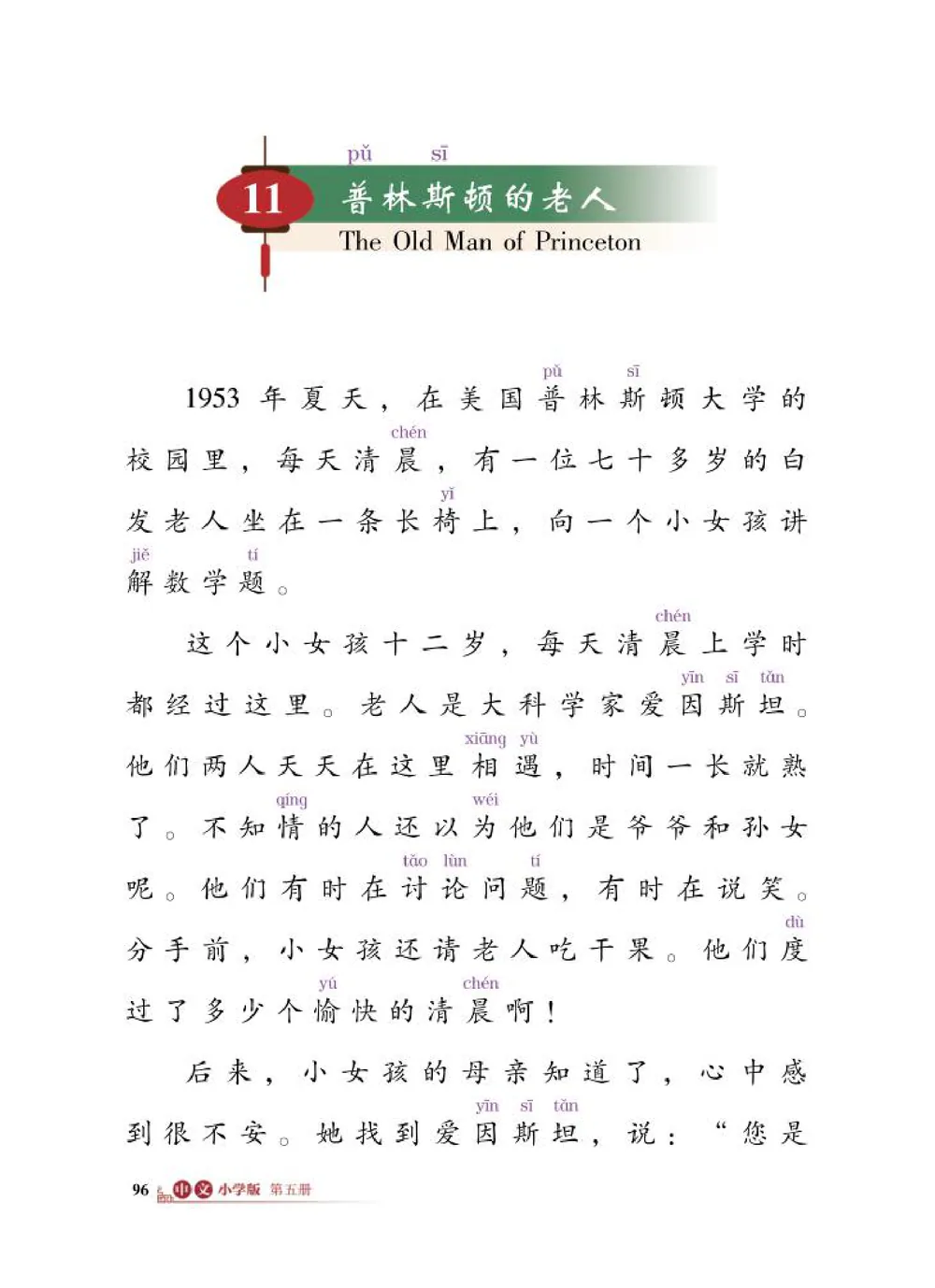
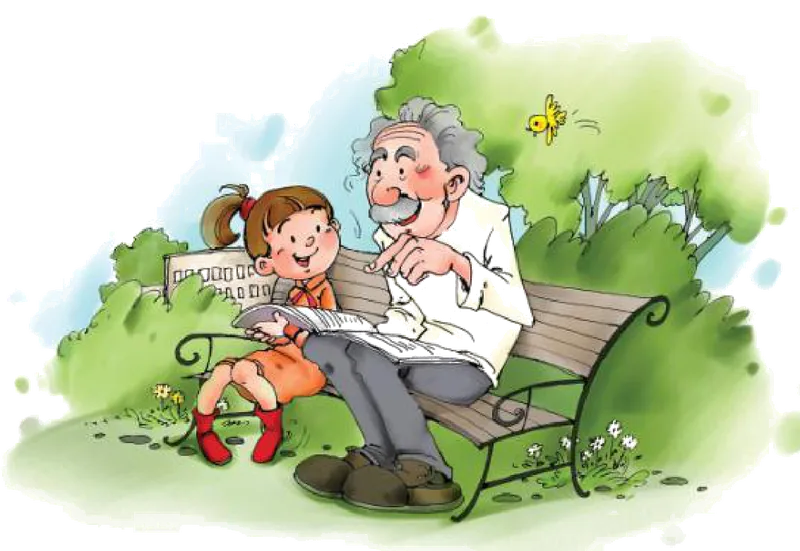
1953nián年xià夏tiān天,zài在měi美guó国pǔ普lín林sī斯dùn顿dà大xué学de的
In the summer of 1953, at Princeton University in America
xiào校yuán园lǐ里,měi每tiān天qīng清chén晨,yǒu有yī一wèi位qī七shí十duō多suì岁de的bái白
…campus, every morning, a white-haired man of over seventy
fā发lǎo老rén人zuò坐zài在yī一tiáo条zhǎng长yǐ椅shàng上,xiàng向yí一gè个xiǎo小nǚ女hái孩jiǎng讲
…haired old man sat on a bench explaining to a little girl
xiè解shù数xué学tí题。
…to solve maths problems.
zhè这ge个xiǎo小nǚ女hái孩shí十èr二suì岁,měi每tiān天qīng清chén晨shàng上xué学shí时
The little girl was twelve, and every morning on her way to school
dōu都jīng经guò过zhè这lǐ里。lǎo老rén人shì是dà大kē科xué学jiā家ài爱yīn因sī斯tǎn坦kǒu口
…passed this way. The old man was the great scientist Einstein.
tā他men们liǎng两rén人tiān天tiān天zài在zhè这lǐ里xiāng相yù遇,shí时jiān间yī一zhǎng长jiù就shú熟
The two met here every day, and in time became
le了。bù不zhī知qíng情de的rén人hái还yǐ以wéi为tā他men们shì是yé爷yé爷hé和sūn孙nǚ女
…Anyone who did not know would have thought them grandfather and granddaughter
ne呢。tā他men们yǒu有shí时zài在tǎo讨lùn论wèn问tí题,yǒu有shí时zài在shuō说xiào笑。
Sometimes they discussed problems, sometimes they laughed and joked.
fēn分shǒu手qián前,xiǎo小nǚ女hái孩hái还qǐng请lǎo老rén人chī吃gān干guǒ果。tā他men们dù度
Before parting the girl gave the old man some dried fruit. They spent
guò过le了duō多shǎo少gè个yú愉kuài快de的qīng清chén晨a啊!
…how many happy mornings we spent!
hòu后lái来,xiǎo小nǚ女hái孩de的mǔ母qīn亲zhī知dào道le了,xīn心zhōng中gǎn感
Later the girl's mother heard of it and felt
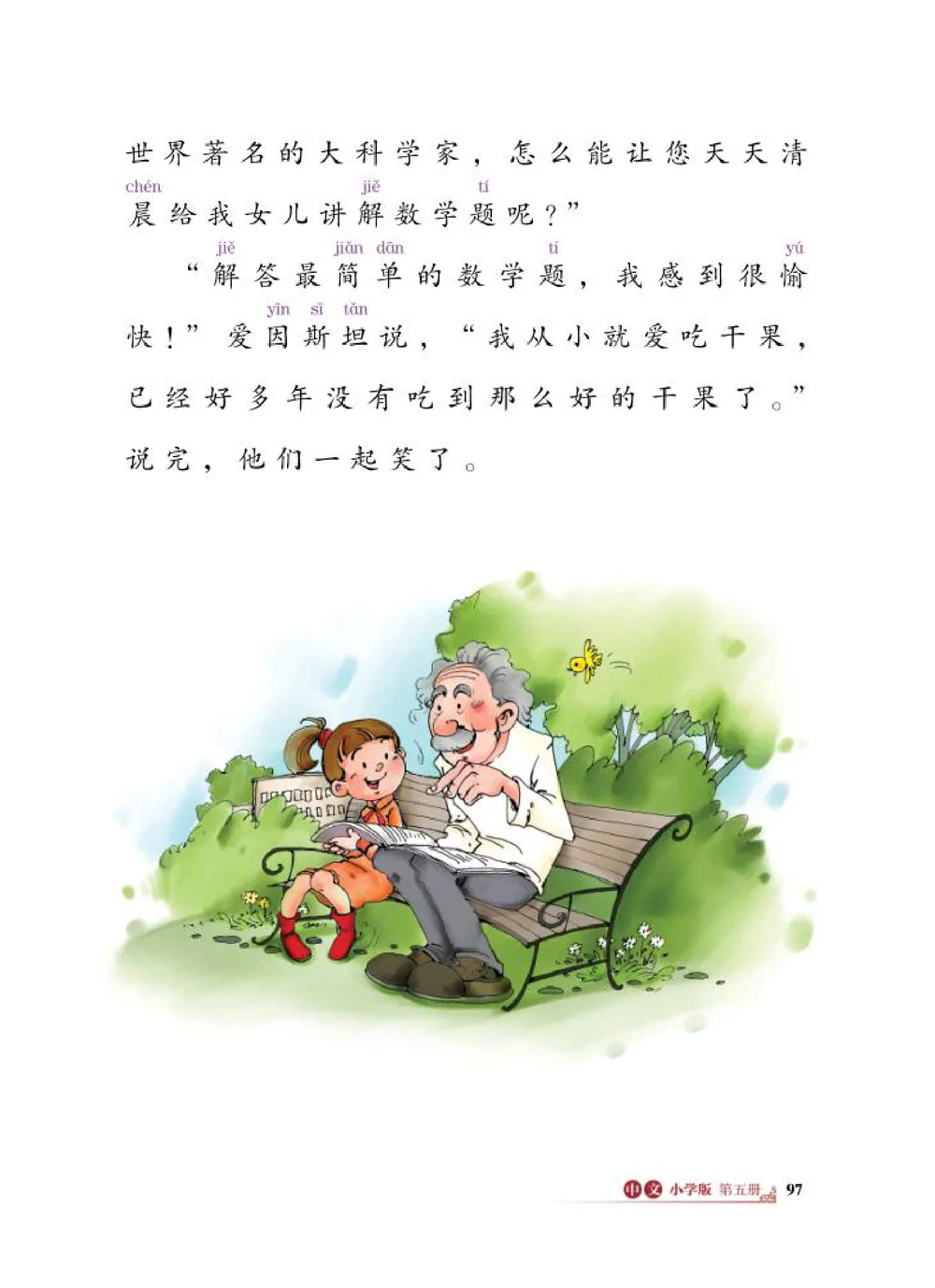
dào到hěn很bù不ān安tā她zhǎo找dào到ài爱yīn因sī斯tǎn坦,shuō说:“nín您shì是
…very uneasy. She went to Einstein and said, "You are
shì世jiè界zhù著míng名de的dà大kē科xué学jiā家,zěn怎me么néng能ràng让nín您tiān天tiān天qīng清
…a world-famous scientist — how can we have you every
chén晨gěi给wǒ我nǚ女ér儿jiǎng讲jiě解shù数xué学tí题ne呢?”
…morning explaining maths problems to my daughter?"
jiě解dá答zuì最jiǎn简dān单de的shù数xué学tí题,wǒ我gǎn感dào到hěn很yú愉
…solve the simplest maths problems, and I am very
kuài快!”ài爱yīn因sī斯tǎn坦shuō说,“wǒ我cóng从xiǎo小jiù就ài爱chī吃gān干guǒ果,
…pleasure!" said Einstein. "I have loved dried fruit since I was a boy,
yǐ已jīng经hǎo好duō多nián年méi没yǒu有chī吃dào到nà那me么hǎo好de的gān干guǒ果le了。
…had not tasted such good dried fruit for many years.
shuō说wán完,tā他men们yì一qǐ起xiào笑le了。
With that they both laughed.
shēng生xué学(Characters)
Characters
chén晨yǐ椅jiě解
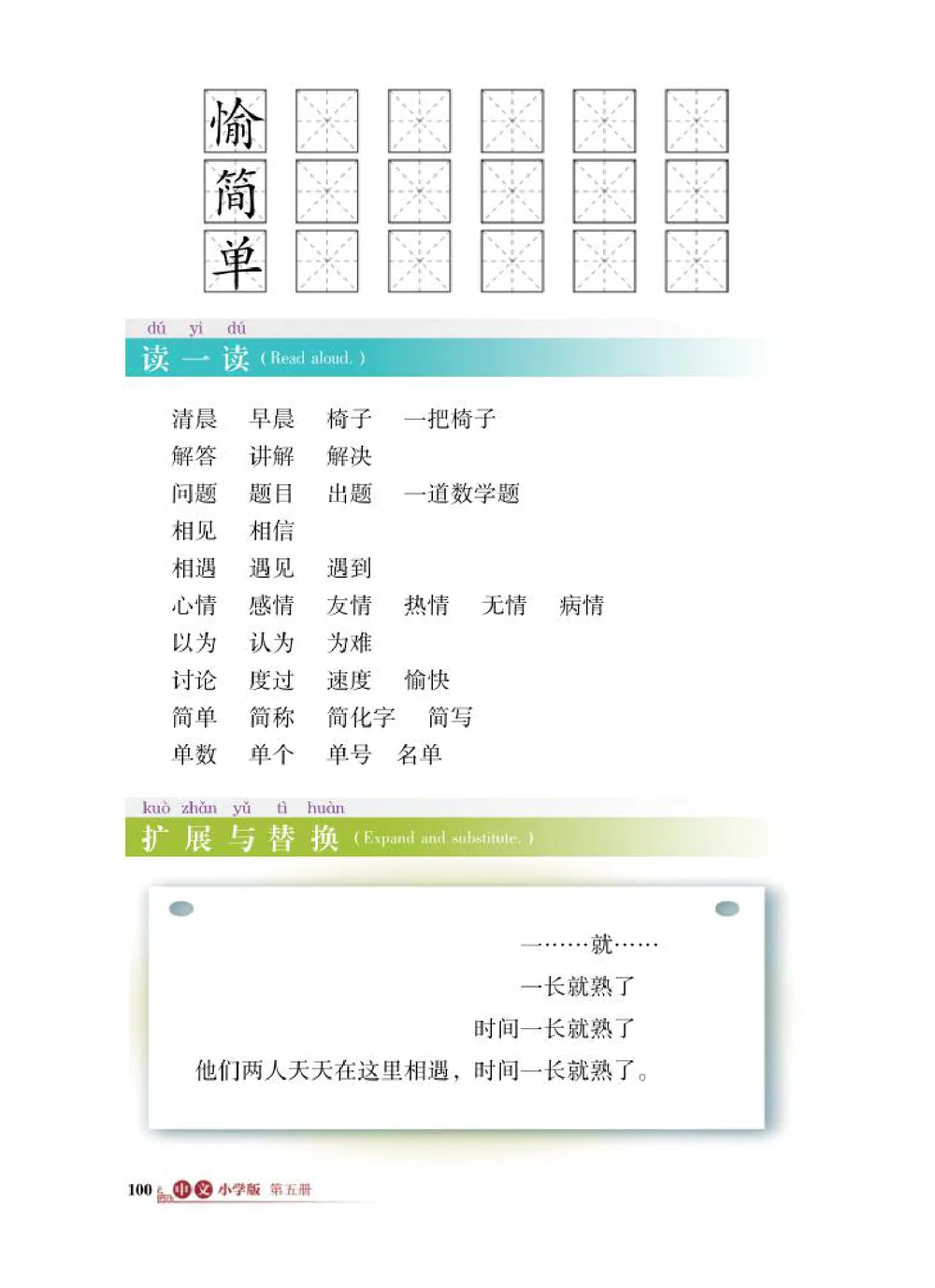
wèi为tǎo讨lùn论dù度yú愉jiǎn简dān单
yī一chén晨
diào调yǔ语(Wonds and expressions)
Words and expressions
dà大xué学
university
lǎo老rén人
an old person
shù数xué学
mathematics
jīng经guò过
to pass; after
shí时jiān间
time
yǐ以wéi为
to think (mistakenly)
tǎo讨lùn论
to discuss
wèn问tí题
question; problem
dù度guò过
to spend (time)
duō多shǎo少
how many; how much
yú愉kuài快
cheerful; pleasant
jiě解dá答
to answer; a solution
jiǎn简dān单
simple
zhuān专yǒu有míng名cí词
Proper nouns
pǔ普lín林sī斯dùn顿
Princeton
ài爱yīn因sī斯tǎn坦
Einstein
句子 Sentences
tā他men们liǎng两rén人tiān天tiān天zài在zhè这lǐ里xiāng相yù遇,shí时jiān间yī一zhǎng长jiù就shú熟le了
The two met here every day, and in time they became friends
xiǎo小nǚ女hái孩hái还qǐng请lǎo老rén人chī吃gān干guǒ果。
The little girl also gave the old man some dried fruit.
课堂练习 Exercises in Class
xiě写xiě写
chén晨yǐ椅jiě解tí题xiāng相yù遇qíng情wèi为lùn论dù度
jiǎn简dān单
simple
dú读dú读
qīng清chén晨
zǎo早chén晨
yǐ椅zi子
yī一bǎ把yǐ椅zi子
jiě解dá答
to answer; a solution
jiǎng讲jiě解
jiě解jué决
tí题mù目
chū出tí题
yī一dào道shù数xué学tí题
xiāng相jiàn见
xiāng相xìn信
xiāng相yù遇
yù遇jiàn见
yù遇dào到
xīn心qíng情
gǎn感qíng情
yǒu友qíng情
rè热qíng情
wú无qíng情
bìng病qíng情
yǐ以wéi为
to think (mistakenly)
rèn认wéi为
wéi为nán难
tǎo讨lùn论
to discuss
dù度guò过
to spend (time)
sù速dù度
yú愉kuài快
cheerful; pleasant
jiǎn简dān单
simple
jiǎn简chēng称
jiǎn简huà化zì字
jiǎn简xiě写
dān单hào号míng名dān单
dān单shù数
dān单gè个
kuò扩zhǎn展mǎ马tì替huàn换xpad adaubsttue
yī一zhǎng长jiù就shú熟le了
shí时jiān间yī一zhǎng长jiù就shú熟le了
tā他men们liǎng两rén人tiān天tiān天zài在zhè这lǐ里xiāng相yù遇,shí时jiān间yī一zhǎng长jiù就shú熟le了
The two met here every day, and in time they became friends
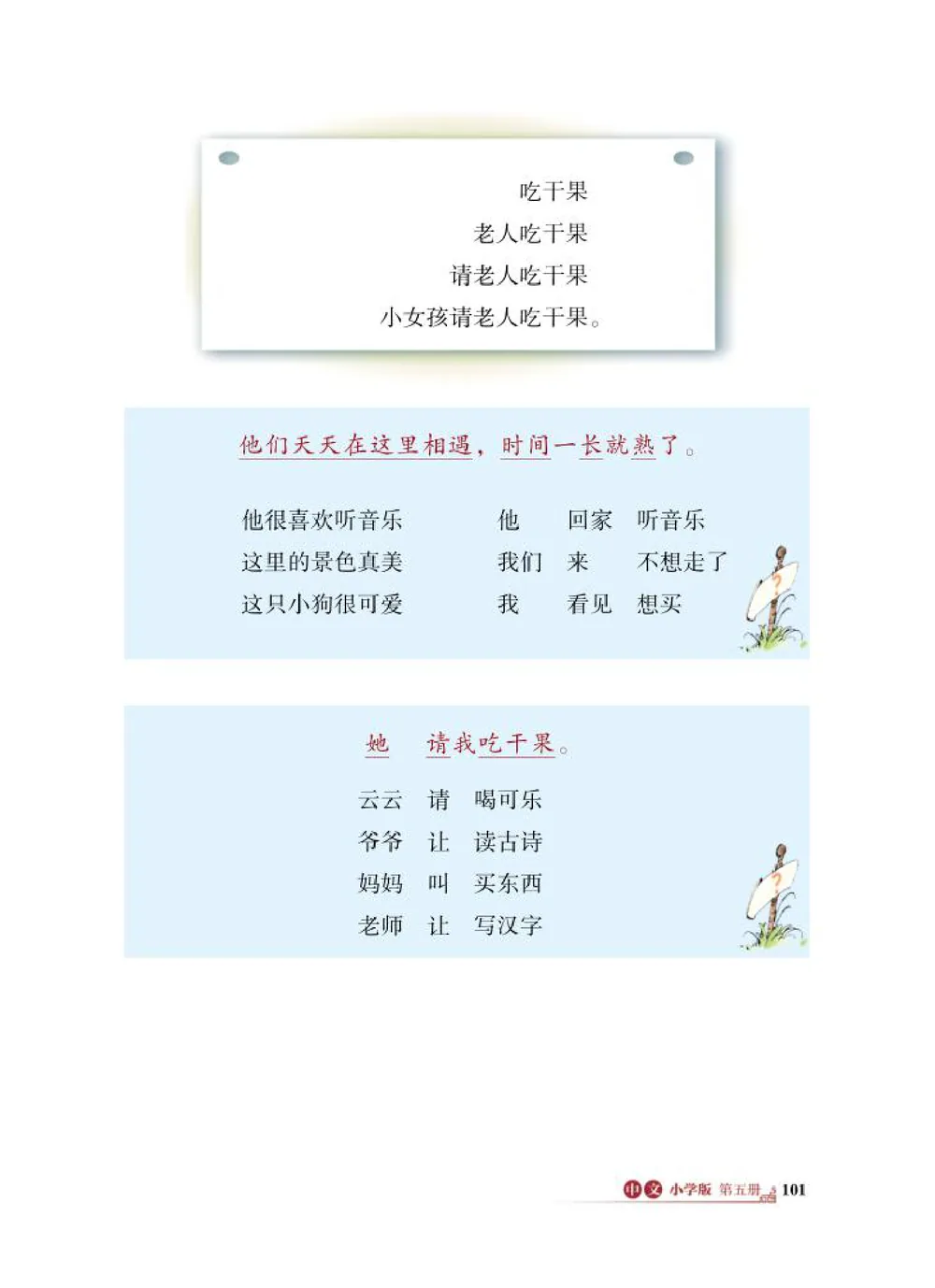
chī吃gān干guǒ果
lǎo老rén人chī吃gān干guǒ果
qǐng请lǎo老rén人chī吃gān干guǒ果
xiǎo小nǚ女hái孩qǐng请lǎo老rén人chī吃gān干guǒ果
tā他men们tiān天tiān天zài在zhè这lǐ里xiāng相yù遇,shí时jiān间yī一zhǎng长jiù就shú熟le了
tā他hěn很xǐ喜huān欢tīng听yīn音yuè乐
huí回jiā家
tīng听yīn音yuè乐
zhè这lǐ里de的jǐng景sè色zhēn真měi美
wǒ我men们lái来
bù不xiǎng想zǒu走le了
zhè这zhǐ只xiǎo小gǒu狗hěn很kě可ài爱
kàn看jiàn见
xiǎng想mǎi买
qǐng请wǒ我chī吃gān干guǒ果
yún云yún云
qǐng请hē喝kě可lè乐
yé爷yé爷
dú读gǔ古shī诗
mā妈mā妈
mǎi买dōng东xī西
lǎo老shī师
xiě写hàn汉zì字
duì对huà话(Diadlogue)
fāng方fāng方:yún云yún云,qǐng请jìn进!zhè这shì是wǒ我yé爷yé爷,tā他gāng刚cóng从guǎng广zhōu州lái来。
yún云yún云:yé爷yé爷,nín您hǎo好!
yé爷yé爷:nǐ你hǎo好!qǐng请zuò坐!
yún云yún云:fāng方fāng方,jīn今tiān天de的shù数xué学tí题zuò做wán完le了ma吗?
fāng方fāng方:hái还méi没yǒu有。nǐ你zuò做wán完le了méi没?
yún云yún云:nà那jǐ几dào道jiǎn简dān单de的shù数xué学tí题zuò做wán完le了,hái还yǒu有yī一dào道tí题bú不huì会zuò做,xiǎng想lái来wèn问
wèn问nǐ你。
fāng方fāng方:wǒ我yé爷yé爷yǐ以qián前shì是shù数xué学lǎo老shī师,hái还shì是qǐng请yé爷yé爷jiào教jiào教wǒ我men们ba吧
yé爷yé爷:méi没jiān间tí题。yún云yún云,shén什me么tí题bú不huì会zuò做?
yún云yún云:jiù就shì是zhè这dào道tí题。shàng上kè课de的shí时hòu候wǒ我méi没tīng听dǒng懂
fāng方fāng方:zhè这dào道tí题wǒ我yě也bù不tài太míng明bái白。yé爷yé爷,nín您jiào教jiào教wǒ我men们ba吧
yé爷yé爷:bié别zháo着jí急。ná拿chū出zhǐ纸hé和bǐ笔,wǒ我gěi给nǐ你men们jiǎng讲yī一jiǎng讲
xiǎng想yī一xiǎng想,shuō说yī一shuō说
(1)měi每tiān天qīng清chén晨,ài爱yīn因sī斯tǎn坦xiàng向xiǎo小nǚ女hái孩jiǎng讲jiě解shén什me么?
(2)ài爱yīn因sī斯tǎn坦hé和xiǎo小nǚ女hái孩yǒu有shí时zài在yì一qǐ起zuò做shén什me么?
(3)xiǎo小nǚ女hái孩de的mā妈mā妈wèi为shén什me么xīn心zhōng中gǎn感dào到bù不ān安?
(4)nǐ你xǐ喜huān欢wèn问lǎo老shī师wèn问tí题ma吗?wèn问guò过lǎo老shī师shén什me么wèn问tí题?
阅读 Reading
niú牛dùn顿qǐng请kè客
Newton gives a dinner
niú牛dùn顿shì是shì世jiè界wén闻míng名de的dà大kē科xué学jiā家。tā他chū出shēng生zài在yīng英guó国de的yí一gè个nóng农jiā家,
Newton was a world-famous scientist. He was born to a farming family in England,
cóng从xiǎo小jiù就xǐ喜huān欢sī思kǎo考,xué学xí习、gōng工zuò作dōu都hěn很zhuān专xīn心。
…liked to think from an early age, and was attentive in study and work.
yǒu有yī一cì次niú牛dùn顿zài在jiā家lǐ里qǐng请kè客。zuò做hǎo好fàn饭cài菜hòu后,kè客rén人hái还méi没dào到,
Once Newton gave a dinner at home. The food was ready but the guests had not come,
tā他jiù就qù去gōng工zuò作shì室zuò做shí实yàn验。kè客rén人men们lái来le了yǐ以hòu后,děng等le了hěn很jiǔ久,niú牛dùn顿hái还
…he went to his workshop to experiment. The guests arrived and waited a long time, but Newton still
méi没yǒu有cóng从gōng工zuò作shì室lǐ里chū出lái来。kè客rén人men们dōu都zhī知dào道tā他de的pí脾qì气:tā他gōng工zuò作qǐ起lái来
…had not come out of his workshop. The guests all knew his ways: once at work he
shì是huì会wàng忘jì记yī一qiè切de的,rú如guǒ果zhè这shí时qù去dǎ打rǎo扰tā他,tā他huì会hěn很bù不gāo高xìng兴。
…forgets everything, and if he is disturbed then he is very displeased.
“zěn怎me么bàn办ne呢?”kè客rén人men们shāng商liáng量le了yī一xià下,jué决dìng定biān边chī吃biān边děng等。děng等dào到
"What shall we do?" The guests talked it over and decided to eat while they waited. By the time
kè客rén人men们dōu都chī吃wán完le了,niú牛dùn顿hái还méi没yǒu有chū出lái来。kè客rén人men们yòu又děng等le了hěn很jiǔ久,niú牛
…the guests had finished, Newton had still not appeared. They waited a long time more, and New
dùn顿hái还shì是méi没yǒu有chū出lái来。méi没bàn办fǎ法,kè客rén人men们zhǐ只hǎo好qiāo悄qiāo悄dì地zǒu走le了。
…Newton still did not appear, so the guests quietly left.
niú牛dùn顿zài在gōng工zuò作shì室lǐ里tū突rán然xiǎng想qǐ起le了qǐng请kè客de的shì事,lián连máng忙pǎo跑chū出lái来,yī一
In his workshop Newton suddenly remembered the dinner and hurried out
kàn看zhuō桌shàng上de的fàn饭cài菜yǐ已jīng经méi没yǒu有le了,jiù就zì自yán言zì自yǔ语dì地shuō说:“wǒ我hái还yǐ以wéi为zì自
…saw the food on the table was gone and said to himself, "I thought I
yǐ已wàng忘jì记qǐng请kè客le了ne呢,yuán原lái来wǒ我yǐ已jīng经péi陪kè客rén人chī吃guò过fàn饭le了,kè客rén人men们dōu都zǒu走
…had forgotten the dinner — so I have already eaten with my guests and they have all gone
le了。”shuō说wán完,tā他yòu又huí回dào到gōng工zuò作shì室zuò做shí实yàn验qù去le了。
…already." With that he went back to his workshop to experiment.
生字 Characters
pái牌wàng忘rǎo扰qiāo悄zhuō桌
词语 Words
qǐng请kè客
to treat someone to a meal
wén闻míng名
well known
pí脾qì气
temper
wàng忘jì记
to forget
dǎ打rǎo扰
to disturb
zhuān专yǒu有míng名cí词Propernouns)
Proper nouns
niú牛dùn顿
Newton
测验 Quiz — 18 questions
做完这些题就算学完这一课。 Finish these to complete the lesson.
-
脾 Choose the pinyin
-
意 Choose the pinyin
-
扰 Choose the pinyin
-
悄 Choose the pinyin
-
桌 Choose the pinyin
-
pí Choose the character
-
yì Choose the character
-
rǎo Choose the character
-
qiāo Choose the character
-
脾(pí) What does it mean?
-
意(yì) What does it mean?
-
扰(rǎo) What does it mean?
-
悄(qiāo) What does it mean?
-
桌(zhuō) What does it mean?
-
没有从工作室里出来。客人们都知道他的_气:他工作起来 Which character belongs in the blank?
-
是会忘记一切的,如果这时去打_他,他会很不高兴。 Which character belongs in the blank?
-
顿还是没有出来。没办法,客人们只好悄_地走了。 Which character belongs in the blank?
-
看_上的饭菜已经没有了,就自言自语地说:“我还以为自 Which character belongs in the blank?
-
把汉字和拼音连起来 Match each character to its pinyin
-
Listen and choose the character you hear
-
Listen and choose the character you hear
-
Listen and choose the character you hear
-
Listen and choose the character you hear
-
生字卡片 Flashcards for this lesson's characters
脾 pí
spleen意 yì
(bound form) idea; thought; meaning; sense; (bound form) intention; feeling; inclination; state of mind; (bound form) Italy (abbr. for 意大利[Yi4 da4 li4])扰 rǎo
to disturb悄 qiāo
used in 悄悄[qiao1 qiao1]桌 zhuō
table; desk; classifier for tables of guests at a banquet etc
课本原页,点图看大图。 The printed pages this lesson comes from — tap to enlarge.