Lesson 3 / 24
放学了
Class Is Over


课文 Text
jīn今tiān天xīng星qī期wǔ五,fàng放xué学le了,bà爸bà爸zài在chē车shàng上gào告
Today is Friday. School is over, and in the car Dad tells
sù诉wǒ我:“xià下wǔ午yǒu有yí一gè个xiǎo小péng朋yǒu友lái来wǒ我men们jiā家。”wǒ我
…me, "A friend is coming to our house this afternoon." I
wèn问“tā他shì是shuí谁?”bà爸bà爸shuō说:“shì是yún云yún云。”
…asked, "Who is he?" Dad said, "That's Yunyun."
yún云shì是wǒ我de的hǎo好péng朋yǒu友,wǒ我tīng听le了,zhēn真kāi开xīn心。
…Yun is my good friend. I was so happy to hear it.
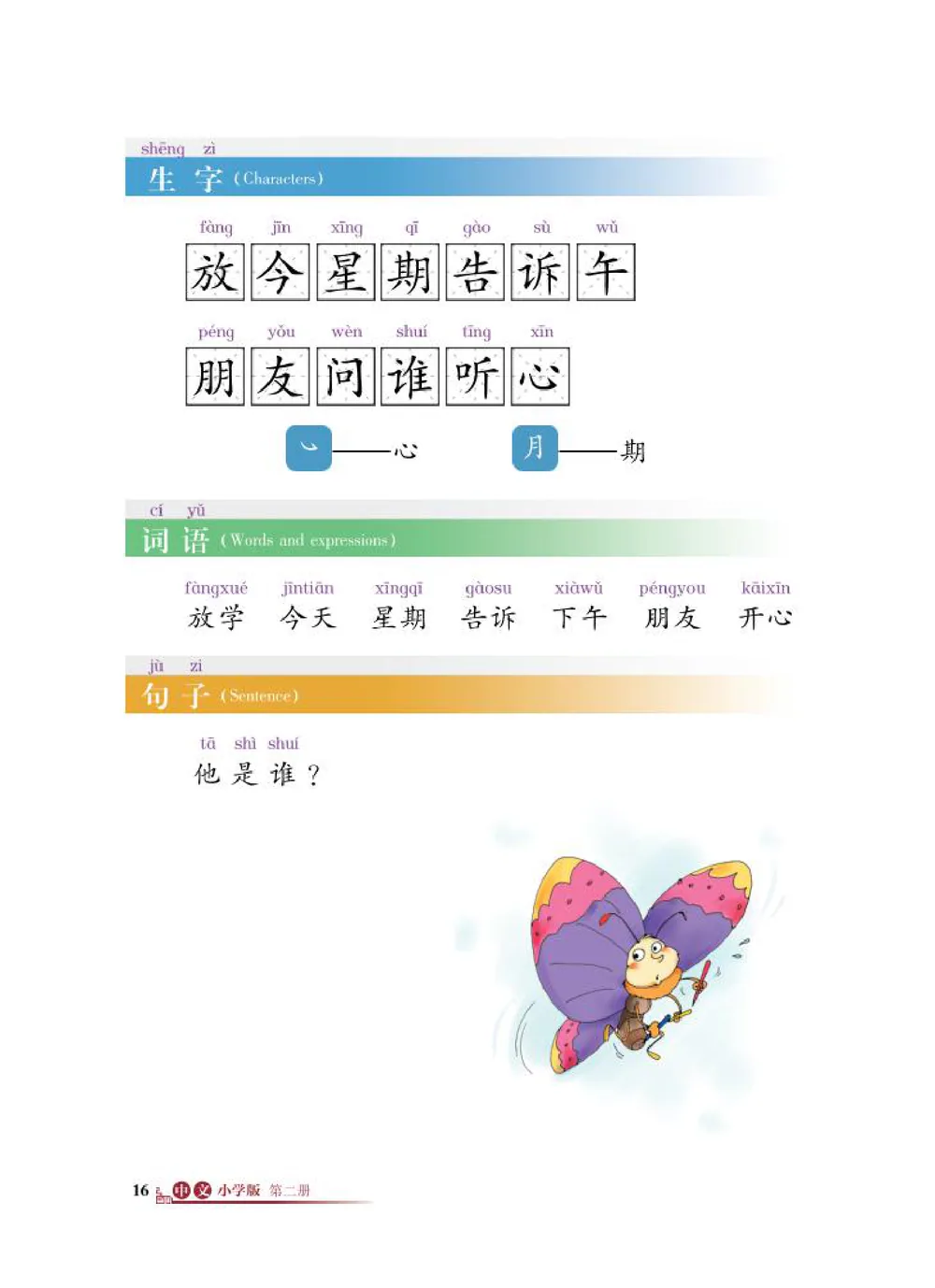
生字 Characters
fàng放jīn今
xīng星qī期gào告
sù诉wǔ午
péng朋yǒu友wèn问shuí谁tīng听
词语 Words
fàng放xué学
school is over for the day
jīn今tiān天
today
xīng星qī期
week
gào告sù诉
to tell
xià下wǔ午
afternoon
péng朋yǒu友
friend
kāi开xīn心
happy
bāo包zi子Semenee
Sentences
tā他shì是shuí谁?
Who is he?
课堂练习 Exercises in Class
miáo描yī一miáo描,xiě写yī一xiě写Lean to write)
xīng星
qī期
sù诉
zhōng中
péng朋
yǒu友
wèn问
shuí谁
fàng放xué学
school is over for the day
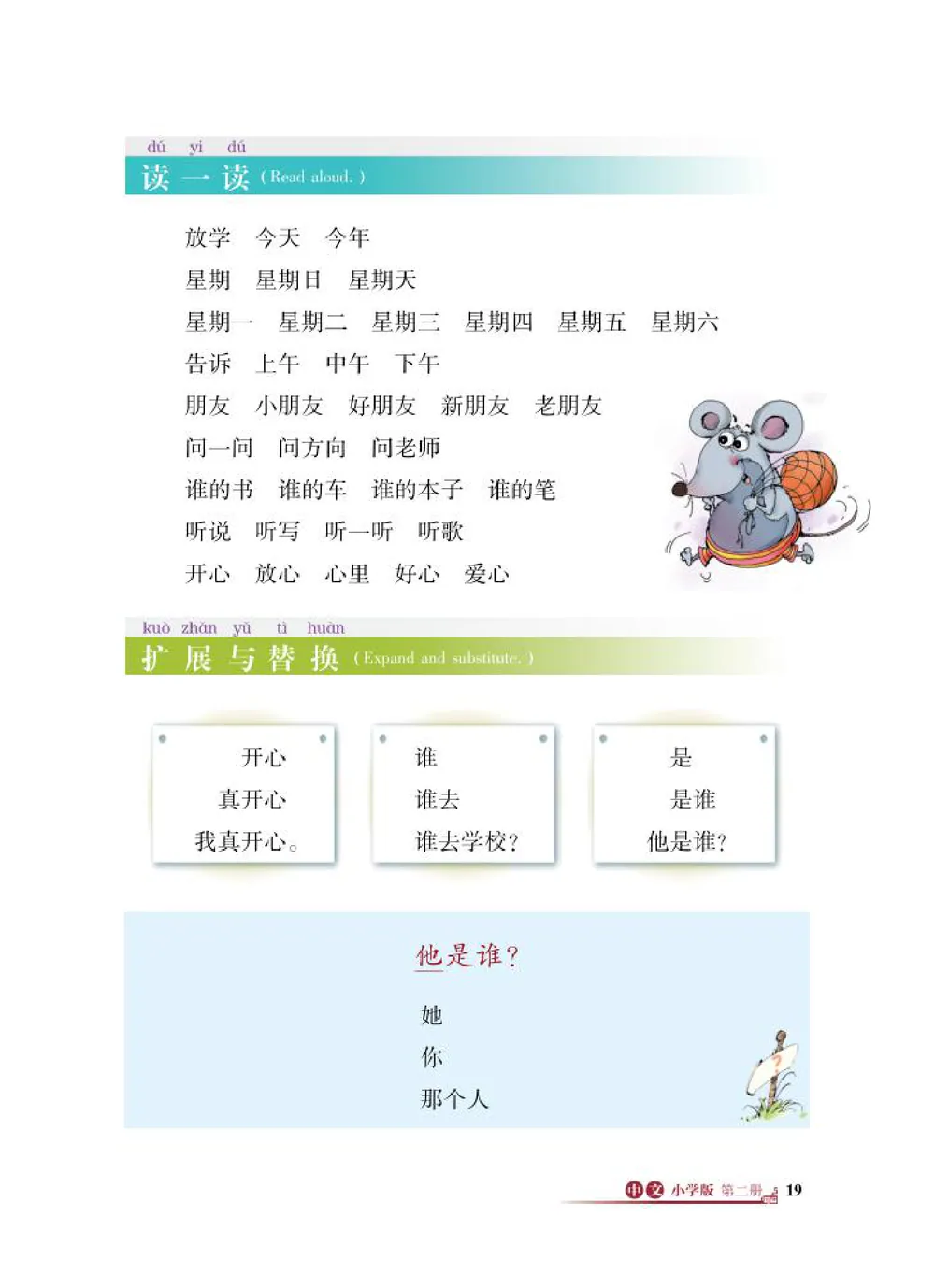
jīn今tiān天jīn今nián年
xīng星qī期
week
xīng星qī期rì日
xīng星qī期tiān天
xīng星qī期yī一
xīng星qī期èr二xīng星qī期sān三
xīng星qī期sì四
xīng星qī期wǔ五
xīng星qī期liù六
gào告sù诉
to tell
shàng上wǔ午zhōng中wǔ午xià下wǔ午
péng朋yǒu友
friend
xiǎo小péng朋yǒu友
hǎo好péng朋yǒu友
xīn新péng朋yǒu友
lǎo老péng朋yǒu友
wèn问fāng方xiàng向
wèn问lǎo老shī师
shéi谁de的shū书
shéi谁de的chē车
shéi谁de的běn本zi子
shéi谁de的bǐ笔
tīng听shuō说
tīng听xiě写tīng听yī一tīng听tīng听gē歌
kāi开xīn心fàng放xīn心xīn心lǐ里hǎo好xīn心ài爱xīn心
kuò扩zhǎn展yǔ与tì替huàn换Fspandand substitute
kāi开xīn心
happy
zhēn真kāi开xīn心
shuí谁qù去
shì是shuí谁
wǒ我zhēn真kāi开xīn心。
shuí谁qù去xué学xiào校?
tā他shì是shuí谁?
Who is he?
tā他shì是shuí谁?
Who is he?
nà那ge个rén人
duì对huà话(Dialogue)
fāng方fāng方:tā他shì是shuí谁?
yún云yún云:wǒ我de的tóng同xué学dōng冬dōng冬。
fāng方fāng方:tā她shì是shuí谁?
yún云yún云:wǒ我de的zhōng中wén文lǎo老shī师。
fāng方fāng方:xué学hàn汉yǔ语kāi开xīn心ma吗?
yún云yún云:kāi开xīn心。lǎo老shī师jiào教wǒ我men们xiě写hàn汉zì字,chàng唱zhōng中wén文gē歌,wǒ我men们kě可kāi开xīn心le了!
fāng方fāng方:jīn今tiān天xīng星qī期wǔ五,xià下wǔ午nǐ你lái来wǒ我jiā家wán玩ér儿,hǎo好ma吗?
yún云yún云:hǎo好。xià下wǔ午fàng放xué学le了,wǒ我gào告sù诉wǒ我bà爸bà爸,wǒ我qù去nǐ你jiā家wán玩ér儿,
fāng方fāng方:zài再jiàn见!
yún云yún云:xià下wǔ午jiàn见!
jiān间wèn问dá答dá答
(1)tā他(tā她)shì是shuí谁?
(2)wǒ我men们zhè这ér儿shuí谁shì是lǎo老shī师?shuí谁shì是xué学shēng生?
(3)zhè这shì是shéi谁de的bǐ笔?
阅读 Reading
yún云yún云huà画huà画ér儿
Yunyun is drawing
yún云yún云xǐ喜huān欢huà画huà画ér儿。měi每tiān天fàng放xué学huí回dào到jiā家,tā她jiù就ná拿
Yunyun likes drawing. Every day when she gets home from school she picks
qǐ起bǐ笔lái来xué学huà画huà画ér儿。tā她xiān先huà画yī一zhī只jī鸡,zài再huà画yī一zhī只yā鸭,
…up her brush and draws. First a chicken, then a duck,
hái还huà画le了niú牛mǎ马hé和ér儿duǒ朵huā花ér儿。xiǎo小xiǎo小huà画bǐ笔zhēn真tīng听tā她de的
…and drew cows, horses and a few flowers. The little brush does just as she
huà话,yún云yún云shì是gè个xiǎo小huà画jiā家。
…Yunyun is a little artist.
生字 Characters
ná拿xiān先jī鸡zài再
tīng听huà话
diào调yǔ语(Wonlsandexpressions)
měi每tiān天
tīng听huà话
huà画jiā家
测验 Quiz — 23 questions
做完这些题就算学完这一课。 Finish these to complete the lesson.
-
放 Choose the pinyin
-
今 Choose the pinyin
-
星 Choose the pinyin
-
期 Choose the pinyin
-
告 Choose the pinyin
-
诉 Choose the pinyin
-
péng Choose the character
-
yǒu Choose the character
-
wèn Choose the character
-
shuí Choose the character
-
xīn Choose the character
-
ná Choose the character
-
放(fàng) What does it mean?
-
今(jīn) What does it mean?
-
星(xīng) What does it mean?
-
期(qī) What does it mean?
-
告(gào) What does it mean?
-
诉(sù) What does it mean?
-
今天星_五,放学了,爸爸在车上告 Which character belongs in the blank?
-
诉我:“下午有一个小_友来我们家。”我 Which character belongs in the blank?
-
问“他是_?”爸爸说:“是云云。” Which character belongs in the blank?
-
云是我的好朋_,我听了,真开心。 Which character belongs in the blank?
-
他是_? Which character belongs in the blank?
-
把汉字和拼音连起来 Match each character to its pinyin
-
Listen and choose the character you hear
-
Listen and choose the character you hear
-
Listen and choose the character you hear
-
Listen and choose the character you hear
-
生字卡片 Flashcards for this lesson's characters
放 fàng
to put; to place; to release今 jīn
now; the present time; current星 xīng
star; heavenly body; satellite期 qī
variant of 期[qi1]; period; cycle告 gào
(bound form) to say; to tell; to announce; to report; to denounce诉 sù
variant of 訴|诉[su4]朋 péng
friend友 yǒu
friend问 wèn
to ask; to inquire谁 shuí
who; also pr. [shui2]心 xīn
heart; mind; intention拿 ná
old variant of 拿[na2]先 xiān
beforehand; first; earlier; at first; originally; for the time being; for now鸡 jī
fowl; chicken再 zài
again; once more; re-; further; beyond this point of time; (before an adjective) more话 huà
dialect; language; spoken words
课本原页,点图看大图。 The printed pages this lesson comes from — tap to enlarge.