Lesson 4 / 24
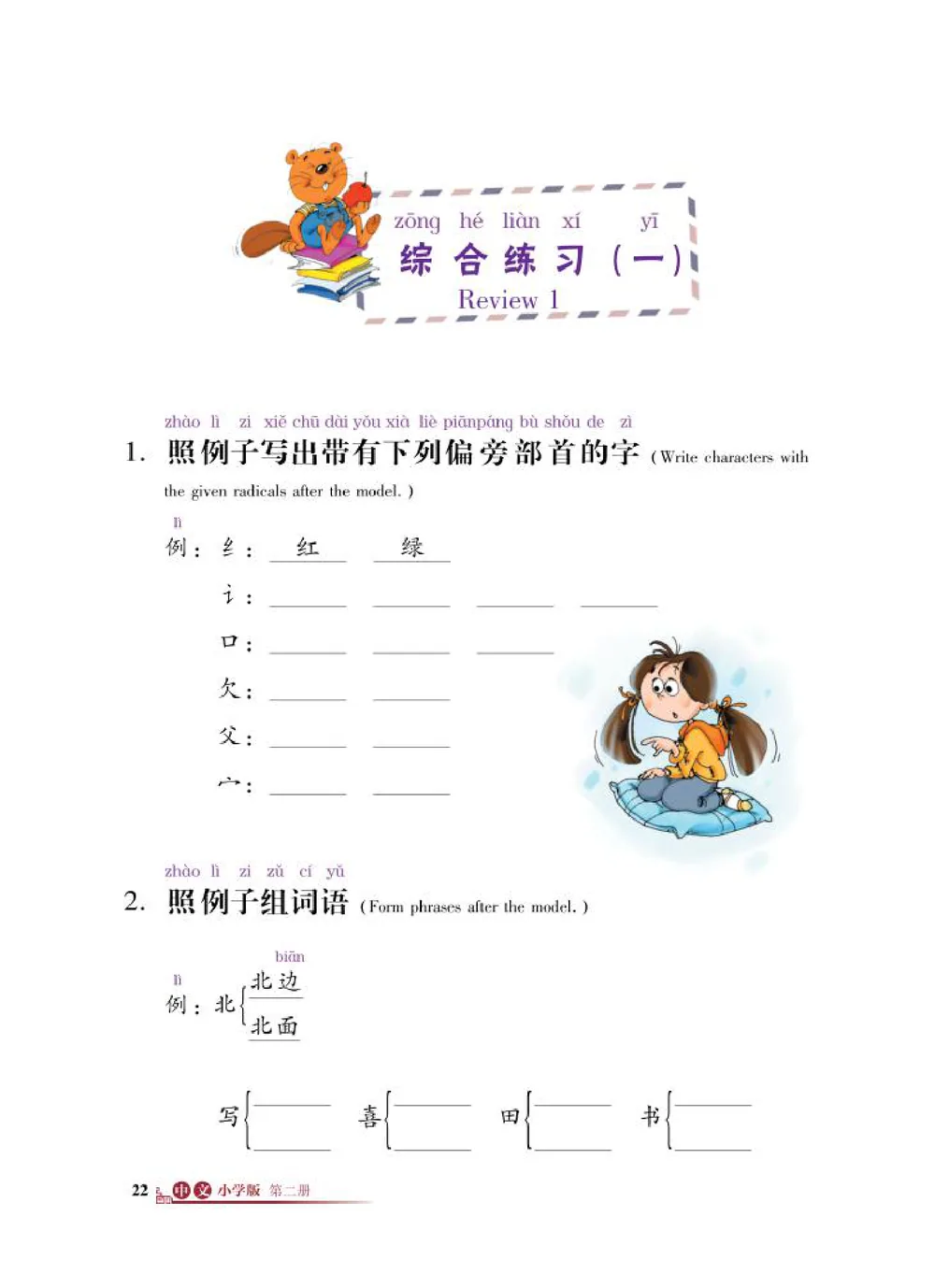
综合练习(一)
Review 1

综合练习 Review
1.zhào照lì例zi子xiě写chū出dài带yǒu有xià下liè列piān偏páng旁bù部shǒu首de的zì字(Write characterswith
lì例::hóng红
lǜ绿
kǒu口
qiàn欠:
fù父:
2zhào照lì例zi子zǔ组cí词yǔ语
běi北biān边
lì例:běi北
běi北miàn面
xiě写
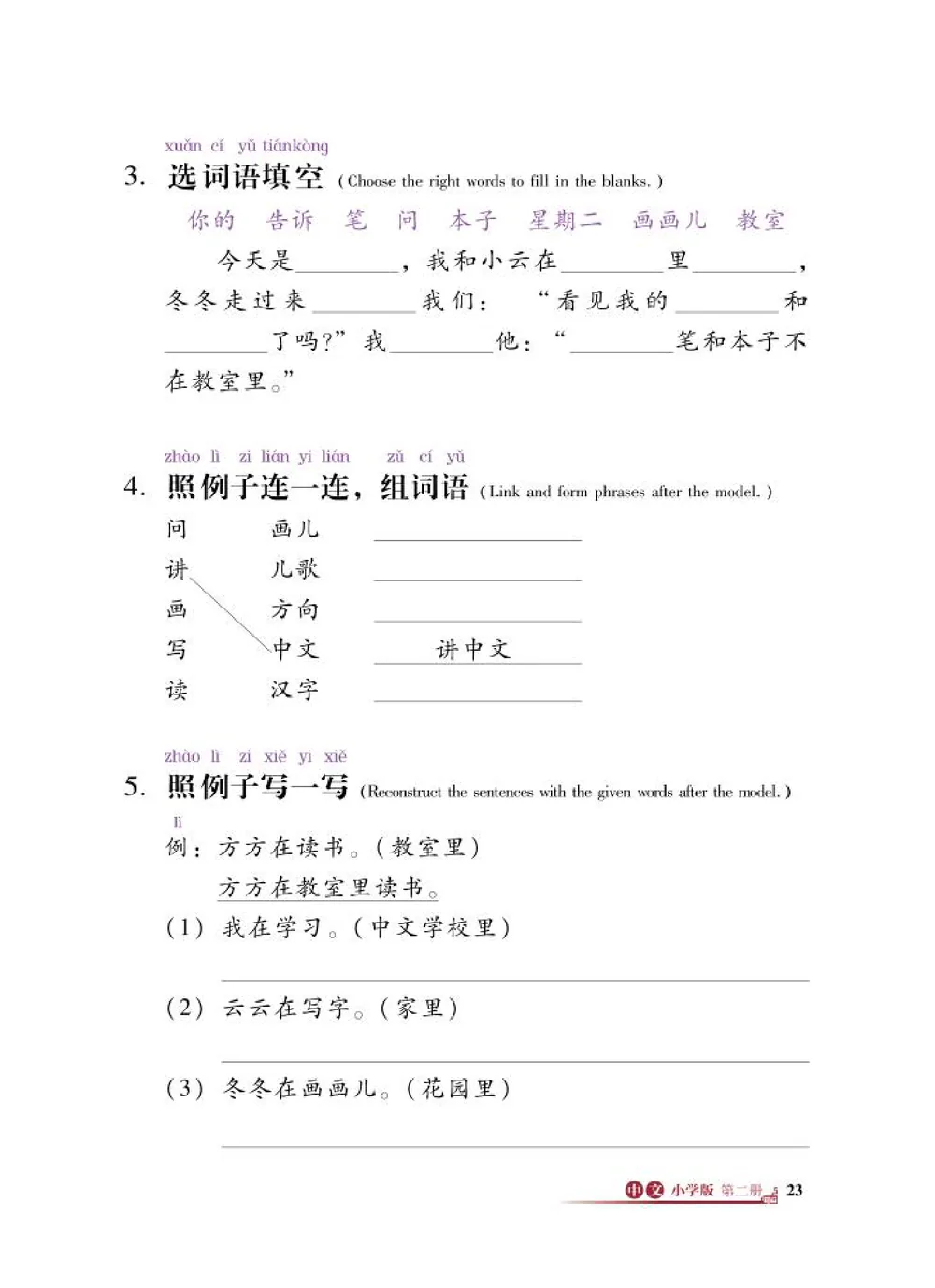
3.xuǎn选cí词yǔ语tián填kòng空
nǐ你de的gào告sù诉bǐ笔wèn问běn本zi子xīng星qī期èr二
huà画huà画ér儿
jiào教shì室
jīn今tiān天shì是
,wǒ我hé和xiǎo小yún云zài在
dōng冬dōng冬zǒu走guò过lái来
wǒ我men们:
“kàn看jiàn见wǒ我de的
le了ma吗?”wǒ我
tā他:
bǐ笔hé和běn本zi子bù不
zài在jiào教shì室lǐ里。”
4.zhào照lì例zi子lián连yī一lián连,zǔ组cí词yǔ语(Link and form phrases afterthemaodlel.)
huà画ér儿
ér儿gē歌
fāng方xiàng向
zhōng中wén文
jiǎng讲zhōng中wén文
hàn汉zì字
5. zhào照lì例zi子xiě写yī一xiě写 (Reconstruct the sentences with the given words afer the model.)
lì例:fāng方fāng方zài在dú读shū书。(jiào教shì室lǐ里)
fāng方fāng方zài在jiào教shì室lǐ里dú读shū书。
(1)wǒ我zài在xué学xí习。(zhōng中wén文xué学xiào校lǐ里)
(2)yún云yún云zài在xiě写zì字。(jiā家lǐ里)
(3)dōng冬dōng冬zài在huà画huà画ér儿。(huā花yuán园lǐ里)
课本的生字表没能从扫描件上读出来,下面是这一课第一次出现的字。 The book's own 生字 list could not be read for this lesson; these are the characters it introduces.
测验 Quiz — 18 questions
做完这些题就算学完这一课。 Finish these to complete the lesson.
-
出 Choose the pinyin
-
带 Choose the pinyin
-
有 Choose the pinyin
-
下 Choose the pinyin
-
列 Choose the pinyin
-
偏 Choose the pinyin
-
páng Choose the character
-
bù Choose the character
-
shǒu Choose the character
-
de Choose the character
-
hóng Choose the character
-
lǜ Choose the character
-
出(chū) What does it mean?
-
带(dài) What does it mean?
-
有(yǒu) What does it mean?
-
下(xià) What does it mean?
-
列(liè) What does it mean?
-
偏(piān) What does it mean?
-
把汉字和拼音连起来 Match each character to its pinyin
-
Listen and choose the character you hear
-
Listen and choose the character you hear
-
Listen and choose the character you hear
-
Listen and choose the character you hear
-
生字卡片 Flashcards for this lesson's characters
出 chū
to go out; to come out; to arise; to occur; to produce; to yield带 dài
band; belt; girdle有 yǒu
to have; there is; (bound form) having; with; -ful; -ed; -al (as in 有意[you3 yi4] intentional)下 xià
down; downwards; below列 liè
to arrange; to line up; file偏 piān
to lean; to slant; oblique旁 páng
one side; other; different部 bù
ministry; department; section首 shǒu
head; chief; first (occasion, thing etc)的 de
of; ~'s (possessive particle); (used after an attribute when it modifies a noun); (used at the end of a declarative sentence for emphasis)红 hóng
red; popular; revolutionary绿 lǜ
used in names口 kǒu
mouth; classifier for things with mouths (people, domestic animals, cannons, wells etc); classifier for bites or mouthfuls欠 qiàn
to owe; to lack; (literary) to be deficient in父 fù
(bound form) father; (bound form) male relative of father's generation (as in 伯父[bo2 fu4]); (computing) (bound form) parent-北 běi
north; (classical) to be defeated边 biān
side; edge; margin面 miàn
face; side; surface你 nǐ
you (informal, as opposed to courteous 您[nin2])二 èr
two; 2; (Beijing dialect) stupid儿 ér
child; son天 tiān
day; sky; heaven是 shì
to be (followed by substantives only); correct; right; true; (respectful acknowledgement of a command) very well我 wǒ
I; me; my和 hé
old variant of 和[he2]云 yún
(classical) to say冬 dōng
winter走 zǒu
to walk; to go; to run过 guò
to cross; to go over; to pass (time)来 lái
to come; (used as a substitute for a more specific verb); hither (directional complement for motion toward the speaker, as in 回來|回来[hui2 lai5])们 men
plural marker for pronouns, and nouns referring to individuals见 jiàn
to see; to meet; to appear (to be sth)了 le
(completed action marker); (modal particle indicating change of state, situation now); (modal particle intensifying preceding clause)他 tā
(third-person singular) (since the early 20th century, usu. male) he; him; his; (bound form) other; another; some other (as in 他日[ta1 ri4] and 他人[ta1 ren2])方 fāng
square; power or involution (math.); upright向 xiàng
towards; to face; to turn towards
课本原页,点图看大图。 The printed pages this lesson comes from — tap to enlarge.