Lesson 8 / 29
综合练习(二)
Review 2

课文 Text
1.dú读pīn拼yīn音,xiě写cí词yǔ语
1. Read the pinyin and write the words
2.zhǎo找yī一zhǎo找,xiě写chū出dài带yǒu有xià下liè列piān偏páng旁bù部shǒu首de的zì字(Put thewordls
2. Find and write characters that contain these radicals
xū须bá拔yāng秧lín邻jū居fěn粉wū屋sī私chāi拆liáng粮wā挖yóu邮
mǐ米:(
xiāng乡:(
hé禾:(
3.zhào照lì例zi子zǔ组cí词yǔ语,zài再zào造jù句(Form phrases andmake sentences ater the
3. Follow the example: form phrases, then make sentences
lì例:wèn问→
Example: 问 →
wèn问tí题
question; problem
→wǒ我wèn问lǎo老shī师yí一gè个wèn问tí题
→ I asked the teacher a question
(1)xiān鲜→
(1) 鲜 →
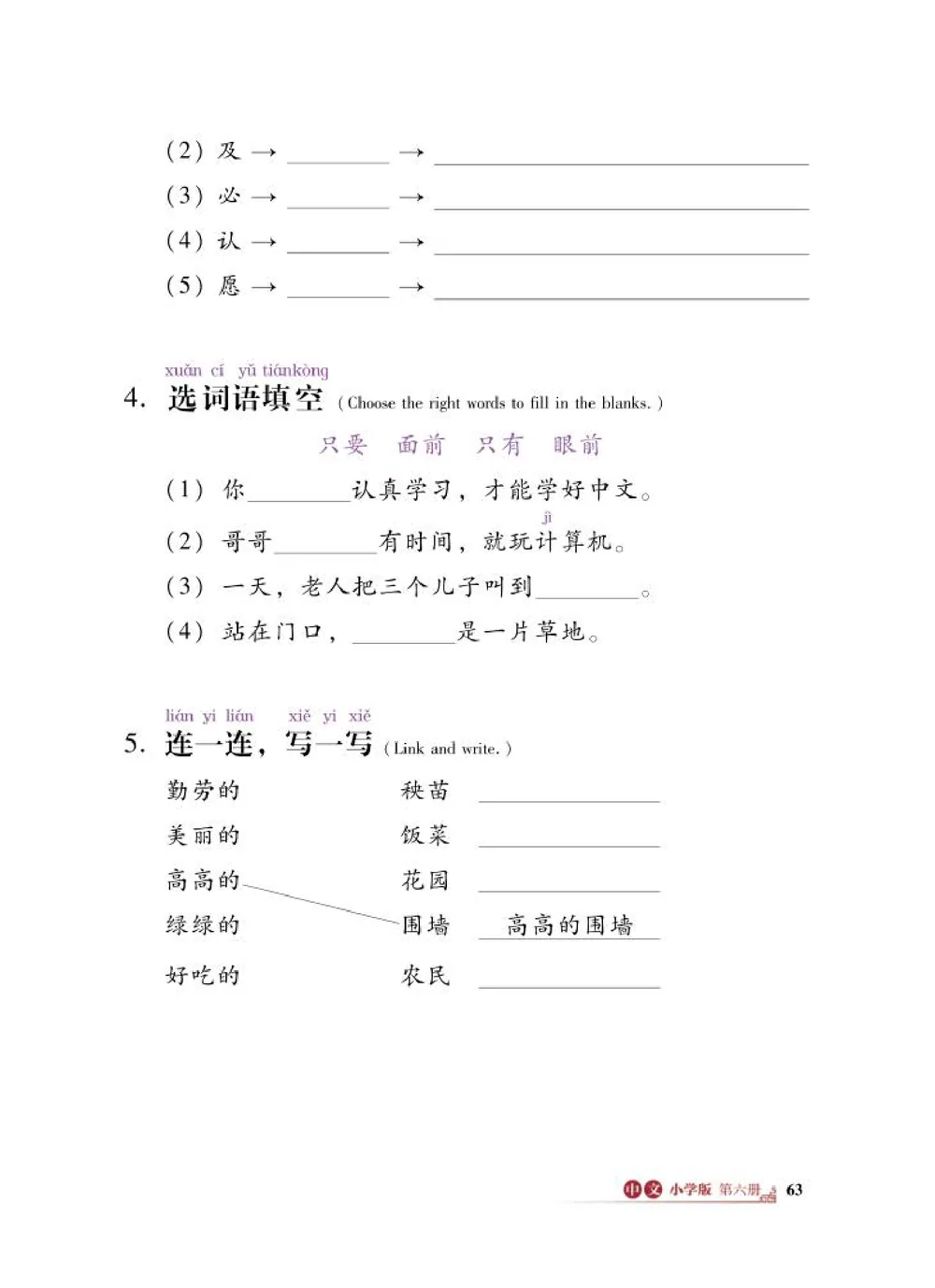
(2)jí及→
(2) 及 →
(3)bì必→
(3) 必 →
(4)rèn认→
(4) 认 →
(5)yuàn愿→
(5) 愿 →
4.xuǎn选cí词yǔ语tián填kòng空(Choose the night wordsto fillin theblanks.)
4. Choose the right words to fill in the blanks.
zhǐ只yào要
as long as
miàn面qián前zhǐ只yǒu有yǎn眼qián前
(1)nǐ你
(1) you
rèn认zhēn真xué学xí习,cái才néng能xué学hǎo好zhōng中wén文。
Only by studying seriously can you learn Chinese well.
(2)gē哥gē哥
(2) elder brother
yǒu有shí时jiān间,jiù就wán玩jì计suàn算jī机。
…whenever there is time, plays on the computer.
(3)yī一tiān天,lǎo老rén人bǎ把sān三gè个ér儿zi子jiào叫dào到
(3) One day the old man called his three sons to
(4)zhàn站zài在mén门kǒu口,
(4) standing in the doorway,
shì是yī一piàn片cǎo草dì地。
…is a stretch of grass.
5.lián连yī一lián连,xiě写yī一xiě写(Link andwrite.)
5. Join them up and write.
qín勤láo劳de的
hardworking
yāng秧miáo苗
seedlings
měi美lì丽de的
beautiful
fàn饭cài菜
food; a meal
gāo高gāo高de的
tall
huā花yuán园
garden
lǜ绿lǜ绿de的
green
wéi围qiáng墙
a surrounding wall
gāo高gāo高de的wéi围qiáng墙
a high wall
hǎo好chī吃de的
something good to eat
nóng农mín民
farmer
6.dú读jù句zi子,yòng用jiā加diǎn点de的cí词yǔ语zào造jù句
6. Read the sentences and make new ones with the marked words
(1)tā他men们suī虽rán然dōu都zhǎng长dà大le了,dàn但shì是gè个gè个dōu都bù不xǐ喜huān欢gàn干huó活ér儿。
(1) Although they were all grown up, not one of them liked work.
(2)nǐ你men们zhǐ只yào要kěn肯chū出lì力qì气,jiù就yí一dìng定huì会wā挖dào到jīn金zi子。
(2) If only you are willing to work, you are sure to dig up gold.
(3)huā花yuán园lǐ里dào到chù处dōu都shì是lǜ绿cǎo草hé和xiān鲜huā花,měi美jí极le了
(3) The garden was full of green grass and flowers, quite lovely
(4)bǔ补dòng洞yǒu有shén什me么yòng用ne呢?
(4) What is the use of mending the hole?
(5)sān三gè个ér儿zi子bǎ把fù父qīn亲fēn分gěi给tā他men们de的dì地dōu都wā挖biàn遍le了。
(5) The three sons dug over all the land their father had given them.
7.lián连cí词chéng成jù句(Put the given words inthe correet order to make sentences.)
7. Put the words in the right order to make sentences.
(1)huā花yuán园
(1) the garden
yuè越lái来yuè越
more and more
zhè这ge个
this one
měi美lì丽
beautiful
biàn变dé得
to become
(2)bǎ把bá拔gāo高le了
měi每kē棵tā他dōu都yāng秧miáo苗
(3)méi没yǒu有
(3) there is no
ér儿zi子men们
the sons
zhǎo找dào到
to find
hái还shì是
still; or
jīn金zi子
gold
(4)hé和wài外miàn面xiān鲜huā花dào到chù处huā花yuán园shì是lǜ绿cǎo草
8.dú读kè课wén文,pàn判duàn断jù句zi子,duì对de的dǎ打“V”,cuò错de的dǎ打
8. Read the text and judge the sentences; mark the right ones ✓ and the wrong ones
(1)nà那wèi位lǎo老rén人zài在dì地lǐ里mái埋le了hěn很duō多jīn金zi子,tā他de的ér儿zi子dōu都wā挖dào到le了。
(1) The old man buried a lot of gold in the fields, and his sons all dug it up.
(2)jù巨rén人kàn看dào到nà那me么duō多hái孩zi子zài在huā花yuán园lǐ里wán玩ér儿,qì气huài坏le了。
(2) The giant was furious to see so many children playing in his garden.
(3)jù巨rén人zài在huā花yuán园sì四zhōu周wéi围le了yī一dào道qiáng墙,suǒ所yǐ以huā花yuán园lǐ里dào到chù处dōu都shì是
(3) The giant built a wall round the garden, so in the garden there was
xiān鲜huā花hé和lǜ绿cǎo草。
…fresh flowers and green grass.
(4)diū丢yáng羊de的nà那ge个rén人méi没yǒu有tīng听lín邻jū居de的quàn劝gào告,suǒ所yǐ以tā他de的yáng羊dōu都pǎo跑
(4) The man who lost the sheep did not listen to his neighbour, so his sheep all ran
diào掉le了。
…fell off.
(5)nà那ge个nóng农mín民bǎ把yāng秧miáo苗bá拔gāo高liǎo了,jié结guǒ果miáo苗quán全sǐ死le了。(
(5) The farmer pulled the shoots up, and as a result they all died. (
9.yuè阅dú读duǎn短wén文,pàn判duàn断jù句zi子,duì对de的dǎ打
9. Read the passage and judge the sentences; mark the right ones
guǎng广“V”,cuò错de的dǎ打
…mark it ✓, and if wrong mark it
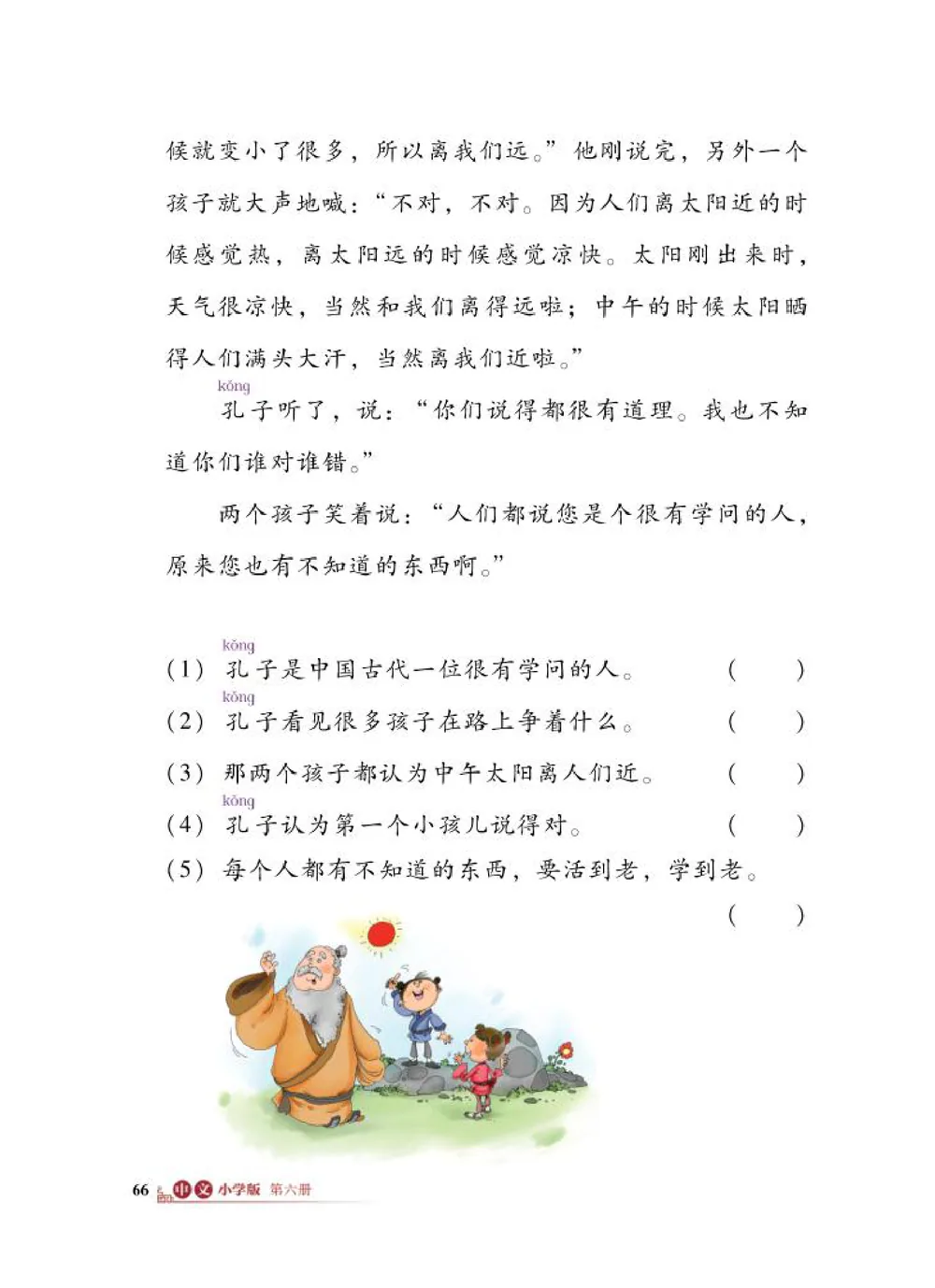
zhōng中guó国gǔ古dài代yǒu有yī一wèi位hěn很yǒu有xué学wèn问de的rén人jiào叫kǒng孔zi子。yǒu有yī一tiān天,kǒng孔
In ancient China there was a very learned man called Confucius. One day, Con
zi子kàn看jiàn见liǎng两gè个xiǎo小hái孩ér儿zài在lù路shàng上zhǐ指zhe着tài太yáng阳zhēng争zhe着shén什me么,jiù就zǒu走guò过qù去
…fucius saw two children in the road pointing at the sun and arguing, so he went over
wèn问:“nǐ你men们zài在shuō说shén什me么ne呢?”qí其zhōng中de的yí一gè个xiǎo小hái孩ér儿huí回dá答shuō说:
…asked, "What are you talking about?" One of the children answered:
yīn因wèi为rén人men们kàn看yuǎn远chù处de的dōng东xī西jué觉de得xiǎo小,kàn看jìn近chù处de的dōng东xī西jué觉de得dà大。
…because things far off look small and things close look large.
tài太yáng阳gāng刚chū出lái来shí时yòu又dà大yòu又yuán圆,suǒ所yǐ以lí离wǒ我men们jìn近:dào到le了zhōng中wǔ午de的shí时
When the sun has just risen it is big and round, so it is near us; by noon
hòu候jiù就biàn变xiǎo小le了hěn很duō多,suǒ所yǐ以lí离wǒ我men们yuǎn远。”tā他gāng刚shuō说wán完,lìng另wài外yí一gè个
…it looks much smaller, so it is far from us." He had barely finished when the other
hái孩zi子jiù就dà大shēng声dì地hǎn喊:“bú不duì对,bú不duì对。yīn因wèi为rén人men们lí离tài太yáng阳jìn近de的shí时
…child shouted, "No, no. Because when people are near the sun
hòu候gǎn感jué觉rè热,lí离tài太yáng阳yuǎn远de的shí时hòu候gǎn感jué觉liáng凉kuài快。tài太yáng阳gāng刚chū出lái来shí时,
…feel hot when near the sun and cool when far from it. When the sun has just risen,
tiān天qì气hěn很liáng凉kuài快,dāng当rán然hé和wǒ我men们lí离dé得yuǎn远la啦:zhōng中wǔ午de的shí时hòu候tài太yáng阳shài晒
…it is cool, so of course it is far from us; at noon the sun beats down
dé得rén人men们mǎn满tóu头dà大hán汗,dāng当rán然lí离wǒ我men们jìn近la啦。”
…makes people sweat, so of course it is nearer."
kǒng孔zi子tīng听le了,shuō说:“nǐ你men们shuō说dé得dōu都hěn很yǒu有dào道lǐ理。wǒ我yě也bù不zhī知
Confucius heard them and said, "You both have good reason. I do not know
dào道nǐ你men们shuí谁duì对shuí谁cuò错。
…know which of you is right and which wrong.
liǎng两gè个hái孩zi子xiào笑zhe着shuō说:“rén人men们dōu都shuō说nín您shì是gè个hěn很yǒu有xué学wèn问de的rén人,
The two children laughed and said, "Everyone says you are a very learned man,
yuán原lái来nín您yě也yǒu有bù不zhī知dào道de的dōng东xī西a啊。
So there are things you do not know either.
kǒng孔zi子shì是zhōng中guó国gǔ古dài代yī一wèi位hěn很yǒu有xué学wèn问de的rén人。
Confucius was a very learned man of ancient China.
kǒng孔zi子kàn看jiàn见hěn很duō多hái孩zi子zài在lù路shàng上zhēng争zhe着shén什me么。
Confucius saw some children arguing about something in the road.
nà那liǎng两gè个hái孩zi子dōu都rèn认wéi为zhōng中wǔ午tài太yáng阳lí离rén人men们jìn近。
Both children thought the noon sun was nearer to people.
(4)kǒng孔zi子rèn认wéi为dì第yí一gè个xiǎo小hái孩ér儿shuō说dé得duì对。
(4) Confucius thought the first child was right.
(5)měi每gè个rén人dōu都yǒu有bù不zhī知dào道de的dōng东xī西,yào要huó活dào到lǎo老,xué学dào到lǎo老。
(5) Everyone has things they do not know: live and learn.
课本的生字表没能从扫描件上读出来,下面是这一课第一次出现的字。 The book's own 生字 list could not be read for this lesson; these are the characters it introduces.
测验 Quiz — 23 questions
做完这些题就算学完这一课。 Finish these to complete the lesson.
-
拼 Choose the pinyin
-
找 Choose the pinyin
-
偏 Choose the pinyin
-
旁 Choose the pinyin
-
部 Choose the pinyin
-
首 Choose the pinyin
-
bá Choose the character
-
yāng Choose the character
-
fěn Choose the character
-
mǐ Choose the character
-
xiāng Choose the character
-
hé Choose the character
-
拼(pīn) What does it mean?
-
找(zhǎo) What does it mean?
-
偏(piān) What does it mean?
-
旁(páng) What does it mean?
-
部(bù) What does it mean?
-
首(shǒu) What does it mean?
-
1.读_音,写词语 Which character belongs in the blank?
-
须拔_邻居粉屋私拆粮挖邮 Which character belongs in the blank?
-
例:_→ Which character belongs in the blank?
-
→我问老_一个问题 Which character belongs in the blank?
-
面前只有_前 Which character belongs in the blank?
-
把汉字和拼音连起来 Match each character to its pinyin
-
Listen and choose the character you hear
-
Listen and choose the character you hear
-
Listen and choose the character you hear
-
Listen and choose the character you hear
-
生字卡片 Flashcards for this lesson's characters
拼 pīn
to piece together; to put together; to pool (resources etc); to share; to risk all; to go all out找 zhǎo
to try to find; to look for; to call on sb偏 piān
to lean; to slant; oblique旁 páng
one side; other; different部 bù
ministry; department; section首 shǒu
head; chief; first (occasion, thing etc)拔 bá
to pull up; to pull out; to draw out by suction秧 yāng
sapling; seedling; sprout; (esp.) rice seedling; stem; stalk; vine; baby livestock; fry粉 fěn
powder; cosmetic face powder; food prepared from starch; noodles or pasta made from any kind of flour米 mǐ
uncooked rice; meter (unit of length); (slang) Chinese yuan乡 xiāng
country or countryside; native place; home village or town禾 hé
(bound form) grain plant; cereal crop造 zào
to make; to build; to manufacture问 wèn
to ask; to inquire老 lǎo
prefix used before the surname of a person or a numeral indicating the order of birth of the children in a family or to indicate affection or familiarity; old (of people); venerable (person)师 shī
teacher; master; expert要 yào
to want; to need; to ask for; will; shall; about to; need to; should面 miàn
face; side; surface眼 yǎn
eye; (often used with 一[yi1]) a look; a glance; small hole你 nǐ
you (informal, as opposed to courteous 您[nin2])真 zhēn
really; truly; indeed才 cái
ability; talent; sb of a certain type; a capable individual能 néng
can; to be able to; might possibly哥 gē
elder brother间 jiān
between; among; within a definite time or space就 jiù
(after a suppositional clause) in that case; then; (after a clause of action) as soon as; immediately after; (same as 就是[jiu4 shi4]) merely; nothing else but; simply; just; precisely; exactly玩 wán
to play; to have fun; to trifle with计 jì
to calculate; to compute; to count算 suàn
to calculate; to figure out; to include; to count in; to count; to be valid; to carry weight机 jī
(bound form) machine; mechanism; (bound form) aircraft; (bound form) an opportunity三 sān
three; 3叫 jiào
to shout; to call; to order站 zhàn
station; to stand; to halt门 mén
gate; door; doorway; gateway; opening; valve; switch; other door-like or gate-like structure; way to do sth; knack; method; approach口 kǒu
mouth; classifier for things with mouths (people, domestic animals, cannons, wells etc); classifier for bites or mouthfuls片 piàn
thin piece; flake; a slice
课本原页,点图看大图。 The printed pages this lesson comes from — tap to enlarge.