Lesson 7 / 28
成语故事
Stories about Idioms


课文 Text
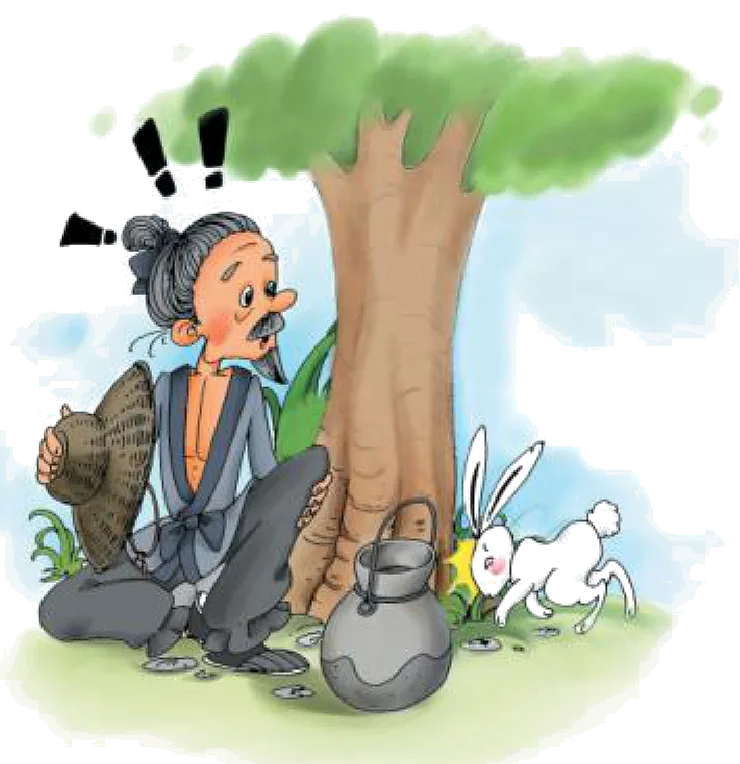
shǒu守zhū株dài待tù兔
Waiting by the Stump for a Hare
hěn很jiǔ久yǐ以qián前,yǒu有gè个nóng农mín民zài在tián田lǐ里qiān千huó活er儿。
Long ago a farmer was working in his field.
tā他lèi累le了zǒu走dào到tián田biān边yī一kē棵dà大shù树xià下xiū休xī息。méi没duō多
Tired, he went to rest under a big tree at the edge of the field. Before
jiǔ久,yī一zhī只tù兔zi子fēi飞kuài快dì地pǎo跑lái来,bù不xiǎo小xīn心,yī一tóu头
…long a hare came running fast and, careless, ran straight
zhuàng撞zài在dà大shù树shàng上,dàng当chǎng场sǐ死le了。
…ran into the tree and died on the spot.
zhè这ge个nóng农mín民hěn很gāo高xìng兴,shí拾qǐ起tù兔zi子,ná拿huí回jiā家
The farmer was delighted, picked up the hare and took it home
zuò做le了yī一dào道hǎo好cài菜,měi美měi美dì地chī吃le了yī一dùn顿kǒu口tā他xiǎng想:
…made a fine dish and ate his fill. He thought:
“wǒ我méi没huā花yì一diǎn点ér儿lì力qì气jiù就kě可yǐ以shí拾dào到miǎn免zi子。rú如
"I picked up a hare without the slightest effort. If
guǒ果měi每tiān天dōu都néng能zhè这yàng样,nà那gāi该duō多hǎo好a啊!”
…if every day were like this, how good that would be!"
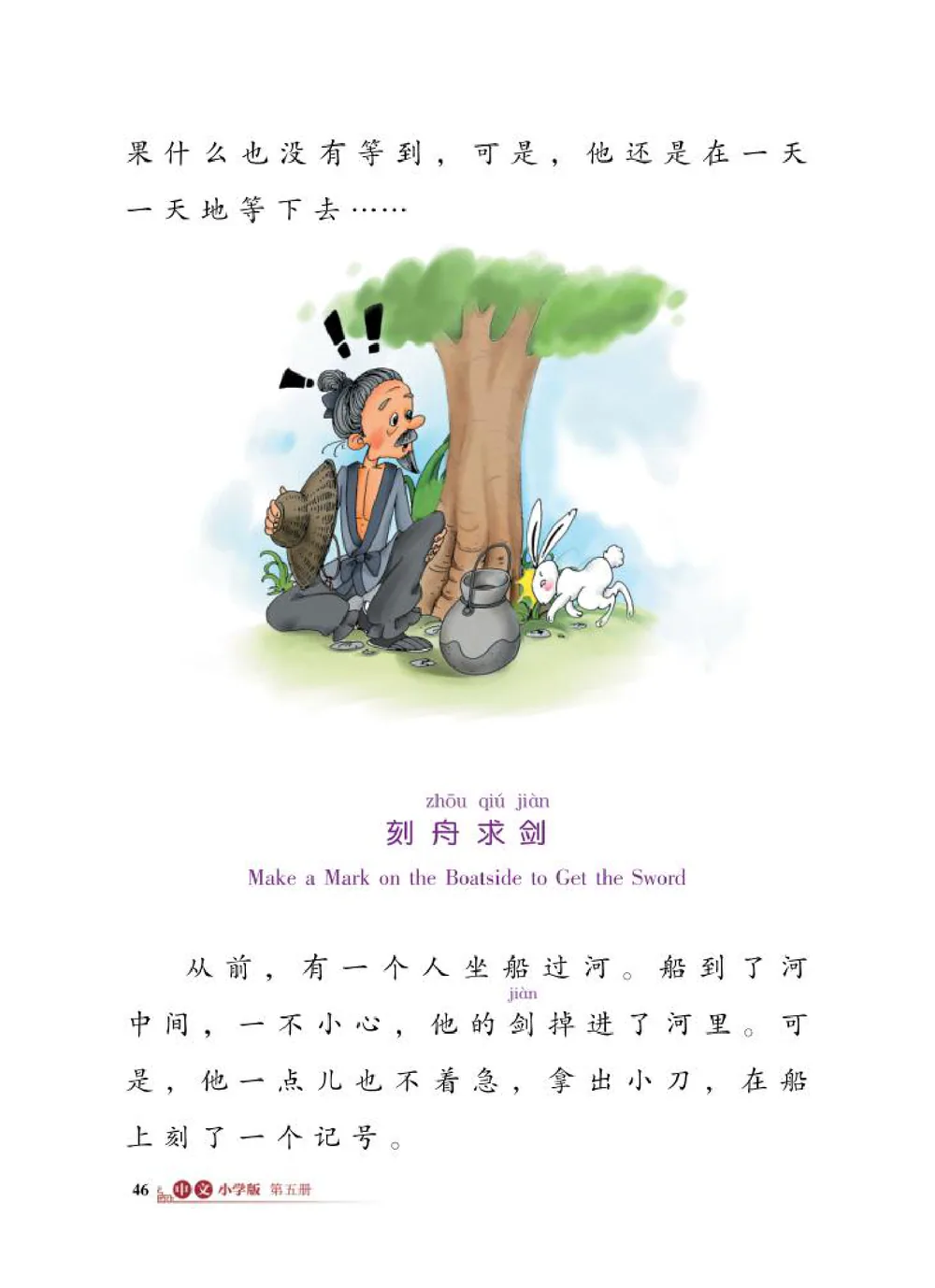
cóng从cǐ此yǐ以hòu后,tā他bù不zài再gàn干huó活ér儿le了,tiān天tiān天shǒu守
From then on he did no more work, but waited every day
zài在dà大shù树xià下děng等zhe着shí拾tù兔zi子。tā他děng等lái来děng等qù去jié结
…waited under the tree for a hare. He waited and waited and in the
guǒ果shén什me么yě也méi没yǒu有děng等dào到,kě可shì是tā他hái还shì是zài在yī一tiān天
…in the end nothing came, yet still he went on day
yī一tiān天dì地děng等xià下qù去
…waiting day after day
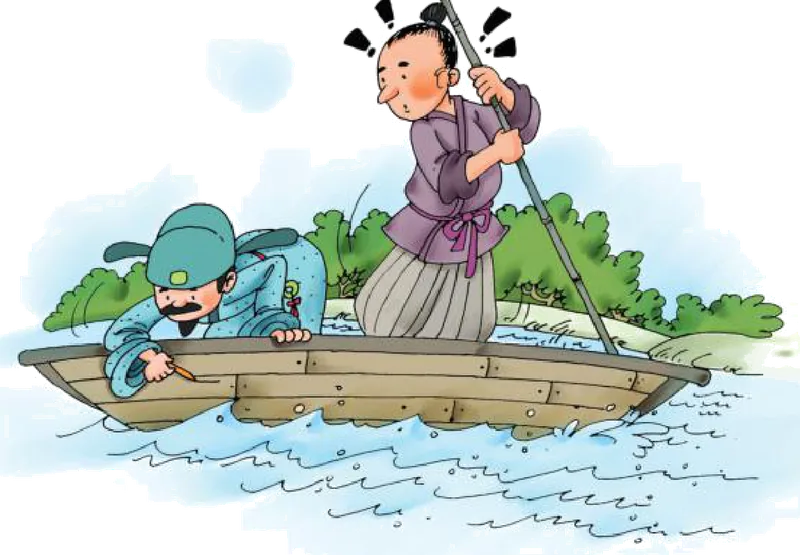
kè刻zhōu舟qiú求jiàn剑
Notching the Boat to Find the Sword
cóng从qián前,yǒu有yí一gè个rén人zuò坐chuán船guò过hé河。chuán船dào到le了hé河
Once a man was crossing a river by boat. When the boat reached the
zhōng中jiān间,yí一bù不xiǎo小xīn心,tā他de的jiàn剑diào掉jìn进le了hé河lǐ里。kě可
…middle of the river, and carelessly he dropped his sword into it. But
shì是,tā他yì一diǎn点ér儿yě也bù不zháo着jí急,ná拿chū出xiǎo小dāo刀,zài在chuán船
…but he was not the least worried; he took out his knife and on the boat
shàng上kè刻le了yí一gè个jì记hào号
…cut a notch in it
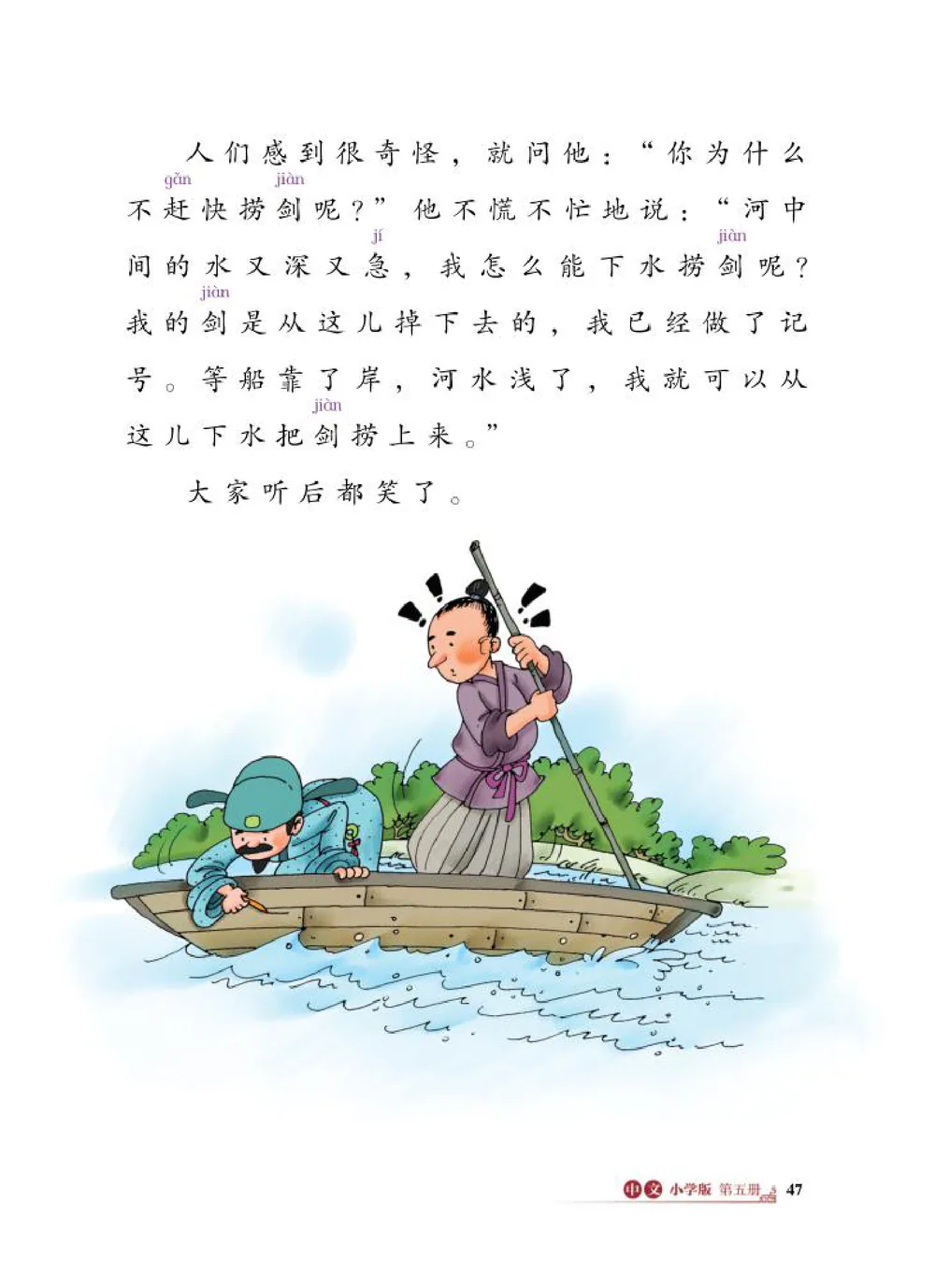
rén人men们gǎn感dào到hěn很qí奇guài怪,jiù就wèn问tā他:“nǐ你wèi为shén什me么
People thought it strange and asked him, "Why do you
bù不gǎn赶kuài快lāo捞jiàn剑ne呢?”tā他bù不huāng慌bù不máng忙dì地shuō说:“hé河zhōng中
…not hurry and fish it out?" He said calmly, "In the middle of the river
jiān间de的shuǐ水yòu又shēn深yòu又jí急,wǒ我zěn怎me么néng能xià下shuǐ水lāo捞jiàn剑ne呢?
…the water is deep and fast — how could I go in and fish the sword out?
wǒ我de的jiàn剑shì是cóng从zhè这ér儿diào掉xià下qù去de的,wǒ我yǐ已jīng经zuò做le了jì记
My sword fell in just here, and I have made a
hào号。děng等chuán船kào靠le了àn岸,hé河shuǐ水qiǎn浅le了,wǒ我jiù就kě可yǐ以cóng从
…mark. When the boat reaches the bank and the water is shallow, I can
zhè这ér儿xià下shuǐ水bǎ把jiàn剑lāo捞shàng上lái来。
…get into the water here and fish the sword out.
dà大jiā家tīng听hòu后dōu都xiào笑le了。
Everyone laughed when they heard it.
shēng生xué学(Characters)
Characters
shǒu守dài待kē棵xiū休xī息zhuàng撞sǐ死
měi每cǐ此qiú求jiàn剑gǎn赶jí急
yī一cǐ此
yī一qiú求
词语 Words
yǐ以qián前
before; formerly
nóng农mín民
farmer
xiū休xī息
to rest
cóng从cǐ此
from then on
xià下qù去
to go down
zhōng中jiān间
in the middle
zháo着jí急
anxious; worried
gǎn感dào到
to feel
gǎn赶kuài快
quickly; at once
句子 Sentences
tā他tiān天tiān天shǒu守zài在dà大shù树xià下,děng等zhe着shí拾miǎn免zi子。
Every day he waited under the tree, hoping to pick up a hare.
wǒ我de的jiàn剑shì是cóng从zhè这ér儿diào掉xià下qù去de的。
My sword fell in just here.
课堂练习 Exercises in Class
xiě写xiě写
shǒu守dài待kē棵xiū休xī息zhuàng撞sǐ死hǎi海cǐ此qiú求
dú读dú读
shǒu守mén门yuán员
shǒu守zhù住
shǒu守zhū株dài待tù兔
Waiting by the Stump for a Hare
jiē接dài待
děng等dài待
yī一kē棵
yī一kē棵dà大shù树
yī一kē棵xiǎo小cǎo草
jǐ几kē棵qīng青cài菜
xiū休xī息
to rest
xiū休xī息xiū休xī息
zhuàng撞sǐ死
zhuàng撞dào倒zhuàng撞huài坏
zhuàng撞chē车è饿sǐ死le了
měi每tiān天
měi每xīng星qī期
měi每yuè月
měi每nián年
měi每shí时měi每kè刻
měi每gè个tóng同xué学
měi每běn本shū书
měi每jiàn件yī衣fú服
cóng从cǐ此cǐ此shí时cǐ此kè刻
cǐ此dì地
cǐ此wài外
kè刻zhōu舟qiú求jiàn剑
Notching the Boat to Find the Sword
qǐng请qiú求yāo要qiú求
qiú求xué学
qiú求jiù救
gǎn赶kuài快
quickly; at once
gǎn赶máng忙
gǎn赶de得shàng上
gǎn赶bù不shàng上gǎn赶chē车
zháo着jí急jí急shì事
jí急máng忙
kuò扩zhǎn展mǎ马tì替huàn换
tiān天tiān天
xià下qù去
to go down
tiān天tiān天shǒu守zài在dà大shù树xià下
diào掉xià下qù去
tā他tiān天tiān天shǒu守zài在dà大shù树xià下。
jiàn剑diào掉xià下qù去le了。
tiān天tiān天
shǒu守zài在dà大shù树xià下,děng等zhe着shí拾miǎn免zi子
měi每tiān天
dōu都yào要xiě写hàn汉zì字
zhè这lǐ里
rén人rén人
dōu都xǐ喜huān欢shuō说zhōng中wén文
duì对huà话(Dialogue)
míng明míng明:fāng方fāng方,nǐ你tīng听guò过shǒu《zhū守dài株tù待de兔》gù的shì故ma事吗?
fāng方fāng方:wǒ我tīng听guò过。
míng明míng明:wǒ我zhǐ只tīng听guò过yì一diǎn点ér儿。tīng听shuō说yǒu有gè个nóng农mín民zài在gàn干huó活ér儿de的shí时hòu候zhuō捉dào到le了yī一zhī只
tù兔zi子,shì是ma吗?
fāng方fāng方:nà那ge个nóng农mín民shì是dé得dào到le了yī一zhī只tù兔zi子。bù不guò过bú不shì是tā他zì自yǐ已zhuō捉de的。
míng明míng明:nà那shì是zěn怎me么dé得dào到de的?nán难dào道shì是miǎn免zi子zì自yǐ已pǎo跑dào到tā他shǒu手shàng上de的ma吗?
fāng方fāng方:shì是miǎn免zi子bù不xiǎo小xīn心zhuàng撞dào到dà大shù树shàng上,dàng当chǎng场zhuàng撞sǐ死le了,nà那ge个nóng农mín民jiù就shí拾
dào到le了。
míng明míng明:hòu后lái来ne呢?
fāng方fāng方:hòu后lái来nà那ge个nóng农mín民jiù就bù不xiǎng想gàn干huó活ér儿le了,tiān天tiān天shǒu守zài在dà大shù树xià下,děng等zhe着shí拾tù兔
zi子。jié结guǒ果shén什me么yě也méi没yǒu有děng等dào到。
míng明míng明:rú如guǒ果nà那ge个nóng农mín民tiān天tiān天bù不gàn干huó活er儿,zuò坐zài在shù树xià下děng等zhe着shí拾tù兔zi子,tā他yí一dìng定
huì会è饿sǐ死de的。
fāng方fāng方:dāng当rán然。
míng明míng明:xiè谢xiè谢nǐ你gěi给wǒ我jiǎng讲zhè这ge个gù故shì事。
fāng方fāng方:bú不kè客qì气!wǒ我yào要huí回jiā家le了,míng明tiān天jiàn见!
míng明míng明:míng明tiān天jiàn见!
xiǎng想yī一xiǎng想,shuō说yī一→shuō说(Think and answer the follewing questrons)
(1)nà那ge个nóng农mín民hòu后lái来hái还néng能shí拾dào到tù兔zi子ma吗?wèi为shén什me么?
(2)nà那ge个zuò坐chuán船de的rén人néng能lāo捞dào到tā他de的jiàn剑ma吗?wèi为shén什me么?
阅读 Reading
wén闻jī鸡qǐ起wǔ舞
Rising to Train at Cockcrow
zǔ祖yāo邀xiǎo小de的shí时hòu候jiù就yǒu有yuǎn远dà大de的lǐ理xiǎng想,kě可tā他què却hěn很táo淘qì气,bù不ài爱dú读
Zu Ti had great ambitions as a boy, yet he was naughty and did not like to
shū书。zhǎng长dà大yǐ以hòu后,tā他màn慢màn慢rèn认shí识dào到,bù不dú读shū书jiù就méi没yǒu有zhī知shí识,méi没yǒu有zhī知
…read. As he grew up he came to see that without reading there is no knowledge, and without knowledge
shí识jiù就hěn很nán难shí实xiàn现zì自yǐ已de的lǐ理xiǎng想。yú于shì是,tā他jiù就hé和hǎo好péng朋yǒu友liú刘kūn琨yì一qǐ起hù互
…knowledge it is hard to fulfil your ambition. So he and his good friend Liu Kun
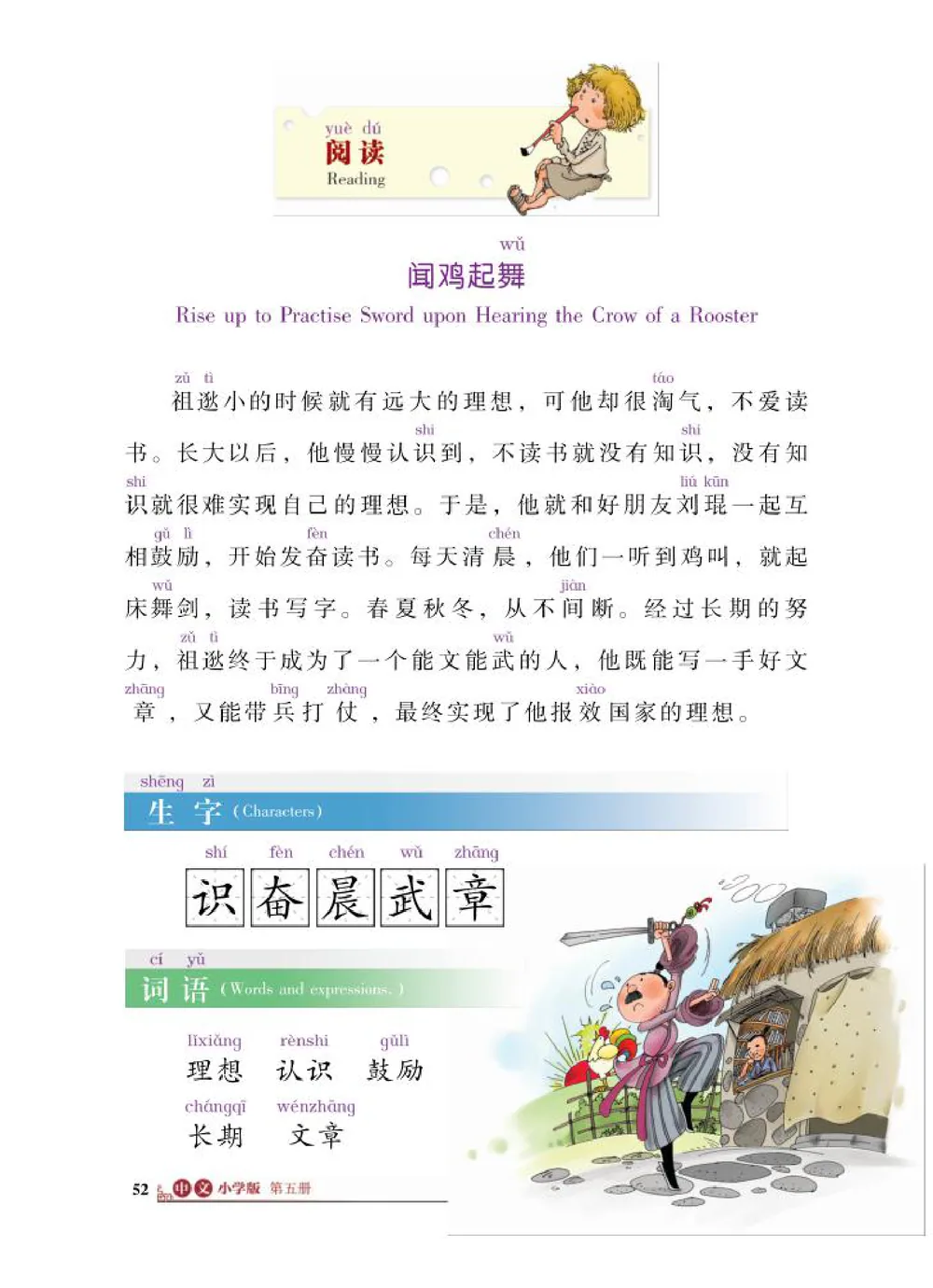
xiāng相gǔ鼓lì励,kāi开shǐ始fā发fèn奋dú读shū书。měi每tiān天qīng清chén晨,tā他men们yī一tīng听dào到jī鸡jiào叫,jiù就qǐ起
…encouraged each other and set to their books. Every morning, at the first cockcrow, they
chuáng床wǔ舞jiàn剑,dú读shū书xiě写zì字。chūn春xià夏qiū秋dōng冬,cóng从bù不jiàn间duàn断。jīng经guò过cháng长qī期de的nǔ努
…got up to practise swordplay, to read and to write — spring, summer, autumn and winter, without a break. After long
lì力,zǔ祖yāo邀zhōng终yú于chéng成wéi为le了yí一gè个néng能wén文néng能wǔ武de的rén人,tā他jì既néng能xiě写yī一shǒu手hǎo好wén文
…effort Zu Ti became a man of both letters and arms: he could write a fine essay
zhāng章,yòu又néng能dài带bīng兵dǎ打zhàng仗,zuì最zhōng终shí实xiàn现le了tā他bào报xiào效guó国jiā家de的lǐ理xiǎng想。
…and could also lead troops in war, and in the end fulfilled his wish to serve his country.
shēng生characters)
Characters
shí识fèn奋chén晨wǔ武zhāng章
词语 Words
lǐ理xiǎng想
ideal; ambition
rèn认shí识
to know; to recognise
gǔ鼓lì励
to encourage
cháng长qī期
long-term
wén文zhāng章
an article; a piece of writing
课本的生字表没能从扫描件上读出来,下面是这一课第一次出现的字。 The book's own 生字 list could not be read for this lesson; these are the characters it introduces.
测验 Quiz — 23 questions
做完这些题就算学完这一课。 Finish these to complete the lesson.
-
守 Choose the pinyin
-
株 Choose the pinyin
-
待 Choose the pinyin
-
兔 Choose the pinyin
-
很 Choose the pinyin
-
久 Choose the pinyin
-
yǐ Choose the character
-
nóng Choose the character
-
mín Choose the character
-
tián Choose the character
-
qiān Choose the character
-
huó Choose the character
-
守(shǒu) What does it mean?
-
株(zhū) What does it mean?
-
待(dài) What does it mean?
-
兔(tù) What does it mean?
-
很(hěn) What does it mean?
-
久(jiǔ) What does it mean?
-
守株_兔 Which character belongs in the blank?
-
很久以前,有个农_在田里千活儿。 Which character belongs in the blank?
-
他累了走到田边一棵大_下休息。没多 Which character belongs in the blank?
-
久,一只兔子飞快_跑来,不小心,一头 Which character belongs in the blank?
-
撞在大树上,当_死了。 Which character belongs in the blank?
-
把汉字和拼音连起来 Match each character to its pinyin
-
Listen and choose the character you hear
-
Listen and choose the character you hear
-
Listen and choose the character you hear
-
Listen and choose the character you hear
-
生字卡片 Flashcards for this lesson's characters
守 shǒu
to guard; to defend; to keep watch株 zhū
tree trunk; stump (tree root); a plant待 dài
to wait; to treat; to deal with兔 tù
variant of 兔[tu4]很 hěn
very; quite; (also, often used before an adjective without intensifying its meaning, i.e. as a meaningless syntactic element)久 jiǔ
(of a period of time) long以 yǐ
old variant of 以[yi3]农 nóng
(bound form) agriculture民 mín
(bound form) the people; inhabitants of a country田 tián
field; farm千 qiān
thousand活 huó
to live; alive; living累 lèi
tired; weary; to strain走 zǒu
to walk; to go; to run棵 kē
classifier for trees, cabbages, plants etc树 shù
tree; ; to cultivate下 xià
down; downwards; below休 xiū
to rest; to stop doing sth for a period of time; to cease息 xī
(bound form) breath; (bound form) to cease; to stop; (bound form) to rest没 méi
(negative prefix for verbs) have not; not只 zhǐ
only; merely; just地 dì
earth; ground; field心 xīn
heart; mind; intention头 tóu
head; hair style; the top撞 zhuàng
to knock against; to bump into; to run into场 chǎng
large place used for a specific purpose; stage; scene (of a play)死 sǐ
to die; impassable; uncrossable兴 xīng
to rise; to flourish; to become popular拾 shí
to pick up; to collate or arrange; ten (banker's anti-fraud numeral)道 dào
road; path; (bound form) way; reason; principle; (bound form) a skill; an art; a specialization好 hǎo
good; appropriate; proper; all right!点 diǎn
to touch briefly; to tap; to mark with a dot; to check off (on a list); to order (food etc); to select力 lì
power; force; strength气 qì
gas; air; smell; weather免 miǎn
to excuse sb; to exempt; to remove or dismiss from office如 rú
as; as if; such as
课本原页,点图看大图。 The printed pages this lesson comes from — tap to enlarge.