Lesson 12 / 27
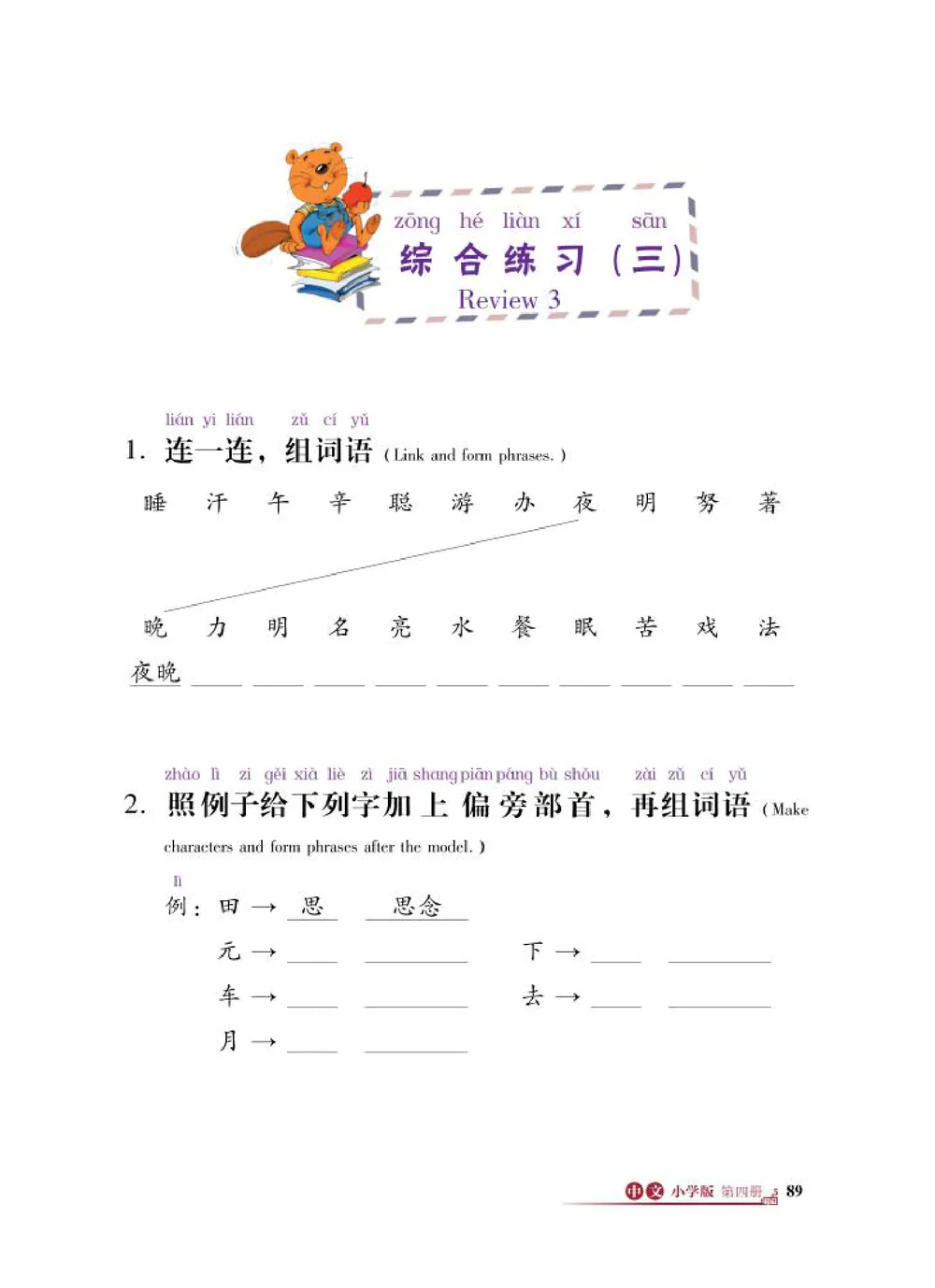
综合练习(三)
Review 3
课文 Text
1lián连yī一lián连,zǔ组cí词yǔ语(Linkand form phrases.)
1. Join them up and form phrases.
shuì睡hàn汗wǔ午xīn辛cōng聪yóu游bàn办yè夜míng明nǔ努zhù著
wǎn晚lì力míng明míng名liàng亮shuǐ水cān餐mián眠kǔ苦xì戏fǎ法
yè夜wǎn晚
night
2.zhào照lì例zi子gěi给xià下liè列zì字jiā加shàng上piān偏páng旁bù部shǒu首,zài再zǔ组cí词yǔ语(Make
2. Follow the example: add a radical to these characters and form phrases
lì例tián田→sī思
Example: 田 → 思
sī思niàn念
to miss; to long for
chē车→
qù去→
yuè月→
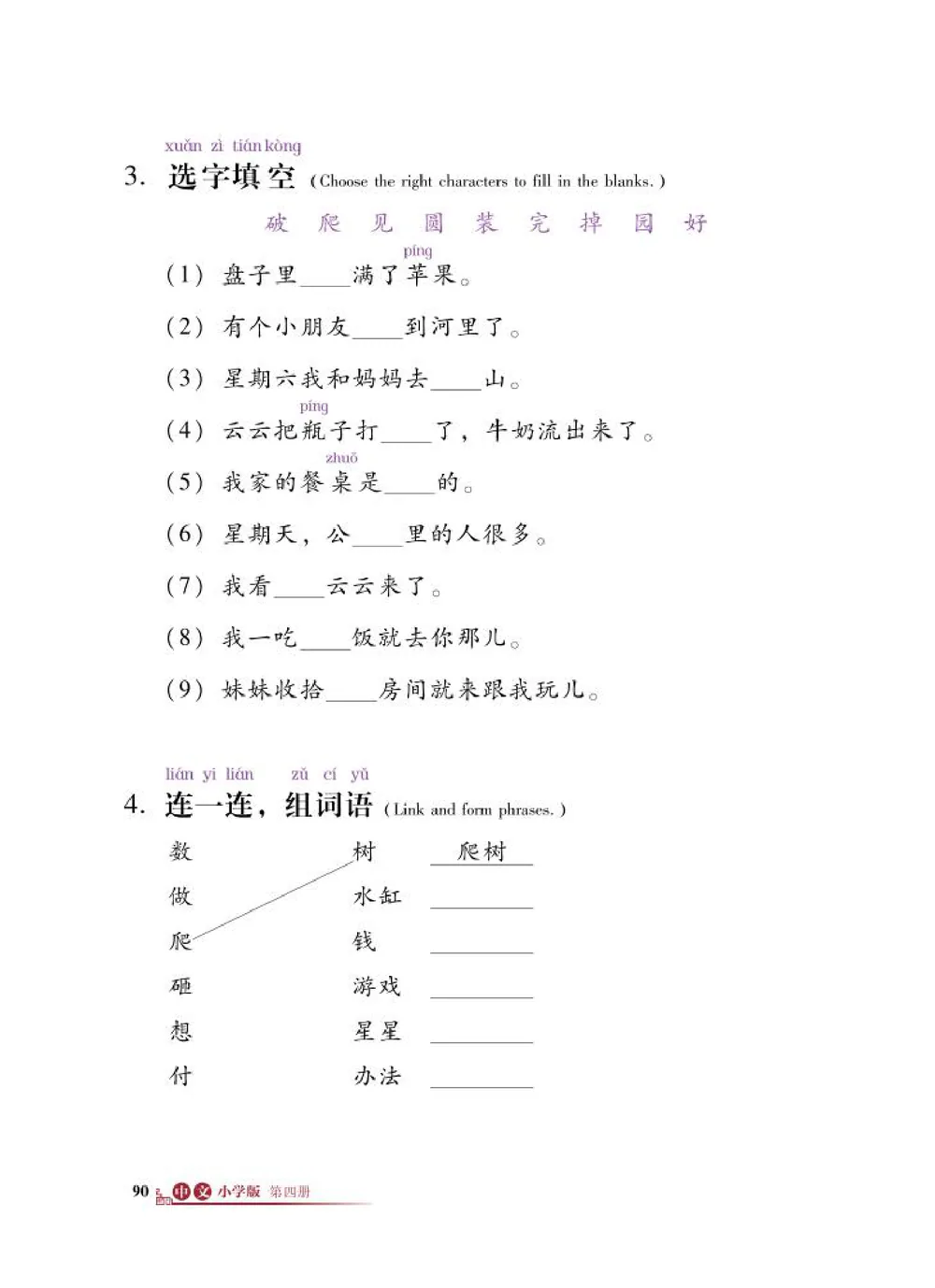
3.xuǎn选zì字tián填kòng空(Choose theright characters tofll intheblanks.)
3. Choose the right characters to fill in the blanks.
pò破pá爬jiàn见yuán圆zhuāng装wán完diào掉yuán园hǎo好
(1)pán盘zi子lǐ里
(1) on the plate
mǎn满le了píng苹guǒ果
…full of apples
(2)yǒu有gè个xiǎo小péng朋yǒu友
(2) there was a child
dào到hé河lǐ里le了。
…into the river.
(3)xīng星qī期liù六wǒ我hé和mā妈mā妈qù去
(3) on Saturday Mum and I went to
shān山。
(4)yún云yún云bǎ把píng瓶zi子dǎ打
(4) Yunyun knocked the bottle
le了,niú牛nǎi奶liú流chū出lái来le了。
…and the milk ran out.
(5)wǒ我jiā家de的cān餐zhuō桌shì是
(5) our dining table is
de的。
lǐ里de的rén人hěn很duō多。
…there are a lot of people.
(6)xīng星qī期tiān天,gōng公
(6) on Sunday, the park
(7)wǒ我kàn看
(7) I saw
yún云yún云lái来le了。
Yunyun has come.
(8)wǒ我yī一chī吃
(8) as soon as I eat
fàn饭jiù就qù去nǐ你nà那ér儿。
…and then I will come to your place.
(9)mèi妹mèi妹shōu收shí拾
(9) my little sister tidies
fáng房jiān间jiù就lái来gēn跟wǒ我wán玩ér儿。
…room and then come and play with me.
4.lián连yī一lián连,zǔ组cí词yǔ语(Linkand form phrases.)
4. Join them up and form phrases.
pá爬shù树
to climb a tree
shuǐ水gāng缸
water vat
yóu游xì戏
game
xīng星xīng星
star
bàn办fǎ法
a way; a method
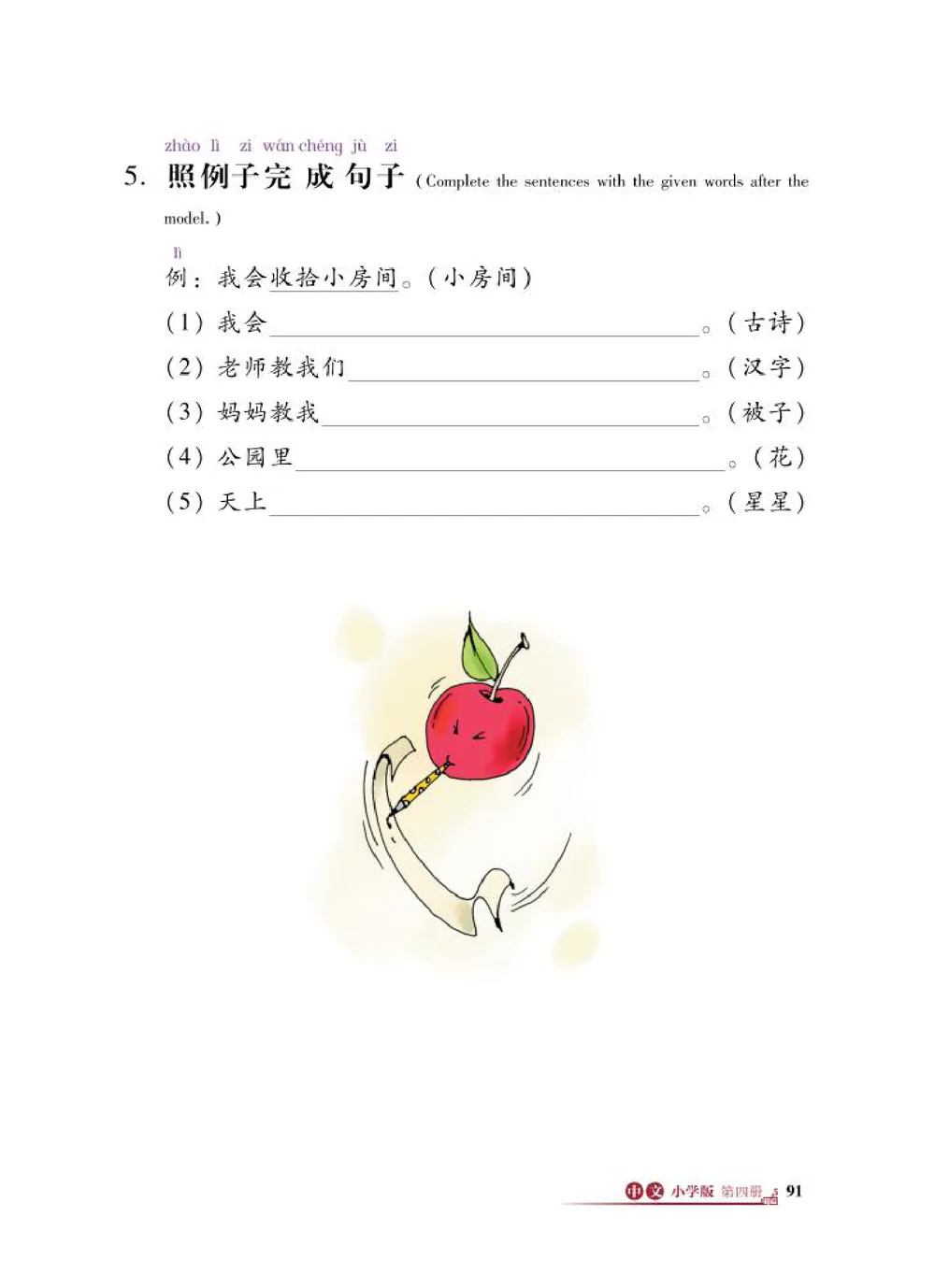
5.zhào照lì例zi子wán完chéng成jù句zi子(Complete the sentences with thegiven words afterthe
5. Follow the example and complete the sentences with the given words
lì例:wǒ我huì会shōu收shí拾xiǎo小fáng房jiān间。(xiǎo小fáng房jiān间)
Example: I can tidy my little room. (little room)
(1)wǒ我huì会
(1) I can
(gǔ古shī诗)
(an old poem)
(2)lǎo老shī师jiào教wǒ我men们
(2) the teacher teaches us
(hàn汉zì字)
(Chinese characters)
(3)mā妈mā妈jiào教wǒ我
(3) Mum teaches me
(bèi被zi子)
(a quilt)
huā。(花)
(4)gōng公yuán园lǐ里
(4) in the park
(5)tiān天shàng上
(5) in the sky
(xīng星xīng星)
(stars)
课本的生字表没能从扫描件上读出来,下面是这一课第一次出现的字。 The book's own 生字 list could not be read for this lesson; these are the characters it introduces.
测验 Quiz — 23 questions
做完这些题就算学完这一课。 Finish these to complete the lesson.
-
睡 Choose the pinyin
-
午 Choose the pinyin
-
夜 Choose the pinyin
-
晚 Choose the pinyin
-
名 Choose the pinyin
-
法 Choose the pinyin
-
tián Choose the character
-
sī Choose the character
-
niàn Choose the character
-
chē Choose the character
-
pò Choose the character
-
jiàn Choose the character
-
睡(shuì) What does it mean?
-
午(wǔ) What does it mean?
-
夜(yè) What does it mean?
-
晚(wǎn) What does it mean?
-
名(míng) What does it mean?
-
法(fǎ) What does it mean?
-
睡汗_辛聪游办夜明努著 Which character belongs in the blank?
-
晚力明_亮水餐眠苦戏法 Which character belongs in the blank?
-
例田→_ Which character belongs in the blank?
-
破爬见_装完掉园好 Which character belongs in the blank?
-
满了苹_ Which character belongs in the blank?
-
把汉字和拼音连起来 Match each character to its pinyin
-
Listen and choose the character you hear
-
Listen and choose the character you hear
-
Listen and choose the character you hear
-
Listen and choose the character you hear
-
生字卡片 Flashcards for this lesson's characters
睡 shuì
to sleep; to lie down午 wǔ
7th earthly branch: 11 a.m.-1 p.m., noon, 5th solar month (6th June-6th July), year of the Horse; ancient Chinese compass point: 180° (south)夜 yè
variant of 夜[ye4]晚 wǎn
evening; night; late名 míng
name; noun (part of speech); place (e.g. among winners)法 fǎ
variant of 法[fa3]田 tián
field; farm思 sī
to think; to consider念 niàn
variant of 念[nian4], to read aloud车 chē
car; vehicle破 pò
broken; damaged; worn out见 jiàn
to see; to meet; to appear (to be sth)圆 yuán
circle; round; circular好 hǎo
good; appropriate; proper; all right!苹 píng
(artemisia); duckweed果 guǒ
fruit; result; resolute星 xīng
star; heavenly body; satellite期 qī
variant of 期[qi1]; period; cycle六 liù
six; 6妈 mā
ma; mom; mother山 shān
mountain; hill; (coll.) small bundle of straw for silkworms to spin cocoons on云 yún
(classical) to say把 bǎ
to hold; to grasp; to hold a baby in position to help it urinate or defecate; handlebar瓶 píng
bottle; vase; pitcher打 dǎ
a semantically light, transitive verb that is combined with various grammatical objects to form compound verbs and verb-object phrases with a diverse range of meanings (e.g. 打傘|打伞[da3 san3] "to hold an umbrella", 打電話|打电话[da3 dian4 hua4] "to make a phone call", 打針|打针[da3 zhen1] "to get an injection", 打手套[da3 shou3 tao4] "to knit gloves", 打氣|打气[da3 qi4] "to inflate"); to hit; to strike; to fight奶 nǎi
breast; milk; to breastfeed流 liú
to flow; to disseminate; to circulate or spread桌 zhuō
table; desk; classifier for tables of guests at a banquet etc人 rén
person; people多 duō
many; much; more; a lot of; too many; in excess; (after a numeral) ... odd吃 chī
to eat; to consume; to eat at (a cafeteria etc); to eradicate; to destroy饭 fàn
cooked rice; ; meal就 jiù
(after a suppositional clause) in that case; then; (after a clause of action) as soon as; immediately after; (same as 就是[jiu4 shi4]) merely; nothing else but; simply; just; precisely; exactly你 nǐ
you (informal, as opposed to courteous 您[nin2])妹 mèi
younger sister收 shōu
to receive; to accept; to collect
课本原页,点图看大图。 The printed pages this lesson comes from — tap to enlarge.