第 17/27 课
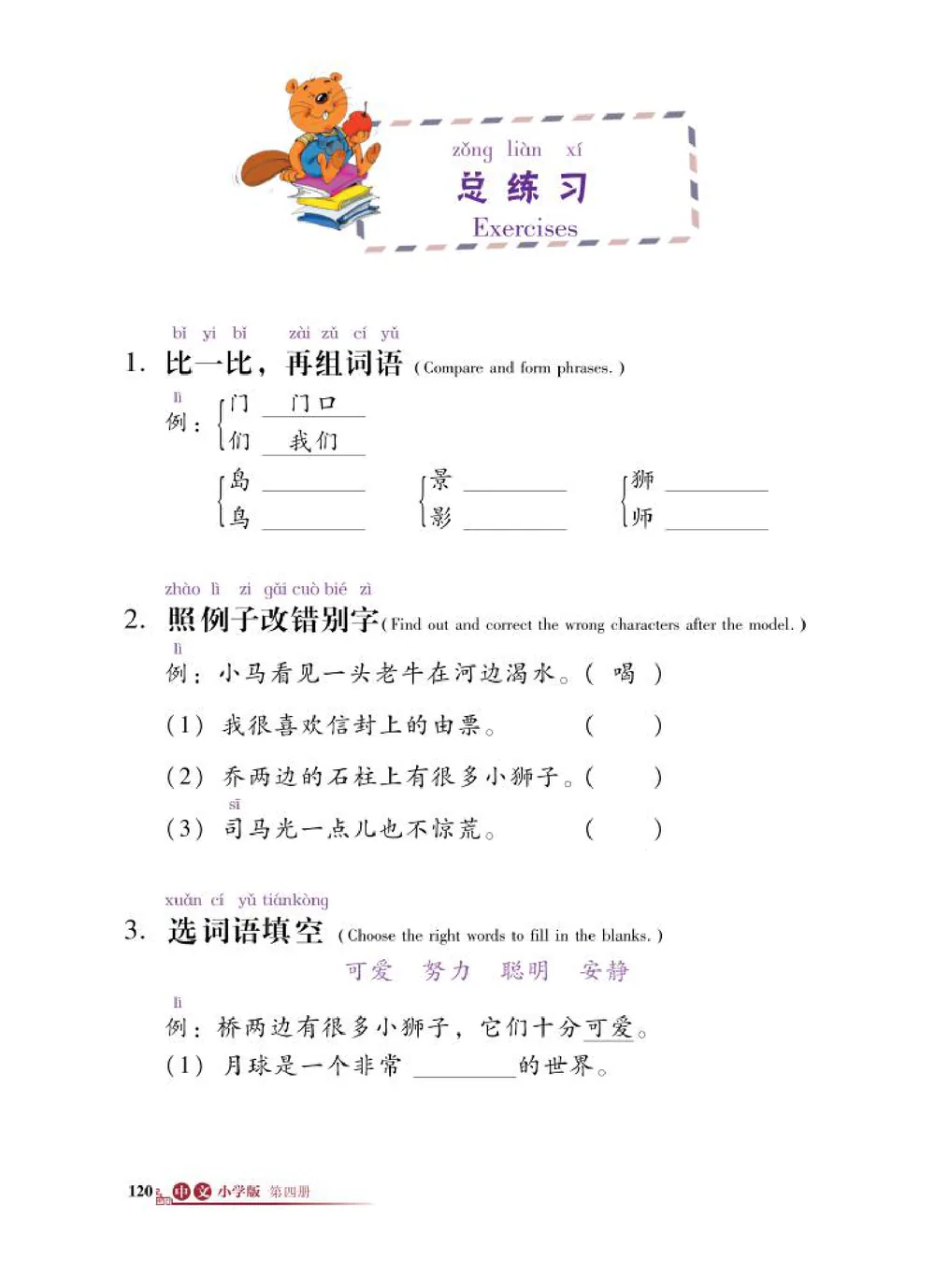
总练习
Exercises
课文 Text
1.bǐ比yī一bǐ比,zài再zǔ组cí词yǔ语(Compareand form phrases.)
1. Compare, then form phrases.
mén门kǒu口
doorway
lì例:
Example:
wǒ我men们
we; us
2.zhào照lì例zi子gǎi改cuò错bié别zì字(Find out and correct the wrong characters afterthe model.)
2. Follow the example: find and correct the wrong characters.
lì例:xiǎo小mǎ马kàn看jiàn见yī一tóu头lǎo老niú牛zài在hé河biān边kě渴shuǐ水。(hē喝)
Example: The little horse saw an old ox drinking at the river. (喝)
(1)wǒ我hěn很xǐ喜huān欢xìn信fēng封shàng上de的yóu由piào票。
(1) I like the stamp on the envelope very much.
(2)qiáo乔liǎng两biān边de的shí石zhù柱shàng上yǒu有hěn很duō多xiǎo小shī狮zi子。(
(2) There are many little lions on the stone posts along the bridge. (
(3)sī司mǎ马guāng光yì一diǎn点ér儿yě也bù不jīng惊huāng荒。
(3) Sima Guang was not the least bit flustered.
3.xuǎn选cí词yǔ语tián填kòng空(Choose the right words to filin theblanks.)
3. Choose the right words to fill in the blanks.
kě可ài爱nǔ努lì力
cōng聪míng明
clever
ān安jìng静
quiet
lì例:qiáo桥liǎng两biān边yǒu有hěn很duō多xiǎo小shī狮zi子,tā它men们shí十fēn分kě可ài爱
Example: There are many little lions along the bridge, and they are very charming
(1)yuè月qiú球shì是yí一gè个fēi非cháng常
(1) the moon is a very
de的shì世jiè界。
…the world.
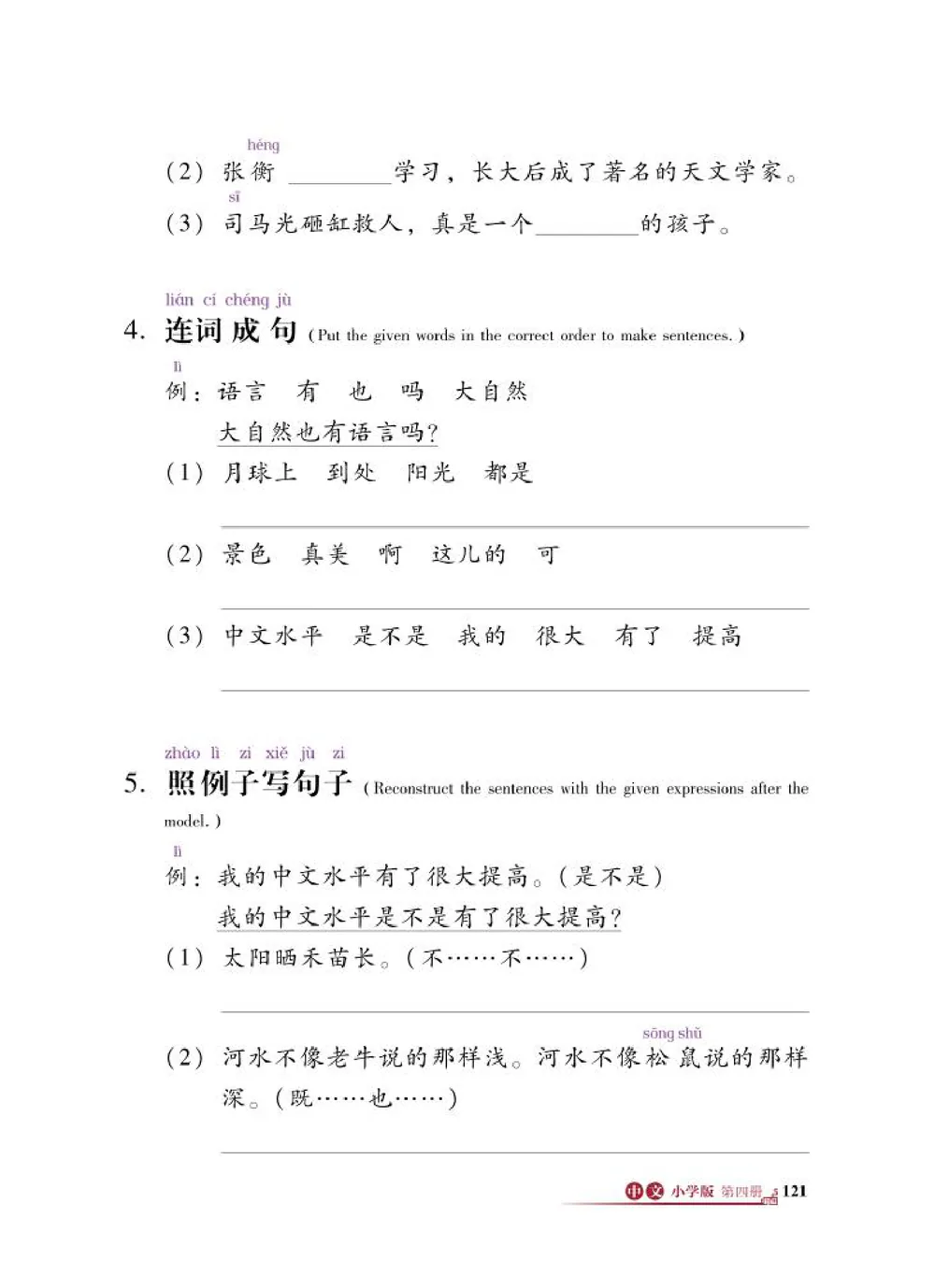
zhāng张héng衡
Zhang Heng
xué学xí习,zhǎng长dà大hòu后chéng成le了zhù著míng名de的tiān天wén文xué学jiā家。
…studied, and when he grew up became a famous astronomer.
sī司mǎ马guāng光zá砸gāng缸jiù救rén人,zhēn真shì是yí一gè个
Sima Guang broke the vat and saved him — he really was a
de的hái孩zi子。
…child.
4.lián连cí词chéng成jù句(Put thegiven wordsinthe coreet order to make sentences.)
4. Put the words in the right order to make sentences.
yǒu有yě也ma吗dà大zì自rán然
lì例:yǔ语yán言
Example: language
dà大zì自rán然yě也yǒu有yǔ语yán言ma吗?
Does nature have a language too?
(1)yuè月qiú球shàng上
(1) on the moon
dào到chù处yáng阳guāng光
sunshine everywhere
dōu都shì是
all are
(2)jǐng景sè色zhēn真měi美a啊zhè这ér儿de的
(3)zhōng中wén文shuǐ水píng平shì是bú不shì是
(3) has my Chinese
wǒ我de的hěn很dà大
yǒu有le了tí提gāo高
…has improved
5.zhào照lì例zi子xiě写jù句zi子(Reconstruct the sentences with the given expressions afer the
5. Follow the example and rewrite the sentences with the given expressions
lì例:wǒ我de的zhōng中wén文shuǐ水píng平yǒu有le了hěn很dà大tí提gāo高。(shì是bú不shì是)
Example: My Chinese has improved a great deal. (hasn't it)
wǒ我de的zhōng中wén文shuǐ水píng平shì是bú不shì是yǒu有le了hěn很dà大tí提gāo高?
Has my Chinese improved a great deal?
()tài太yáng阳shài晒hé禾miáo苗zhǎng长。(bù不·bù不)
( ) The sun shines and the seedlings grow. (without… not…)
(2)hé河shuǐ水bù不xiàng像lǎo老niú牛shuō说de的nà那yàng样qiǎn浅。hé河shuǐ水bù不xiàng像sōng松shǔ鼠shuō说de的nà那yàng样
(2) The river is not as shallow as the old ox said. The river is not as … as the squirrel said
shēn深。(jì既yě也··
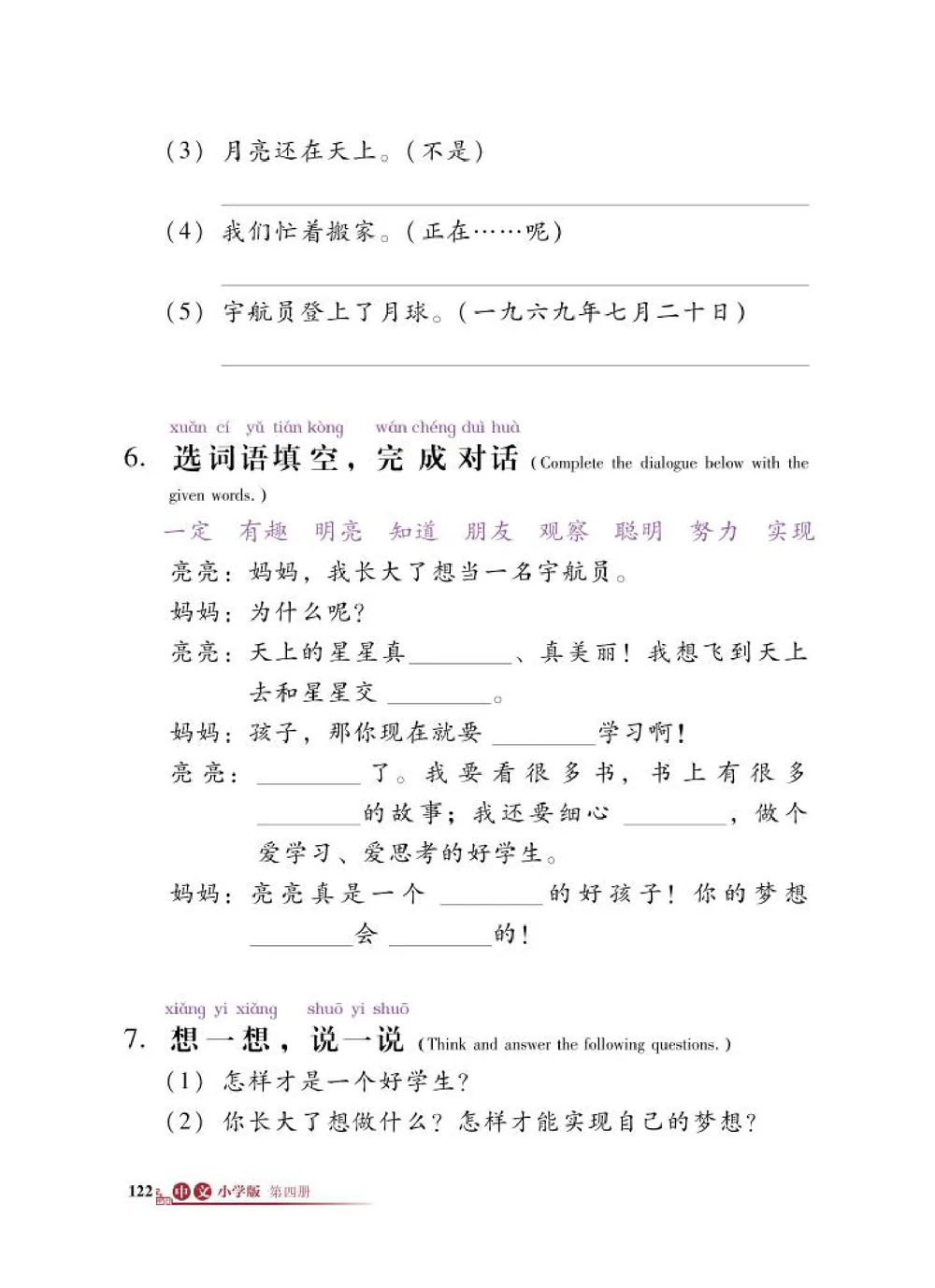
(3)yuè月liàng亮hái还zài在tiān天shàng上。(bú不shì是)
(3) The moon is still in the sky. (isn't it)
(4)wǒ我men们máng忙zhe着bān搬jiā家。(zhèng正zài在··ne呢)
(4) We are busy moving house. (in the middle of…)
(5)yǔ宇háng航yuán员dēng登shàng上le了yuè月qiú球。(yī一jiǔ九liù六jiǔ九nián年qī七yuè月èr二shí十rì日)
(5) The astronauts set foot on the moon. (20 July 1969)
6xuǎn选cí词yǔ语tián填kòng空,wán完chéng成duì对huà话
6. Choose the right words to complete the dialogue
yí一dìng定yǒu有qù趣míng明liàng亮
zhī知dào道
to know
péng朋yǒu友
friend
guān观chá察cōng聪míng明nǔ努lì力
shí实xiàn现
to bring about; to achieve
liàng亮liàng亮:mā妈mā妈,wǒ我zhǎng长dà大le了xiǎng想dāng当yī一míng名yǔ宇háng航yuán员。
Liangliang: Mum, when I grow up I want to be an astronaut.
mā妈mā妈:wèi为shén什me么ne呢?
Mum: Why is that?
liàng亮liàng亮:tiān天shàng上de的xīng星xīng星zhēn真
Liangliang: the stars in the sky are really
zhēn、měi真lì美wǒ丽!xiǎng我fēi想dào飞tiān到shàng天上
…so beautiful! I want to fly up into the sky
qù去hé和xīng星xīng星jiāo交
…go and make friends with the stars
mā妈mā妈:hái孩zi子,nà那nǐ你xiàn现zài在jiù就yào要
Mum: Then, child, you must start now
xué学xí习a啊!
…study hard!
liàng亮liàng亮:
Liangliang:
le了。wǒ我yào要kàn看hěn很duō多shū书,shū书shàng上yǒu有hěn很duō多
…I want to read many books; books have many
de的gù故shì事;wǒ我hái还yào要xì细xīn心
…stories; and I will also look carefully
,zuò做gè个
, be a
ài爱xué学xí习、ài爱sī思kǎo考de的hào好xué学shēng生。
…a good pupil who loves to study and to think.
mā妈mā妈:liàng亮liàng亮zhēn真shì是yí一gè个
Mum: Liangliang really is a
de的hǎo好hái孩zi子!nǐ你de的mèng梦xiǎng想
…a good child! Your dream
de的!
7.xiǎng想yī一xiǎng想,shuō说yī一shuō说(Think and ansiwer the following questions.)
7. Think about it and answer these questions.
(1)zěn怎yàng样cái才shì是yí一gè个hào好xué学shēng生?
(1) What makes a good pupil?
(2)nǐ你zhǎng长dà大le了xiǎng想zuò做shén什me么?zěn怎yàng样cái才néng能shí实xiàn现zì自jǐ己de的mèng梦xiǎng想?
(2) What do you want to be when you grow up? How can you make your dream come true?
课本的生字表没能从扫描件上读出来,下面是这一课第一次出现的字。 The book's own 生字 list could not be read for this lesson; these are the characters it introduces.
测验 Quiz — 23 questions
做完这些题就算学完这一课。 Finish these to complete the lesson.
-
门 Choose the pinyin
-
口 Choose the pinyin
-
边 Choose the pinyin
-
渴 Choose the pinyin
-
欢 Choose the pinyin
-
由 Choose the pinyin
-
qiáo Choose the character
-
liǎng Choose the character
-
diǎn Choose the character
-
jīng Choose the character
-
huāng Choose the character
-
kě Choose the character
-
门(mén) What does it mean?
-
口(kǒu) What does it mean?
-
边(biān) What does it mean?
-
渴(kě) What does it mean?
-
欢(huān) What does it mean?
-
由(yóu) What does it mean?
-
例:小马看见一头老牛在河边_水。(喝) Which character belongs in the blank?
-
(1)我很喜欢信封上的_票。 Which character belongs in the blank?
-
(2)乔_边的石柱上有很多小狮子。( Which character belongs in the blank?
-
(3)司马光一点儿也不_荒。 Which character belongs in the blank?
-
_爱努力 Which character belongs in the blank?
-
把汉字和拼音连起来 Match each character to its pinyin
-
Listen and choose the character you hear
-
Listen and choose the character you hear
-
Listen and choose the character you hear
-
Listen and choose the character you hear
-
生字卡片 Flashcards for this lesson's characters
门 mén
gate; door; doorway; gateway; opening; valve; switch; other door-like or gate-like structure; way to do sth; knack; method; approach口 kǒu
mouth; classifier for things with mouths (people, domestic animals, cannons, wells etc); classifier for bites or mouthfuls边 biān
side; edge; margin渴 kě
thirsty欢 huān
variant of 歡|欢[huan1]由 yóu
to follow; from; because of; due to乔 qiáo
tall两 liǎng
two; both; some点 diǎn
to touch briefly; to tap; to mark with a dot; to check off (on a list); to order (food etc); to select惊 jīng
to startle; to be frightened; to be scared荒 huāng
desolate; shortage; scarce可 kě
(prefix) can; may; able to; -able; to approve; to permit; to suit它 tā
it十 shí
ten; 10衡 héng
to weigh; weight; measure后 hòu
empress; queen; (archaic) monarch成 chéng
to succeed; to finish; to complete砸 zá
to smash; to pound; to fail救 jiù
variant of 救[jiu4]这 zhè
(pronoun) this; these; (bound form) this; the (followed by a noun); (bound form) this; these (followed by a classifier) (in this sense, commonly pr. [zhei4], esp. in Beijing)禾 hé
(bound form) grain plant; cereal crop苗 miáo
sprout呢 ne
(sentence-final particle) used in questions to link back to prior discourse or context ("what about...?", "and...?"); (sentence-final particle) indicating that a state or situation still holds; (discourse particle) used to mark a slight pause or emphasis in speech九 jiǔ
nine; 9年 nián
year七 qī
seven; 7二 èr
two; 2; (Beijing dialect) stupid日 rì
(bound form) sun; day; day of the month对 duì
right; correct; towards; at; for; concerning; regarding话 huà
dialect; language; spoken words道 dào
road; path; (bound form) way; reason; principle; (bound form) a skill; an art; a specialization现 xiàn
to appear; present; now为 wèi
because of; for; to什 shén
what交 jiāo
to hand over; to deliver; to pay (money); to turn over; to make friends; (of lines) to intersect要 yào
to want; to need; to ask for; will; shall; about to; need to; should
课本原页,点图看大图。 The printed pages this lesson comes from — tap to enlarge.