Lesson 12 / 25
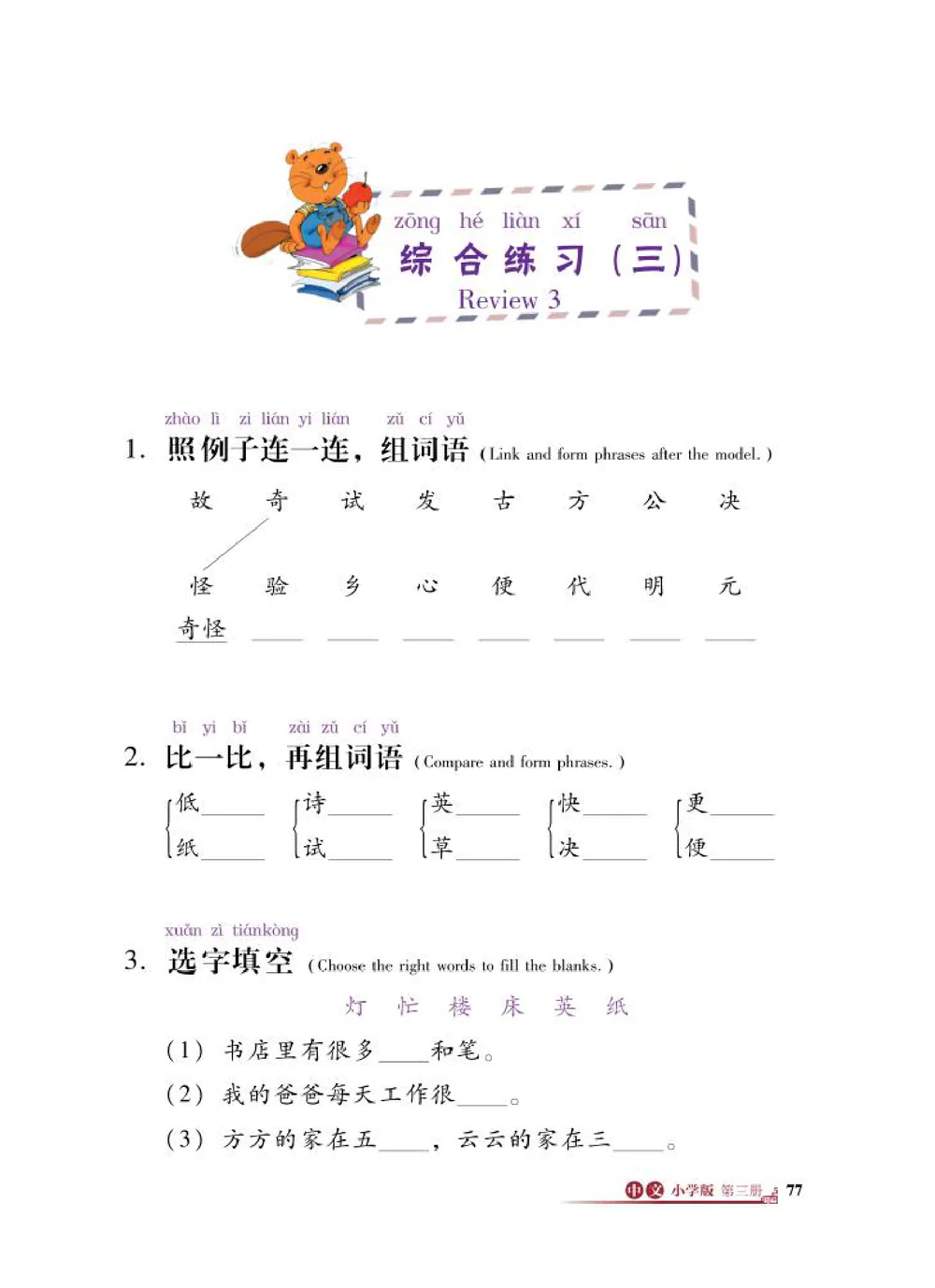
综合练习(三)
Review 3



课文 Text
1.zhào照lì例zi子lián连yī一lián连,zǔ组cí词yǔ语(Link and form phrases after the model.)
1. Follow the example: join them up and form phrases.
gù故qí奇shì试fā发gǔ古fāng方gōng公jué决
biàn便dài代míng明
qí奇guài怪
strange; odd
2.bǐ比yī一bǐ比,zài再zǔ组cí词yǔ语(Compare and form phrases.)
2. Compare, then form phrases.
[shī诗
[zhǐ纸
[shì试
[cǎo草
[jué决
3.xuǎn选zì字tián填kòng空(Choose the right words to filtheblanks.)
3. Choose the right characters to fill in the blanks.
dēng灯máng忙lóu楼chuáng床yīng英zhǐ纸
hé和bǐ笔。
…and a pen.
(1)shū书diàn店lǐ里yǒu有hěn很duō多
(1) there are many … in the bookshop
(2)wǒ我de的bà爸bà爸měi每tiān天gōng工zuò作hěn很
(2) My dad works very … every day
,yún云yún云de的jiā家zài在sān三
…Yunyun's home is on the third
(3)fāng方fāng方de的jiā家zài在wǔ五
(3) Fangfang's home is on the fifth
(4)kē科xué学jiā家wǎ瓦tè特shì是
(4) the scientist Watt was
guó国rén人。
(5)gē哥gē哥měi每tiān天liù六diǎn点qǐ起
(5) My brother gets up at six every day
(6)lǎo老shī师gào告sù诉wǒ我men们:“hóng红
(6) The teacher told us, "Red
tíng停,lǜ绿
xíng行。”
…all right."
4.xuǎn选cí词yǔ语tián填kòng空(Chose the right words to fill in the blanks.)
4. Choose the right words to fill in the blanks.
lǜ绿sè色hǎo好chī吃yǒu有míng名gǔ古lǎo老
kuān宽kuān宽
wide
de的miàn面bāo包
…the bread
de的kē科xué学jiā家
…the scientist
de的xiǎo小cǎo草
…the little grass
de的gù故shì事
…the story of
de的jiē街dào道
…the street
5.zhào照lì例zi子gǎi改bìng病jù句(Crecthefollowing sentences after the model.)
5. Follow the example and correct these sentences.
lì例:wǒ我qǐ起chuáng床liù六diǎn点。
Example: I get up at six.
wǒ我liù六diǎn点qǐ起chuáng床。
I get up at six.
(1)yé爷yé爷shì是fēi飞jī机lái来zuò坐de的。
(2)hóng红hóng红bù不míng明bái白hái还shì是。
6.zhào照lì例zi子wán完chéng成jù句zi子(Complete the sentences with the given expressions afier
6. Follow the example and complete the sentences with the given expressions
lì例:míng明míng明pǎo跑guò过qù去。(fēi飞kuài快dì地)
Example: Mingming ran over. (quickly)
míng明míng明fēi飞kuài快dì地pǎo跑guò过qù去。
Mingming ran over quickly.
(1)xiǎo小péng朋yǒu友chàng唱gē歌。(gāo高xìng兴dì地)
(1) The children sang. (happily)
(2)wǒ我zǒu走chū出le了shū书diàn店。(gāo高gāo高xìng兴xìng兴dì地)
(2) I walked out of the bookshop. (happily)
(3)yún云yún云xiě写hàn汉zì字。(rèn认zhēn真dì地)
(3) Yunyun wrote characters. (carefully)
zhōng中Q
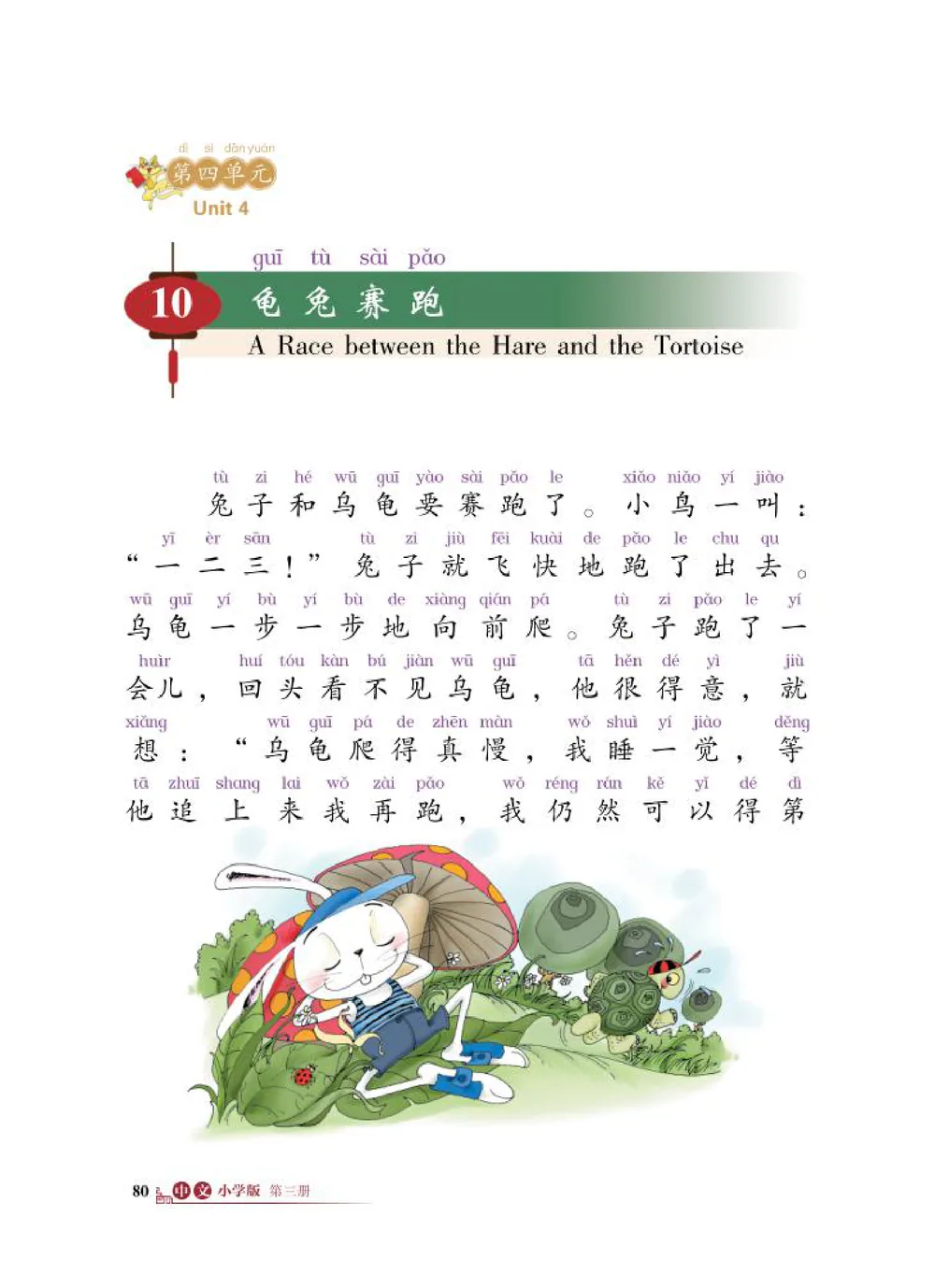
guī龟tù兔sài赛pǎo跑
The Tortoise and the Hare
tù兔zi子hé和wū乌guī龟yào要sài赛pǎo跑le了
The hare and the tortoise are going to race
xiǎo小niǎo鸟
little bird
tù兔zi子jiù就fēi飞kuài快dì地pǎo跑le了chū出qù去
and the hare shot off
wū乌guī龟yí一bù步yí一bù步dì地xiàng向qián前pá爬。tù兔zi子pǎo跑le了
The tortoise crawled forward step by step. The hare ran
huì会er儿,huí回tóu头kàn看bú不jiàn见wū乌guī龟,tā他hěn很dé得yì意,jiù就
…looked back and could not see the tortoise; very pleased with himself, he
xiǎng想:
thought:
wū乌guī龟pá爬dé得zhēn真màn慢,wǒ我shuì睡yī一jiào觉,děng等
The tortoise is so slow — I'll have a nap and wait
tā他zhuī追shàng上lái来wǒ我zài再pǎo跑,wǒ我réng仍rán然kě可yǐ以dé得dì第
When he catches up I can run again and still come
zhè这yàng样yī一xiǎng想,tù兔zi子jiù就shuì睡qǐ起jué觉lái来le了
Thinking this, the hare fell asleep
wū乌guī龟zài在hòu后miàn面bù不tíng停dì地xiàng向qián前pá爬,cóng从tù兔zi子
The tortoise kept crawling on behind, and past the hare
shēn身biān边pá爬le了guò过qù去,yì一zhí直pá爬dào到le了zhōng终diǎn点,dé得
…crawled past him, right to the finish, and won
le了dì第yì一míng名,kě可tù兔zi子hái还zài在nà那ér儿shuì睡dà大jué觉ne呢!
…came first, while the hare was still fast asleep!
shēng生bǎo宝(Character-)
Characters
guī龟sài赛wū乌bù步pá爬huí回
yì意màn慢zhuī追
réng仍rán然dì第
词语 Words
chū出qù去
to go out
réng仍rán然
still
zhè这yàng样
like this
shēn身biān边
at your side
guò过qù去
to go over; the past
kě可yǐ以
can; may
句子 Sentences
tù兔zi子fēi飞kuài快dì地pǎo跑le了chū出qù去。
The hare shot off.
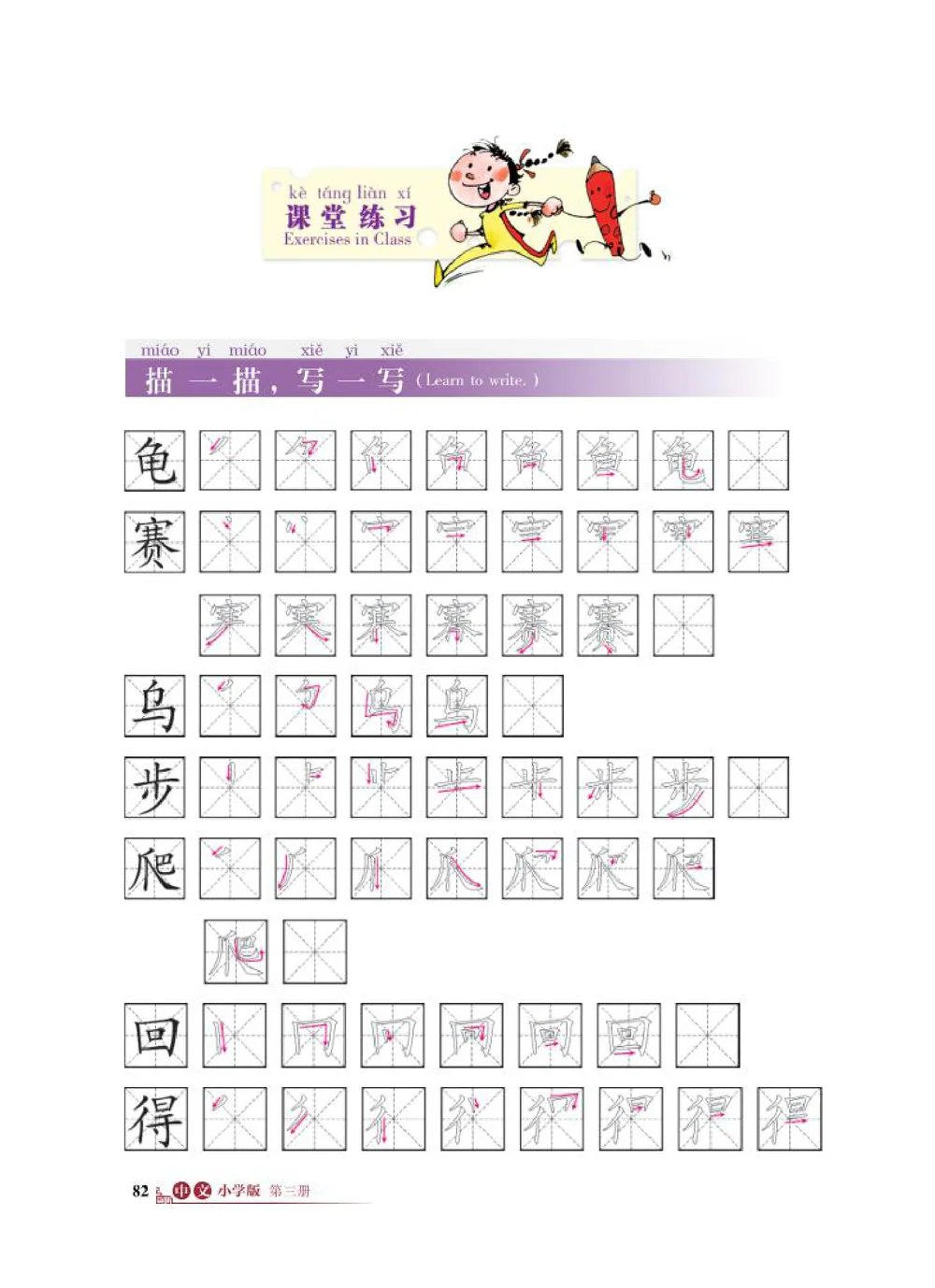
课堂练习 Exercises in Class
miáo描yī一miáo描,xiě写yī一xiě写Leam towite)
zhōng中
sài赛
pá爬
dé得
yì意
màn慢
réng仍
rán然
dì第
zhōng中
课本的生字表没能从扫描件上读出来,下面是这一课第一次出现的字。 The book's own 生字 list could not be read for this lesson; these are the characters it introduces.
测验 Quiz — 23 questions
做完这些题就算学完这一课。 Finish these to complete the lesson.
-
故 Choose the pinyin
-
发 Choose the pinyin
-
方 Choose the pinyin
-
公 Choose the pinyin
-
明 Choose the pinyin
-
草 Choose the pinyin
-
máng Choose the character
-
hé Choose the character
-
bǐ Choose the character
-
shū Choose the character
-
diàn Choose the character
-
hěn Choose the character
-
故(gù) What does it mean?
-
发(fā) What does it mean?
-
方(fāng) What does it mean?
-
公(gōng) What does it mean?
-
明(míng) What does it mean?
-
草(cǎo) What does it mean?
-
故奇试发古_公决 Which character belongs in the blank?
-
灯_楼床英纸 Which character belongs in the blank?
-
(1)书店里有_多 Which character belongs in the blank?
-
(2)我的爸爸每_工作很 Which character belongs in the blank?
-
,云_的家在三 Which character belongs in the blank?
-
把汉字和拼音连起来 Match each character to its pinyin
-
Listen and choose the character you hear
-
Listen and choose the character you hear
-
Listen and choose the character you hear
-
Listen and choose the character you hear
-
生字卡片 Flashcards for this lesson's characters
故 gù
happening; instance; reason发 fā
to send out; to show (one's feeling); to issue方 fāng
square; power or involution (math.); upright公 gōng
public; collectively owned; common明 míng
bright; opposite: dark 暗[an4]; (of meaning) clear草 cǎo
variant of 草[cao3]忙 máng
busy; hurriedly; to hurry和 hé
old variant of 和[he2]笔 bǐ
writing brush; writing implement; brushstroke; stroke (in painting or calligraphy); (bound form) style of writing; literary manner; technique of brushwork书 shū
book; letter; document店 diàn
inn; old-style hotel; (bound form) shop; store很 hěn
very; quite; (also, often used before an adjective without intensifying its meaning, i.e. as a meaningless syntactic element)多 duō
many; much; more; a lot of; too many; in excess; (after a numeral) ... odd爸 bà
father; dad; pa每 měi
each; every天 tiān
day; sky; heaven工 gōng
work; worker; skill作 zuò
to do; to engage in; to write; to compose; to pretend; to feign云 yún
(classical) to say三 sān
three; 3五 wǔ
five; 5瓦 wǎ
roof tile; abbr. for 瓦特[wa3 te4]特 tè
special; unique; distinguished国 guó
country; nation; state; (bound form) national人 rén
person; people哥 gē
elder brother六 liù
six; 6老 lǎo
prefix used before the surname of a person or a numeral indicating the order of birth of the children in a family or to indicate affection or familiarity; old (of people); venerable (person)师 shī
teacher; master; expert告 gào
(bound form) to say; to tell; to announce; to report; to denounce诉 sù
variant of 訴|诉[su4]红 hóng
red; popular; revolutionary绿 lǜ
used in names行 xíng
(bound form) to walk; to go; to travel; (literary) trip; journey; visit; (bound form) temporary; makeshift色 sè
color; ; look名 míng
name; noun (part of speech); place (e.g. among winners)
课本原页,点图看大图。 The printed pages this lesson comes from — tap to enlarge.