Lesson 20 / 29
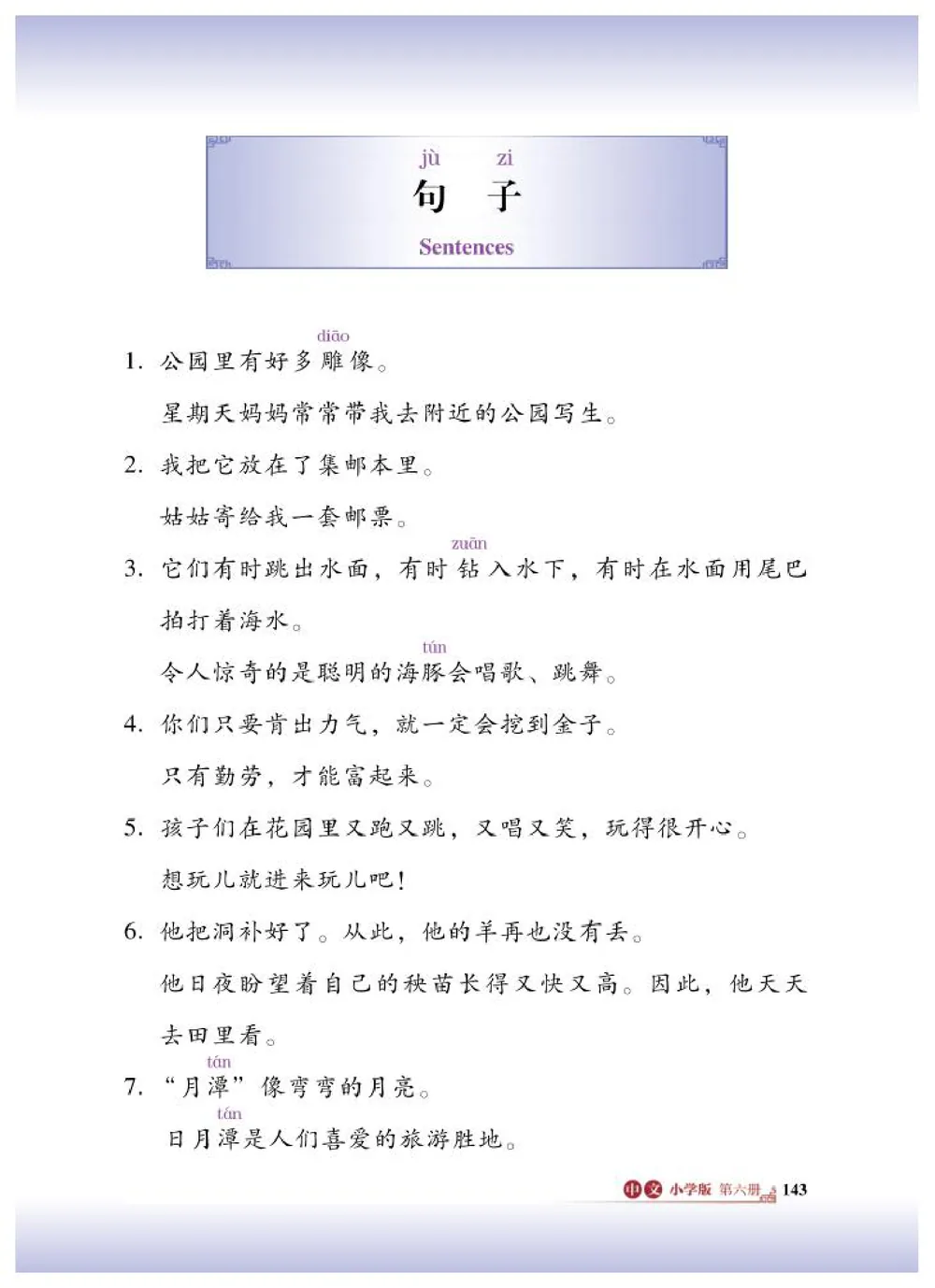
句子
Sentences
课文 Text
1.gōng公yuán园lǐ里yǒu有hǎo好duō多diāo雕xiàng像。
1. There are many sculptures in the park.
xīng星qī期tiān天mā妈mā妈cháng常cháng常dài带wǒ我qù去fù附jìn近de的gōng公yuán园xiě写shēng生。
On Sundays Mum often takes me to sketch in the park nearby.
2.wǒ我bǎ把tā它fàng放zài在le了jí集yóu邮běn本lǐ里
2. I put it in my stamp album
gū姑gū姑jì寄gěi给wǒ我yī一tào套yóu邮piào票。
My aunt sent me a set of stamps.
3.tā它men们yǒu有shí时tiào跳chū出shuǐ水miàn面,yǒu有shí时zuān钻rù入shuǐ水xià下,yǒu有shí时zài在shuǐ水miàn面yòng用wěi尾ba巴
3. Sometimes they leap out of the water, sometimes they dive under, sometimes at the surface with their tails
pāi拍dǎ打zhe着hǎi海shuǐ水。
…beating the water.
jīn今rén人jīng惊qí奇de的shì是cōng聪míng明de的hǎi海tún豚huì会chàng唱gē歌、tiào跳wǔ舞
What is astonishing is that the clever dolphins can sing and dance
4.nǐ你men们zhǐ只yào要kěn肯chū出lì力qì气,jiù就yí一dìng定huì会wā挖dào到jīn金zi子。
4. If only you are willing to work, you are sure to dig up gold.
zhǐ只yǒu有qín勤láo劳,cái才néng能fù富qǐ起lái来。
Only by hard work can you grow rich.
5.hái孩zi子men们zài在huā花yuán园lǐ里yòu又pǎo跑yòu又tiào跳,yòu又chàng唱yòu又xiào笑,wán玩dé得hěn很kāi开xīn心。
5. The children ran and jumped and sang and laughed in the garden, and had a fine time.
xiǎng想wán玩ér儿jiù就jìn进lái来wán玩ér儿ba吧!
If you want to play, come in and play!
6.tā他bǎ把dòng洞bǔ补hǎo好le了。cóng从cǐ此,tā他de的yáng羊zài再yě也méi没yǒu有diū丢。
6. He mended the hole. After that he never lost another sheep.
tā他rì日yè夜pàn盼wàng望zhe着zì自jǐ己de的qiū秋miáo苗zhǎng长dé得yòu又kuài快yòu又gāo高。yīn因cǐ此,tā他tiān天tiān天
Day and night he longed for his shoots to grow fast and tall. So every day he
qù去tián田lǐ里kàn看。
…went to look at the field.
7.“yuè月tán潭”xiàng像wān弯wān弯de的yuè月liàng亮。
7. The Moon Pool is like the curved moon.
rì日yuè月tán潭shì是rén人men们xǐ喜ài爱de的lǚ旅yóu游shèng胜dì地。
The Sun Moon Lake is a favourite place to visit.
8.shuí谁yě也shuō说bù不chū出dào道lǐ理lái来。
8. Nobody could explain why.
wàng望yuǎn远jìng镜chú除le了yòng用yú于guān观chá察tiān天kōng空zhī之wài外,hái还kě可yǐ以yòng用yú于jūn军shì事。
Besides observing the sky, the telescope can also be used in war.
10.tā他duō多cì次xiàng向chǔ楚wáng王tí提chū出zì自jǐ己de的zhèng政zhì治zhǔ主zhāng张
10. He put his political views to the King of Chu many times
wèi为le了jì纪niàn念qū屈yuán原,rén人men们jiù就zài在nóng农lì历wǔ五yuè月chū初wǔ五sài赛lóng龙zhōu舟
To remember Qu Yuan, people race dragon boats on the fifth day of the fifth lunar month
11.tā她qīng青shào少nián年shí时dài代jiù就hěn很ài爱xué学xí习。
11. She loved to study from her earliest years.
yīn音yuè乐、měi美shù术tā她dōu都xué学guò过。
She studied both music and art.
12tā他chū出shēng生zài在yún云nán南yí一gè个yī医shēng生de的jiā家tíng庭lǐ里。
12. He was born into a doctor's family in Yunnan.
tiān天jiù就yào要xià下yǔ雨le了,tā他yì一diǎn点ér儿yě也méi没yǒu有chá察jué觉
…it was about to rain and he did not notice at all
课本的生字表没能从扫描件上读出来,下面是这一课第一次出现的字。 The book's own 生字 list could not be read for this lesson; these are the characters it introduces.
测验 Quiz — 23 questions
做完这些题就算学完这一课。 Finish these to complete the lesson.
-
雕 Choose the pinyin
-
像 Choose the pinyin
-
它 Choose the pinyin
-
放 Choose the pinyin
-
跳 Choose the pinyin
-
水 Choose the pinyin
-
hǎi Choose the character
-
jīng Choose the character
-
cōng Choose the character
-
tún Choose the character
-
wǔ Choose the character
-
lì Choose the character
-
雕(diāo) What does it mean?
-
像(xiàng) What does it mean?
-
它(tā) What does it mean?
-
放(fàng) What does it mean?
-
跳(tiào) What does it mean?
-
水(shuǐ) What does it mean?
-
1.公园里有好多雕_。 Which character belongs in the blank?
-
2.我把它_在了集邮本里 Which character belongs in the blank?
-
3.它们有时跳出_面,有时钻入水下,有时在水面用尾巴 Which character belongs in the blank?
-
拍打着海_。 Which character belongs in the blank?
-
今人惊奇的是聪明的海_会唱歌、跳舞 Which character belongs in the blank?
-
把汉字和拼音连起来 Match each character to its pinyin
-
Listen and choose the character you hear
-
Listen and choose the character you hear
-
Listen and choose the character you hear
-
Listen and choose the character you hear
-
生字卡片 Flashcards for this lesson's characters
雕 diāo
variant of 雕[diao1], to engrave像 xiàng
to resemble; to be like; to look as if它 tā
it放 fàng
to put; to place; to release跳 tiào
to jump; to hop; to skip over水 shuǐ
water; (after a name) ... River; to swim (used mostly in 會水|会水[hui4 shui3] and 水性[shui3 xing4])海 hǎi
ocean; sea惊 jīng
to startle; to be frightened; to be scared聪 cōng
(literary) acute (of hearing); (bound form) clever; intelligent; sharp豚 tún
suckling pig舞 wǔ
to dance; to wield; to brandish力 lì
power; force; strength定 dìng
to fix; to set; to make definite; to subscribe to (a newspaper etc); to book (tickets etc); to order (goods etc); to congeal; to coagulate劳 láo
(bound form) to toil; labor; (bound form) laborer; (bound form) meritorious deed孩 hái
(bound form) child笑 xiào
old variant of 笑[xiao4]进 jìn
to go forward; to advance; to go in此 cǐ
this; these高 gāo
high; tall; above average田 tián
field; farm潭 tán
deep pool; pond; pit (dialect)旅 lǚ
trip; travel; to travel游 yóu
to swim; variant of 遊|游[you2]谁 shuí
who; also pr. [shui2]治 zhì
to rule; to govern; to manage主 zhǔ
owner; master; host张 zhāng
to open up; to spread; sheet of paper纪 jì
order; discipline; age念 niàn
variant of 念[nian4], to read aloud农 nóng
(bound form) agriculture五 wǔ
five; 5舟 zhōu
boat雨 yǔ
rain
课本原页,点图看大图。 The printed pages this lesson comes from — tap to enlarge.