Lesson 17 / 29
总练习
Exercises
课文 Text
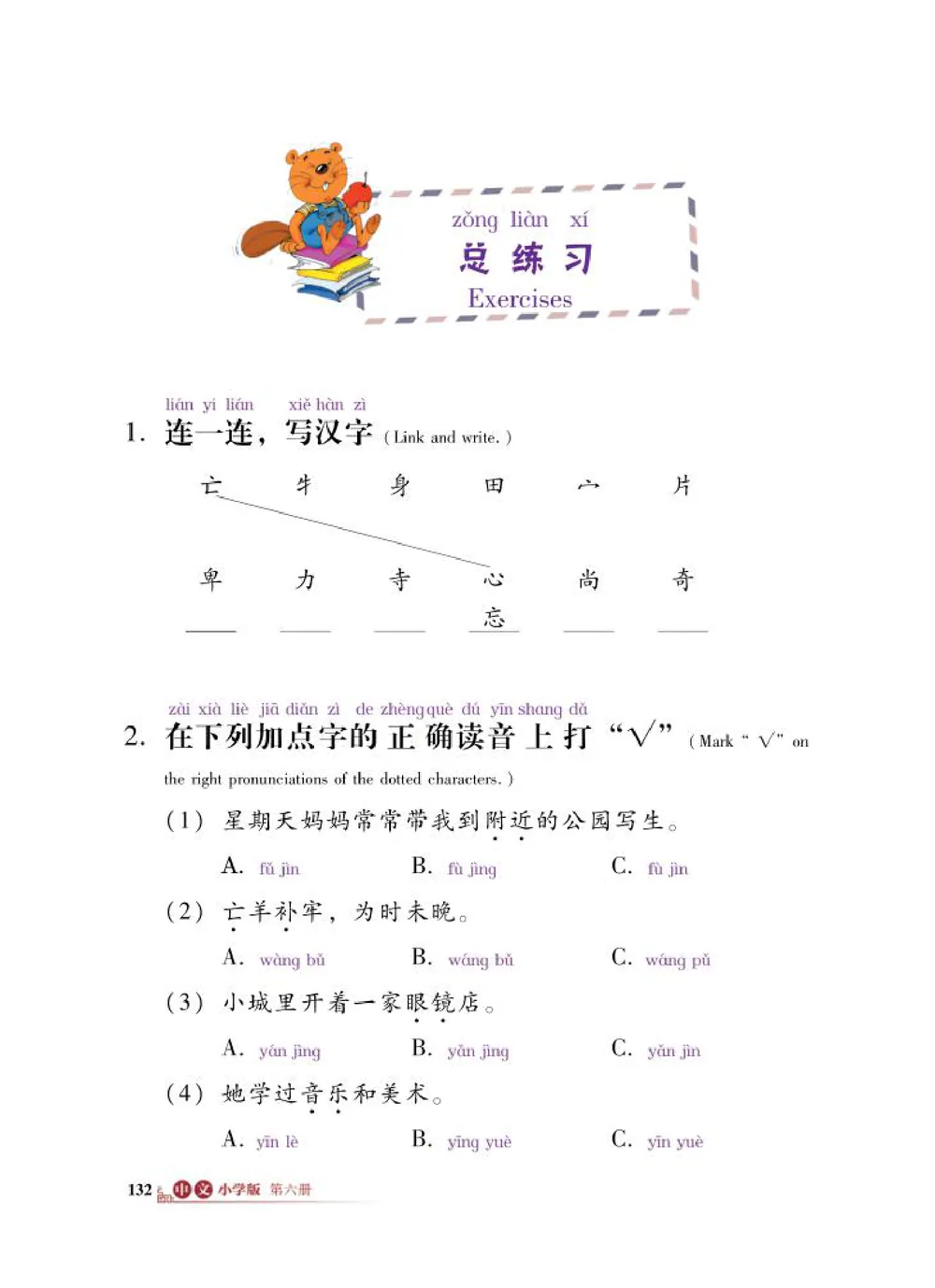
1.lián连yī一lián连,xiě写hàn汉zì字(Linkandwrite.)
1. Join them up and write the characters.
shàng尚qí奇
2.zài在xià下liè列jiā加diǎn点zì字de的zhèng正què确dú读yīn音shàng上dǎ打“
2. Mark the correct pronunciation of each marked character
(1)xīng星qī期tiān天mā妈mā妈cháng常cháng常dài带wǒ我dào到fù附jìn近de的gōng公yuán园xiě写shēng生。
(1) On Sundays Mum often takes me to sketch in the park nearby.
(2)wáng亡yáng羊bǔ补láo牢,wéi为shí时wèi未wǎn晚。
(2) Mend the fold and it is not too late.
(3)xiǎo小chéng城lǐ里kāi开zhe着yī一jiā家yǎn眼jìng镜diàn店。
(3) There was a spectacle shop in the little town.
(4)tā她xué学guò过yīn音yuè乐hé和měi美shù术。
(4) She studied music and art.
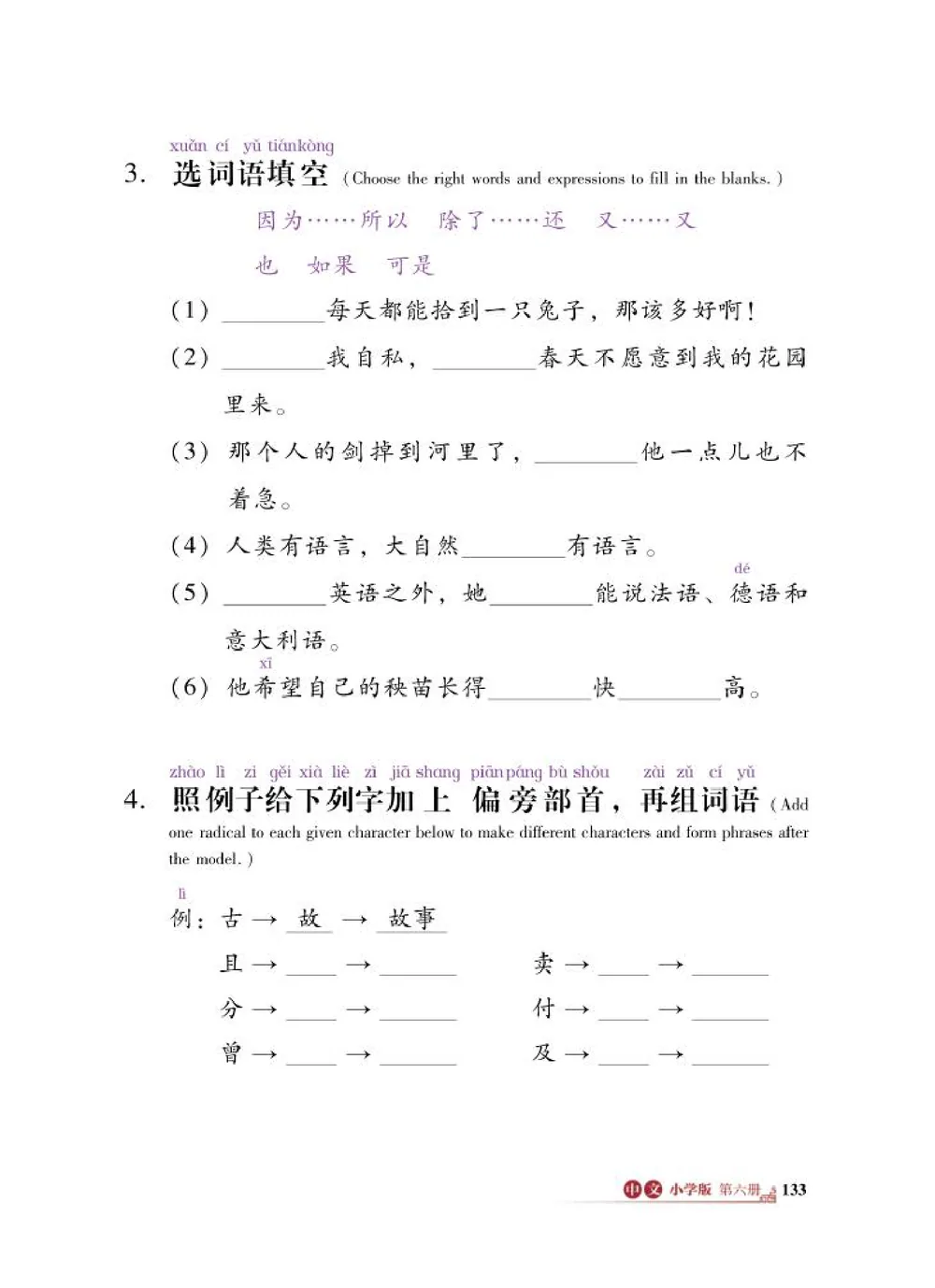
3.xuǎn选cí词yǔ语tián填kòng空(Choose the right words and expresions tofll in the blanks.)
3. Choose the right words and expressions to fill in the blanks.
yīn因wèi为·suǒ所yǐ以
because… so…
chú除le了hái还yòu又yòu又
yě也rú如guǒ果
kě可shì是
but; however
měi每tiān天dōu都néng能shí拾dào到yī一zhī只tù兔zi子,nà那gāi该duō多hǎo好a啊!
…could pick up a hare every day, how good that would be!
wǒ我zì自sī私,
…I was selfish,
chūn春tiān天bù不yuàn愿yì意dào到wǒ我de的huā花yuán园
Spring will not come to my garden
lǐ里lái来。
(3)nà那ge个rén人de的jiàn剑diào掉dào到hé河lǐ里le了,
(3) The man's sword fell into the river,
tā他yì一diǎn点ér儿yě也bù不
he was not the least bit
zháo着jí急。
…anxious.
(4)rén人lèi类yǒu有yǔ语yán言,dà大zì自rán然
(4) People have language, and nature
yǒu有yǔ语yán言。
…has a language.
yīng英yǔ语zhī之wài外,tā她
…besides English, she
néng能shuō说fǎ法yǔ语、dé德yǔ语hé和
…could speak French, German and
yì意dà大lì利yǔ语。
…Italian.
(6)tā他xī希wàng望zì自yǐ已de的qiū秋miáo苗zhǎng长dé得
(6) He hoped his own shoots would grow
4.zhào照lì例zi子gěi给xià下liè列zì字jiā加shàng上piān偏páng旁bù部shǒu首,zài再zǔ组cí词yǔ语(Add
4. Follow the example: add a radical to these characters and form phrases
lì例:gǔ古→gù故yī一gù故shì事
Example: 古 → 故 → 故事
qiě且→
mài卖→
fù付→
jí及→
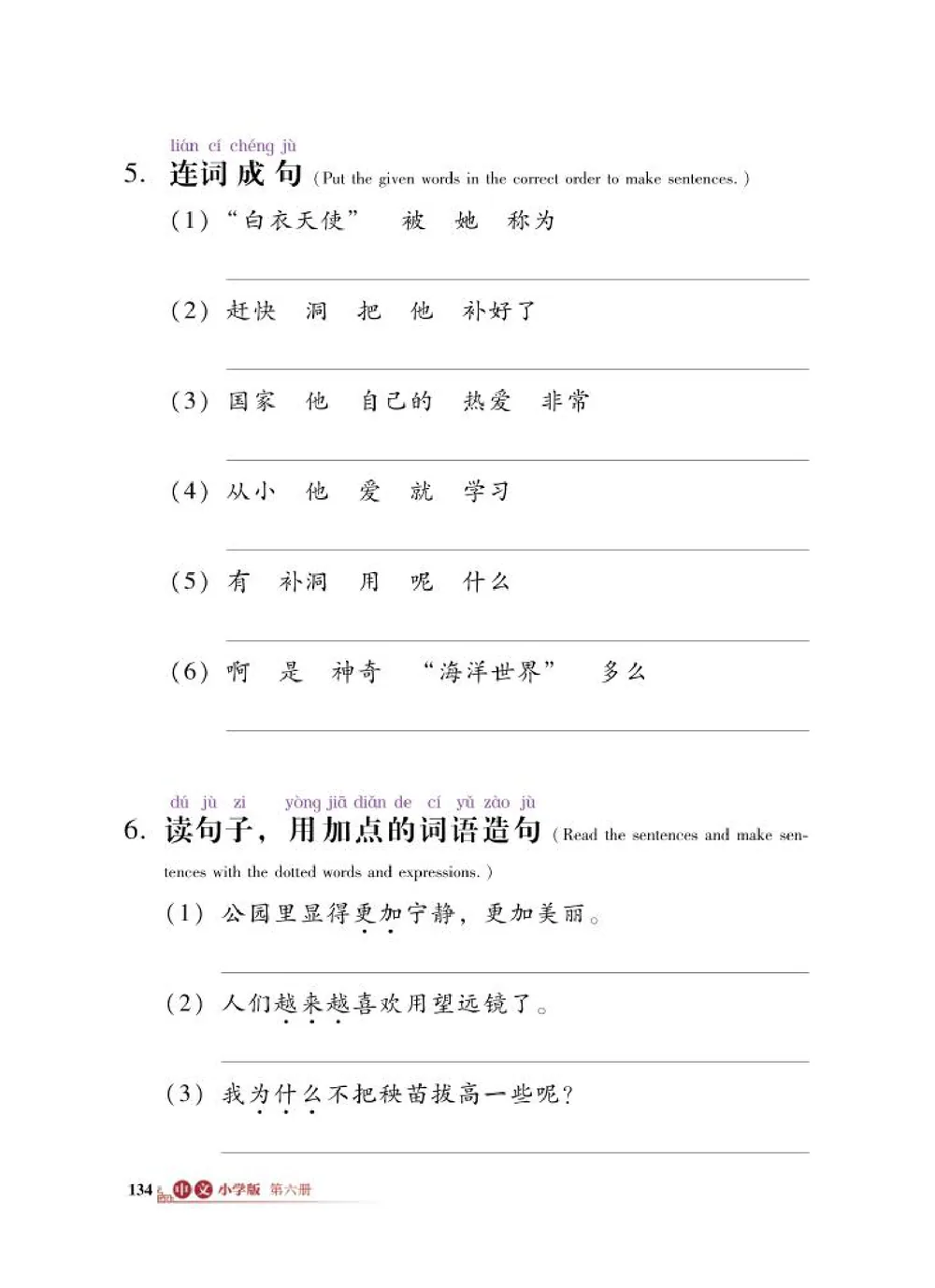
5.lián连cí词chéng成jù句(Put the given words in the correct order to make sentences.
5. Put the words in the right order to make sentences.
(1)“bái白yī衣tiān天shǐ使”
(1) the nurses
bèi被tā她chēng称wéi为
…which she called
(2)gǎn赶kuài快
(2) quickly
dòng洞bǎ把tā他
bǔ补hǎo好le了
…mended.
(3)guó国jiā家tā他zì自jǐ己de的
rè热ài爱
to love deeply
fēi非cháng常
very; extremely
(4)cóng从xiǎo小
(4) since childhood
tā他ài爱jiù就xué学xí习
(5)yǒu有bǔ补dòng洞
yòng用ne呢shén什me么
(6)a啊shì是shén神qí奇
“hǎi海yáng洋shì世jiè界”
the Ocean World
duō多me么
how (very)
6.dú读jù句zi子,yòng用jiā加diǎn点de的cí词yǔ语zào造jù句
6. Read the sentences and make new ones with the marked words
(1)gōng公yuán园lǐ里xiǎn显de得gèng更jiā加níng宁jìng静,gèng更jiā加měi美lì丽。
(1) The park seemed quieter and more beautiful still.
(2)rén人men们yuè越lái来yuè越xǐ喜huān欢yòng用wàng望yuǎn远jìng镜le了。
(2) People grew fonder and fonder of using the telescope.
(3)wǒ我wèi为shén什me么bù不bǎ把yāng秧miáo苗bá拔gāo高yī一xiē些ne呢?
(3) Why do I not pull the shoots up a little?
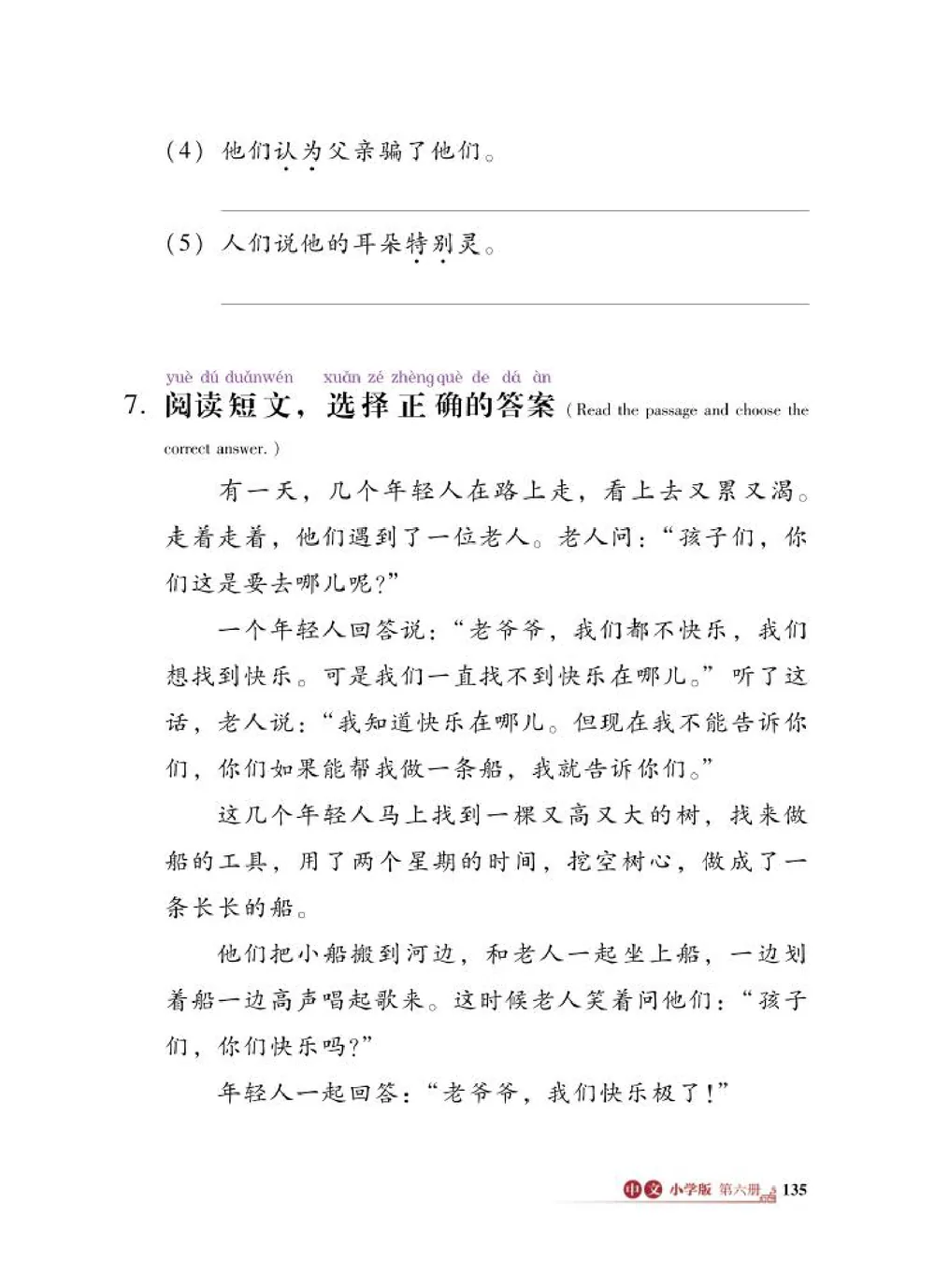
(4)tā他men们rèn认wéi为fù父qīn亲piàn骗le了tā他men们。
(4) They thought their father had tricked them.
(5)rén人men们shuō说tā他de的ěr耳duǒ朵tè特bié别líng灵。
(5) People said his hearing was very sharp.
7.yuè阅dú读duǎn短wén文,xuǎn选zé择zhèng正què确de的dá答àn案(Read the passage and choose the
7. Read the passage and choose the right answer
yǒu有yī一tiān天,jǐ几gè个nián年qīng轻rén人zài在lù路shàng上zǒu走,kàn看shàng上qù去yòu又lèi累wén文kě渴。
One day some young men were walking along the road, looking tired and thirsty.
zǒu走zhe着zǒu走zhe着,tā他men们yù遇dào到le了yī一wèi位lǎo老rén人。lǎo老rén人wèn问:“hái孩zi子men们,nǐ你
As they walked they met an old man, who asked, "My boys, what
men们zhè这shì是yào要qù去nǎ哪ér儿ne呢?”
…where are you going?"
yí一gè个nián年qīng轻rén人huí回dá答shuō说:“lǎo老yé爷yé爷,wǒ我men们dōu都bù不kuài快lè乐,wǒ我men们
One of the young men answered, "Old man, none of us is happy; we
xiǎng想zhǎo找dào到kuài快lè乐。kě可shì是wǒ我men们yì一zhí直zhǎo找bú不dào到kuài快lè乐zài在nǎ哪ér儿。”tīng听le了zhè这
…want to find happiness. But we have never found where it is."
huà话,lǎo老rén人shuō说:“wǒ我zhī知dào道kuài快lè乐zài在nǎ哪ér儿。dàn但xiàn现zài在wǒ我bù不néng能gào告sù诉nǐ你
…this, the old man said, "I know where happiness is. But I cannot tell you now
men们,nǐ你men们rú如guǒ果néng能bāng帮wǒ我zuò做yī一tiáo条chuán船,wǒ我jiù就gào告sù诉nǐ你men们。”
…you: if you will make me a boat, I will tell you."
zhè这jǐ几gè个nián年qīng轻rén人mǎ马shàng上zhǎo找dào到yī一kē棵yòu又gāo高yòu又dà大de的shù树,zhǎo找lái来zuò做
The young men at once found a tall thick tree and fetched the tools for
chuán船de的gōng工jù具,yòng用le了liǎng两gè个xīng星qī期de的shí时jiān间,wā挖kōng空shù树xīn心,zuò做chéng成le了yī一
…making a boat; in two weeks they hollowed out the trunk and made a
tiáo条cháng长cháng长de的chuán船。
…a long boat.
tā他men们bǎ把xiǎo小chuán船bān搬dào到hé河biān边,hé和lǎo老rén人yì一qǐ起zuò坐shàng上chuán船,yī一biān边huà划
They carried the boat to the river, got in with the old man, and as they rowed
zhe着chuán船yī一biān边gāo高shēng声chàng唱qǐ起gē歌lái来。zhè这shí时hòu候lǎo老rén人xiào笑zhe着wèn问tā他men们:“hái孩zi子
…rowed they sang aloud. Then the old man smiled and asked them, "My
men们,nǐ你men们kuài快lè乐ma吗?”
…you, are you happy?"
nián年qīng轻rén人yì一qǐ起huí回dá答:“lǎo老qiān签,wǒ我men们kuài快lè乐jí极le了!”
The young men answered together, "Old man, we are very happy indeed!"
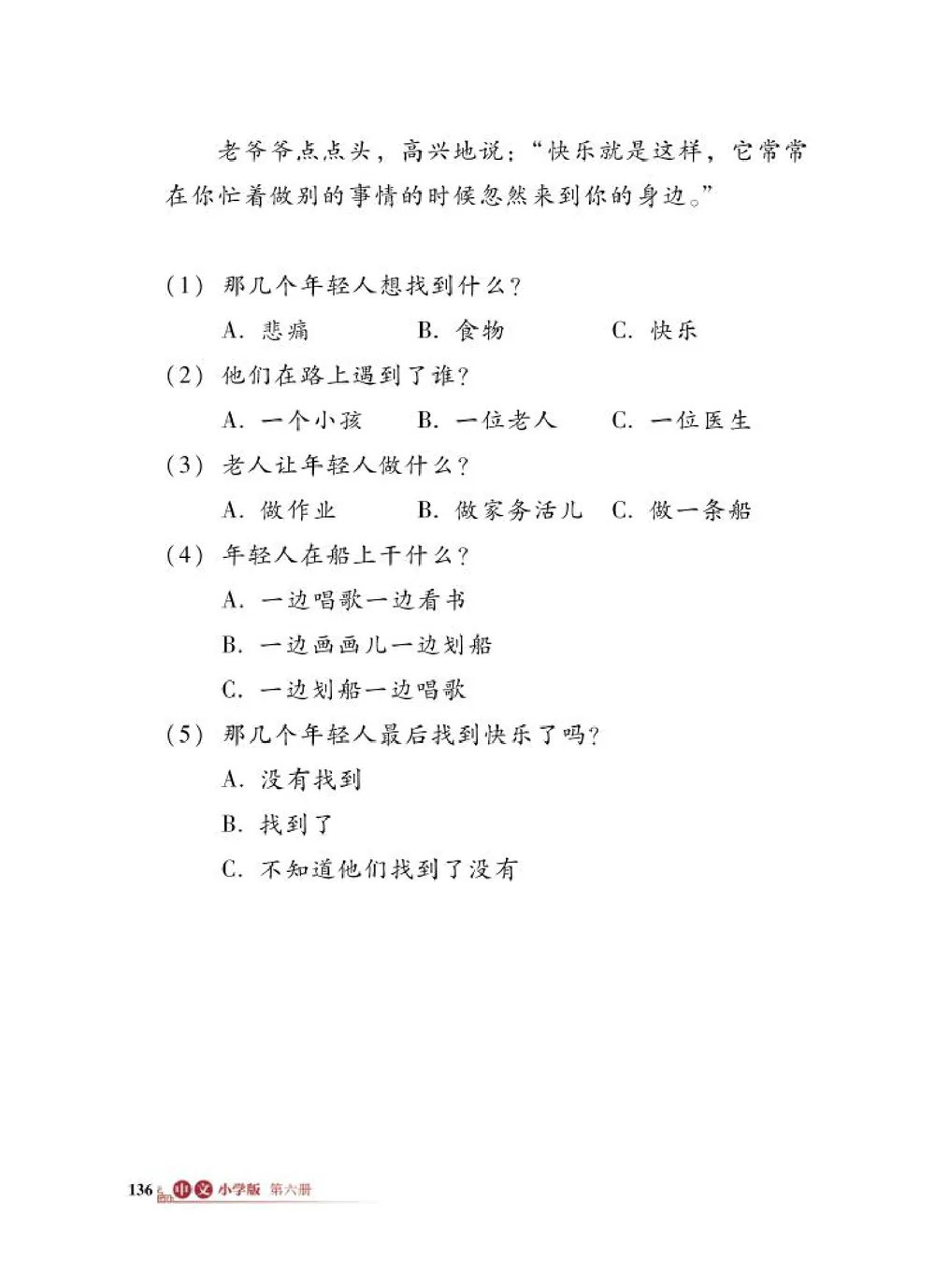
lǎo老qiān签qiān签diǎn点diǎn点tóu头,gāo高xìng兴dì地shuō说:“kuài快lè乐jiù就shì是zhè这yàng样,tā它cháng常cháng常
The old man nodded and said happily, "That is what happiness is: it often
zài在nǐ你máng忙zhe着zuò做bié别de的shì事qíng情de的shí时hòu候hū忽rán然lái来dào到nǐ你de的shēn身biān边。”
…comes to you suddenly while you are busy with something else."
(1)nà那jǐ几gè个nián年qīng轻rén人xiǎng想zhǎo找dào到shén什me么?
(1) What did the young men want to find?
A.bēi悲tòng痛
A. grief
B.shí食wù物
B. food
C.kuài快lè乐
C. joy
(2)tā他men们zài在lù路shàng上yù遇dào到le了shuí谁?
(2) Whom did they meet on the way?
A.yí一gè个xiǎo小hái孩
A. a child
B.yī一wèi位lǎo老rén人
B. an old man
C.yī一wèi位yī医shēng生
C. a doctor
(3)lǎo老rén人ràng让nián年qīng轻rén人zuò做shén什me么?
(3) What did the old man ask the young men to do?
A.zuò做zuò作yè业
A. doing homework
B.zuò做jiā家wù务huó活ér儿
B. doing the housework
C.zuò做yī一tiáo条chuán船
C. to make a boat
(4)nián年qīng轻rén人zài在chuán船shàng上qiān千shén什me么?
(4) What did the young man do on the boat?
A.yī一biān边chàng唱gē歌yī一biān边kàn看shū书
A. singing while reading
B.yī一biān边huà画huà画ér儿yī一biān边huá划chuán船
B. drawing while rowing
C.yī一biān边huá划chuán船yī一biān边chàng唱gē歌
C. singing while rowing
(5)nà那jǐ几gè个nián年qīng轻rén人zuì最hòu后zhǎo找dào到kuài快lè乐le了ma吗?
(5) Did the young men find happiness in the end?
A.méi没yǒu有zhǎo找dào到
A. did not find it
B.zhǎo找dào到le了
B. found
C.bù不zhī知dào道tā他men们zhǎo找dào到le了méi没yǒu有
C. it is not known whether they found it
课本的生字表没能从扫描件上读出来,下面是这一课第一次出现的字。 The book's own 生字 list could not be read for this lesson; these are the characters it introduces.
测验 Quiz — 23 questions
做完这些题就算学完这一课。 Finish these to complete the lesson.
-
汉 Choose the pinyin
-
尚 Choose the pinyin
-
奇 Choose the pinyin
-
为 Choose the pinyin
-
未 Choose the pinyin
-
城 Choose the pinyin
-
diàn Choose the character
-
yīn Choose the character
-
suǒ Choose the character
-
yòu Choose the character
-
rú Choose the character
-
guǒ Choose the character
-
汉(hàn) What does it mean?
-
尚(shàng) What does it mean?
-
奇(qí) What does it mean?
-
为(wèi) What does it mean?
-
未(wèi) What does it mean?
-
城(chéng) What does it mean?
-
1.连一连,写_字(Linkandwrite.) Which character belongs in the blank?
-
(2)亡羊补牢,为时_晚。 Which character belongs in the blank?
-
(3)小城里开着一家眼镜_。 Which character belongs in the blank?
-
因_·所以 Which character belongs in the blank?
-
除了还又_ Which character belongs in the blank?
-
把汉字和拼音连起来 Match each character to its pinyin
-
Listen and choose the character you hear
-
Listen and choose the character you hear
-
Listen and choose the character you hear
-
Listen and choose the character you hear
-
生字卡片 Flashcards for this lesson's characters
汉 hàn
man尚 shàng
still; yet; to value奇 qí
strange; odd; weird为 wèi
because of; for; to未 wèi
not yet; did not; have not城 chéng
city walls; city; town店 diàn
inn; old-style hotel; (bound form) shop; store因 yīn
old variant of 因[yin1]所 suǒ
actually; place; classifier for houses, small buildings, institutions etc又 yòu
(once) again; also; both... and...如 rú
as; as if; such as果 guǒ
fruit; result; resolute拾 shí
to pick up; to collate or arrange; ten (banker's anti-fraud numeral)兔 tù
variant of 兔[tu4]该 gāi
should; ought to; probably春 chūn
old variant of 春[chun1]剑 jiàn
double-edged sword; ; classifier for blows of a sword河 hé
river; (bound form) the Yellow River; (bound form) the Milky Way急 jí
urgent; pressing; rapid类 lèi
kind; type; class; category; (classifier) kind; type; (bound form) to resemble; to be similar to言 yán
words; speech; to say然 rán
correct; right; so英 yīng
hero; outstanding; excellent之 zhī
(possessive particle, literary equivalent of 的[de5]); him; her法 fǎ
variant of 法[fa3]德 dé
virtue; goodness; morality利 lì
sharp; favorable; advantage秋 qiū
autumn; fall; harvest time苗 miáo
sprout给 gěi
to; for; for the benefit of古 gǔ
ancient; old; paleo-故 gù
happening; instance; reason卖 mài
to sell; to betray; to spare no effort付 fù
to pay; to hand over to; classifier for pairs or sets of things衣 yī
clothes; ; Kangxi radical 145呢 ne
(sentence-final particle) used in questions to link back to prior discourse or context ("what about...?", "and...?"); (sentence-final particle) indicating that a state or situation still holds; (discourse particle) used to mark a slight pause or emphasis in speech
课本原页,点图看大图。 The printed pages this lesson comes from — tap to enlarge.