Lesson 8 / 27
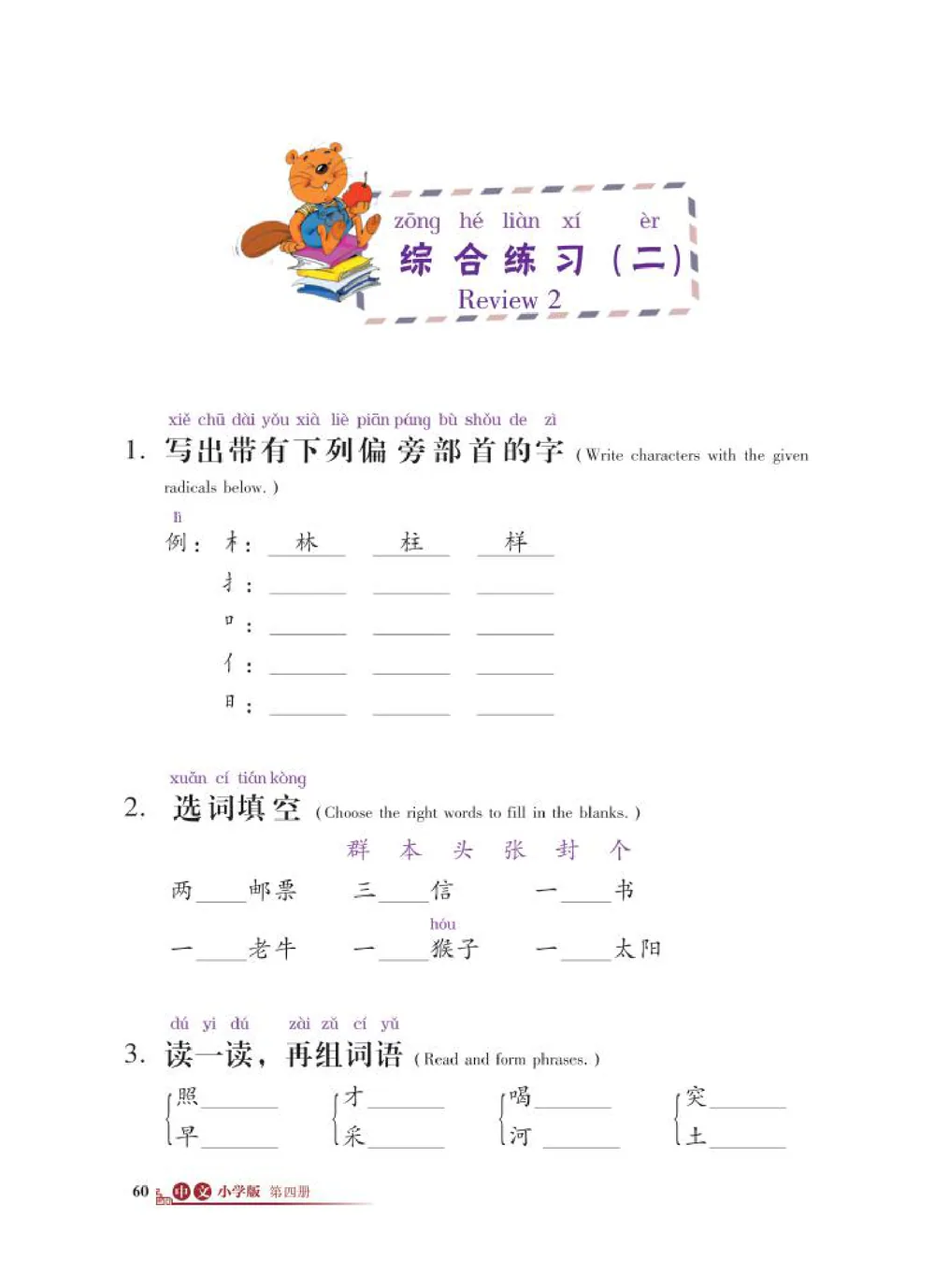
综合练习(二)
Review 2
综合练习 Review
1.xiě写chū出dài带yǒu有xià下liè列piān偏páng旁bù部shǒu首de的zì字(Write characterswith the given
lì例lín林
2.xuǎn选cí词tián填kòng空(Choose theright words tofllin the blanks.)
qún群běn本tóu头zhāng张fēng封gè个
yóu邮piào票
sān三xìn信
lǎo老niú牛
hóu猴zi子
tài太yáng阳
3.dú读yī一dú读,zài再zǔ组cí词yǔ语(Read and form phrases.)
1cǎi采
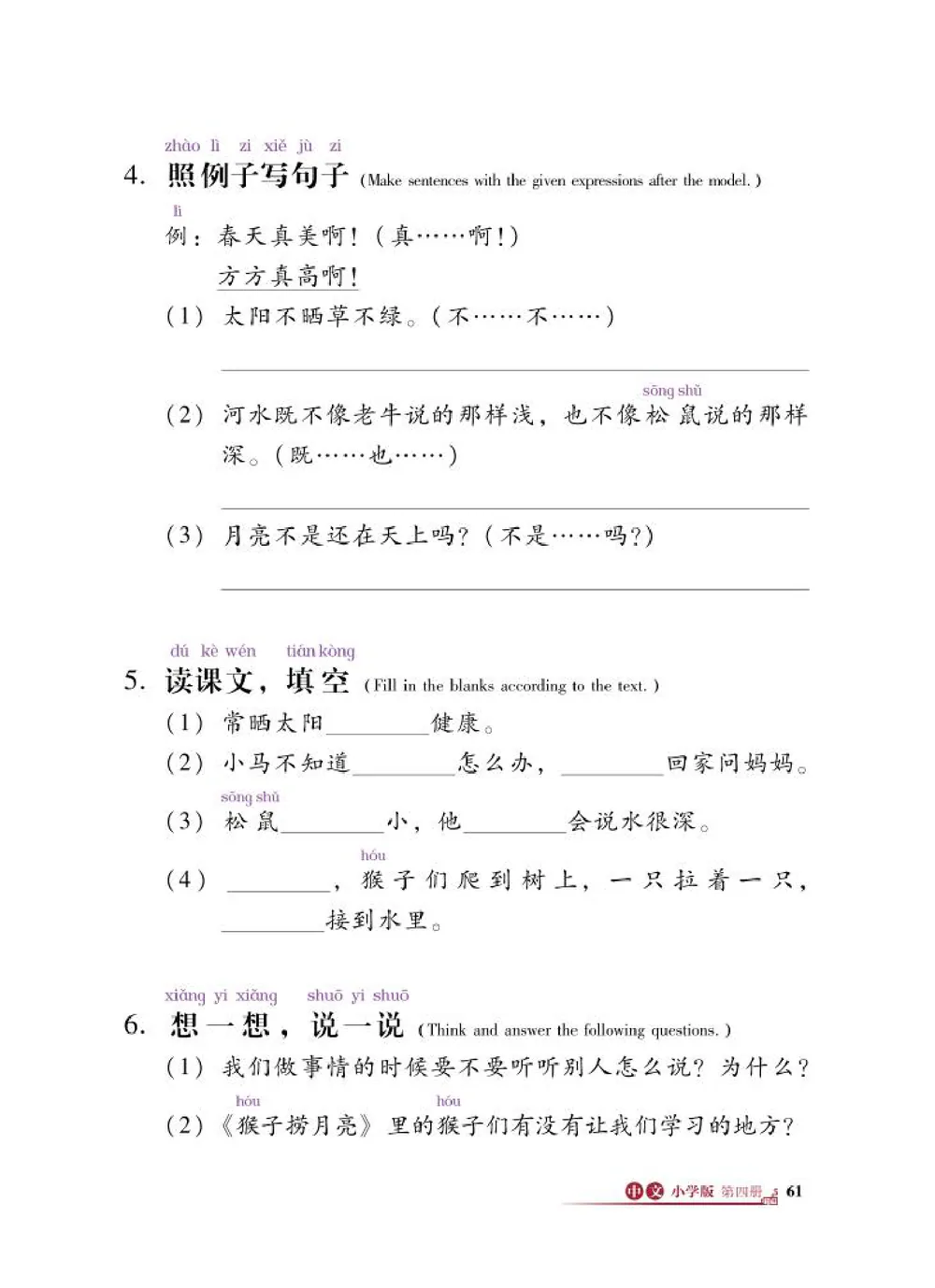
4.zhào照lì例zi子xiě写jù句zi子(Make sentenees with the given expressions after the model)
lì例:chūn春tiān天zhēn真měi美a啊!(zhēn真···…·a啊!)
fāng方fāng方zhēn真gāo高a啊!
(1)tài太yáng阳bù不shài晒cǎo草bù不lǜ绿。(bù不…···bù不…··…
(2)hé河shuǐ水jì既bù不xiàng像lǎo老niú牛shuō说de的nà那yàng样qiǎn浅,yě也bù不xiàng像sōng松shǔ鼠shuō说de的nà那yàng样
shēn深。(jì既yě也)
(3)yuè月liàng亮bú不shì是hái还zài在tiān天shàng上ma吗?(bú不shì是··.·.ma吗?)
5.dú读kè课wén文,tián填kòng空(Fill in theblanks according to the text.)
(1)cháng常shài晒tài太yáng阳
jiàn健kāng康。
(2)xiǎo小mǎ马bù不zhī知dào道
zěn怎me么bàn办,
huí回jiā家wèn问mā妈mā妈。
(3)sōng松shǔ鼠
xiǎo小,tā他
huì会shuō说shuǐ水hěn很shēn深。
hóu猴zi子men们pá爬dào到shù树shàng上,yī一zhī只lā拉zhe着yī一zhī只,
jiē接dào到shuǐ水lǐ里。
6.xiǎng想yī一xiǎng想,shuō说yī一shuō说(Think and answer the following questions.)
(1)wǒ我men们zuò做shì事qíng情de的shí时hòu候yào要bù不yào要tīng听tīng听bié别rén人zěn怎me么shuō说?wèi为shén什me么?
(2)hóu《zi猴lāo子yuè捞liàng月lǐ亮》de里hóu的zi猴men子yǒu们méi有yǒu没ràng有wǒ让men我xué们xí学de习dì的fāng地方?
课本的生字表没能从扫描件上读出来,下面是这一课第一次出现的字。 The book's own 生字 list could not be read for this lesson; these are the characters it introduces.
测验 Quiz — 18 questions
做完这些题就算学完这一课。 Finish these to complete the lesson.
-
出 Choose the pinyin
-
带 Choose the pinyin
-
有 Choose the pinyin
-
群 Choose the pinyin
-
本 Choose the pinyin
-
头 Choose the pinyin
-
zhāng Choose the character
-
gè Choose the character
-
sān Choose the character
-
lǎo Choose the character
-
niú Choose the character
-
hóu Choose the character
-
出(chū) What does it mean?
-
带(dài) What does it mean?
-
有(yǒu) What does it mean?
-
群(qún) What does it mean?
-
本(běn) What does it mean?
-
头(tóu) What does it mean?
-
把汉字和拼音连起来 Match each character to its pinyin
-
Listen and choose the character you hear
-
Listen and choose the character you hear
-
Listen and choose the character you hear
-
Listen and choose the character you hear
-
生字卡片 Flashcards for this lesson's characters
出 chū
to go out; to come out; to arise; to occur; to produce; to yield带 dài
band; belt; girdle有 yǒu
to have; there is; (bound form) having; with; -ful; -ed; -al (as in 有意[you3 yi4] intentional)群 qún
variant of 群[qun2]本 běn
(bound form) root; stem; (bound form) origin; source; (bound form) one's own; this头 tóu
head; hair style; the top张 zhāng
to open up; to spread; sheet of paper个 gè
(classifier used before a noun that has no specific classifier); (bound form) individual三 sān
three; 3老 lǎo
prefix used before the surname of a person or a numeral indicating the order of birth of the children in a family or to indicate affection or familiarity; old (of people); venerable (person)牛 niú
ox; cow; bull猴 hóu
monkey太 tài
highest; greatest; too (much)阳 yáng
positive (electric.); sun; male principle (Taoism)采 cǎi
to pick; to pluck; to collect春 chūn
old variant of 春[chun1]真 zhēn
really; truly; indeed方 fāng
square; power or involution (math.); upright高 gāo
high; tall; above average不 bù
no; not so; (bound form) not; un-草 cǎo
variant of 草[cao3]河 hé
river; (bound form) the Yellow River; (bound form) the Milky Way水 shuǐ
water; (after a name) ... River; to swim (used mostly in 會水|会水[hui4 shui3] and 水性[shui3 xing4])那 nà
(specifier) that; the; those (colloquial pr. [nei4]); (pronoun) that (referring to persons, things or situations); then (in that case)也 yě
also; too; as well; (not ...) either; (used after a verbal or nominal expression X to indicate that X is an extreme or unexpected case) even (X); (literary) particle having functions similar to 啊[a5]松 sōng
pine鼠 shǔ
(bound form) rat; mouse月 yuè
moon; month; monthly亮 liàng
bright; light; to shine; to flash; loud and clear是 shì
to be (followed by substantives only); correct; right; true; (respectful acknowledgement of a command) very well还 hái
still; still in progress; still more在 zài
to exist; to be alive; (of sb or sth) to be (located) at; (used before a verb to indicate an action in progress)吗 ma
(question particle for "yes-no" questions)常 cháng
always; ever; often马 mǎ
horse; ; horse or cavalry piece in Chinese chess知 zhī
to know; to be aware
课本原页,点图看大图。 The printed pages this lesson comes from — tap to enlarge.