Lesson 2 / 25
识字(二)
Learning Characters 2



课文 Text
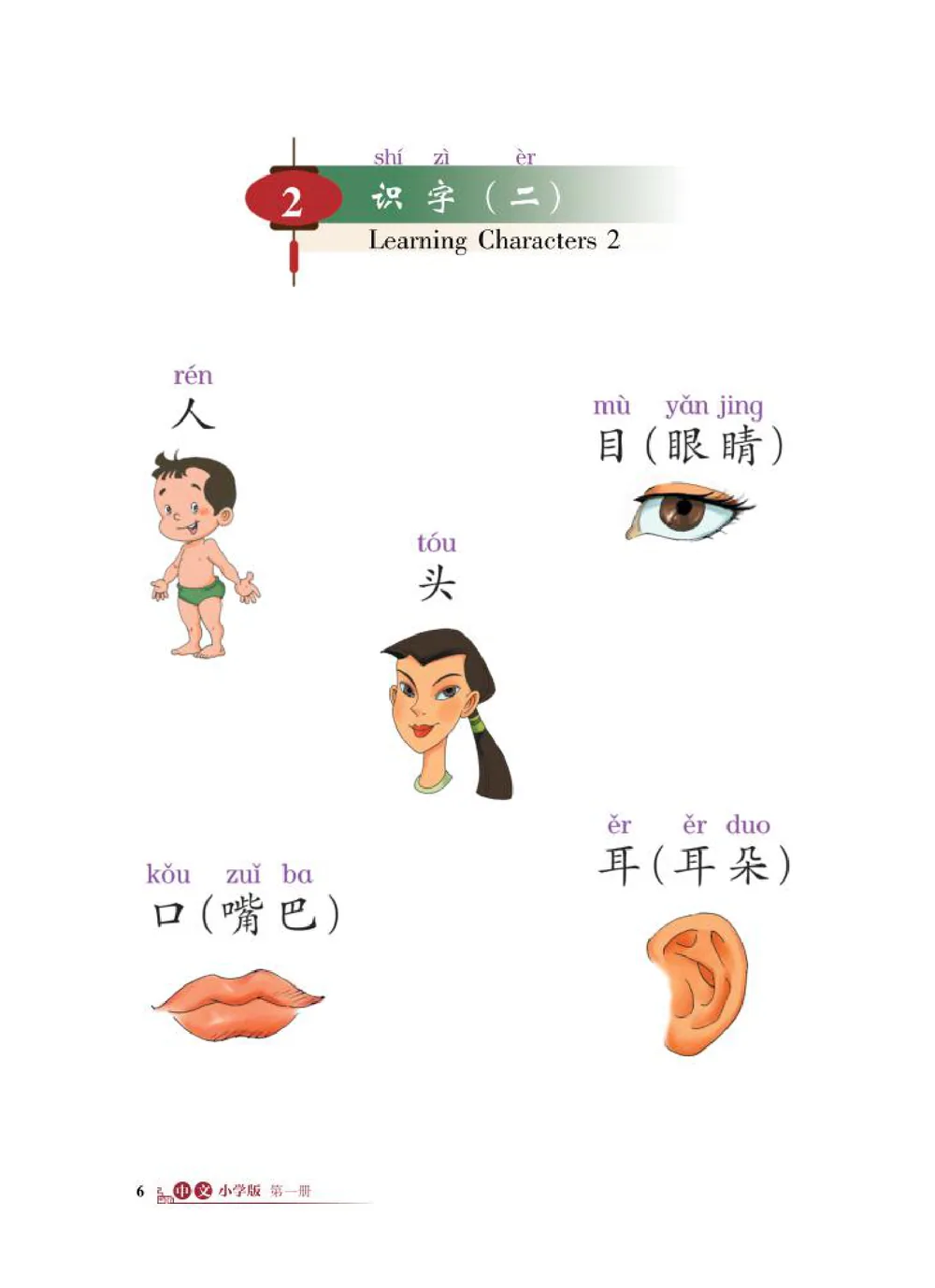
rén人
mù目(yǎn眼qíng晴)
eye
tóu头
ěr耳(ěr耳duǒ朵)
ear
kǒu口(zuǐ嘴bā巴)
mouth
zhōng中
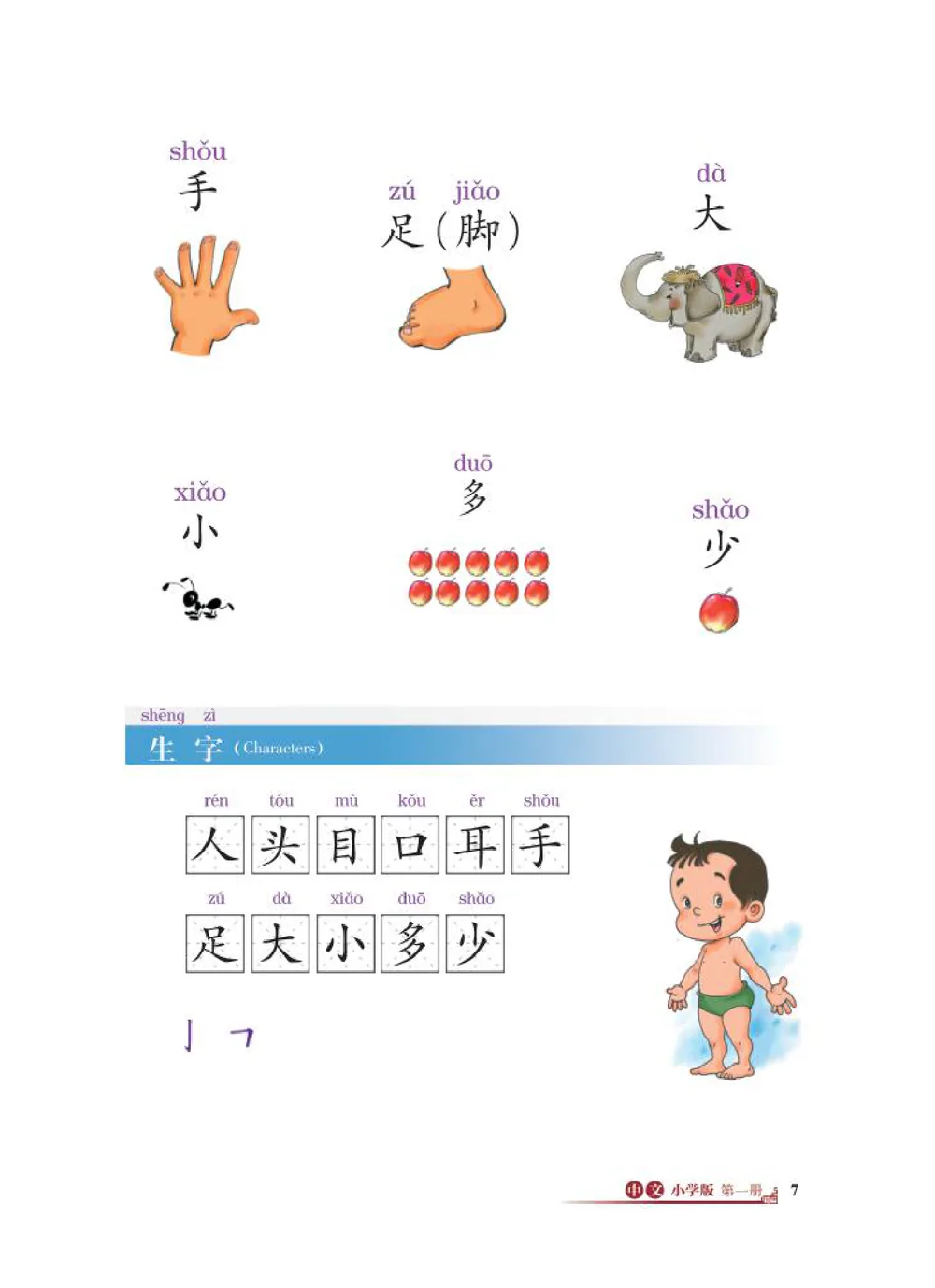
zú足(jiǎo脚)
foot
shēng生bǎo宝(Chareders)
Characters
ěr耳shǒu手
zú足dà大
课堂练习 Exercises in Class
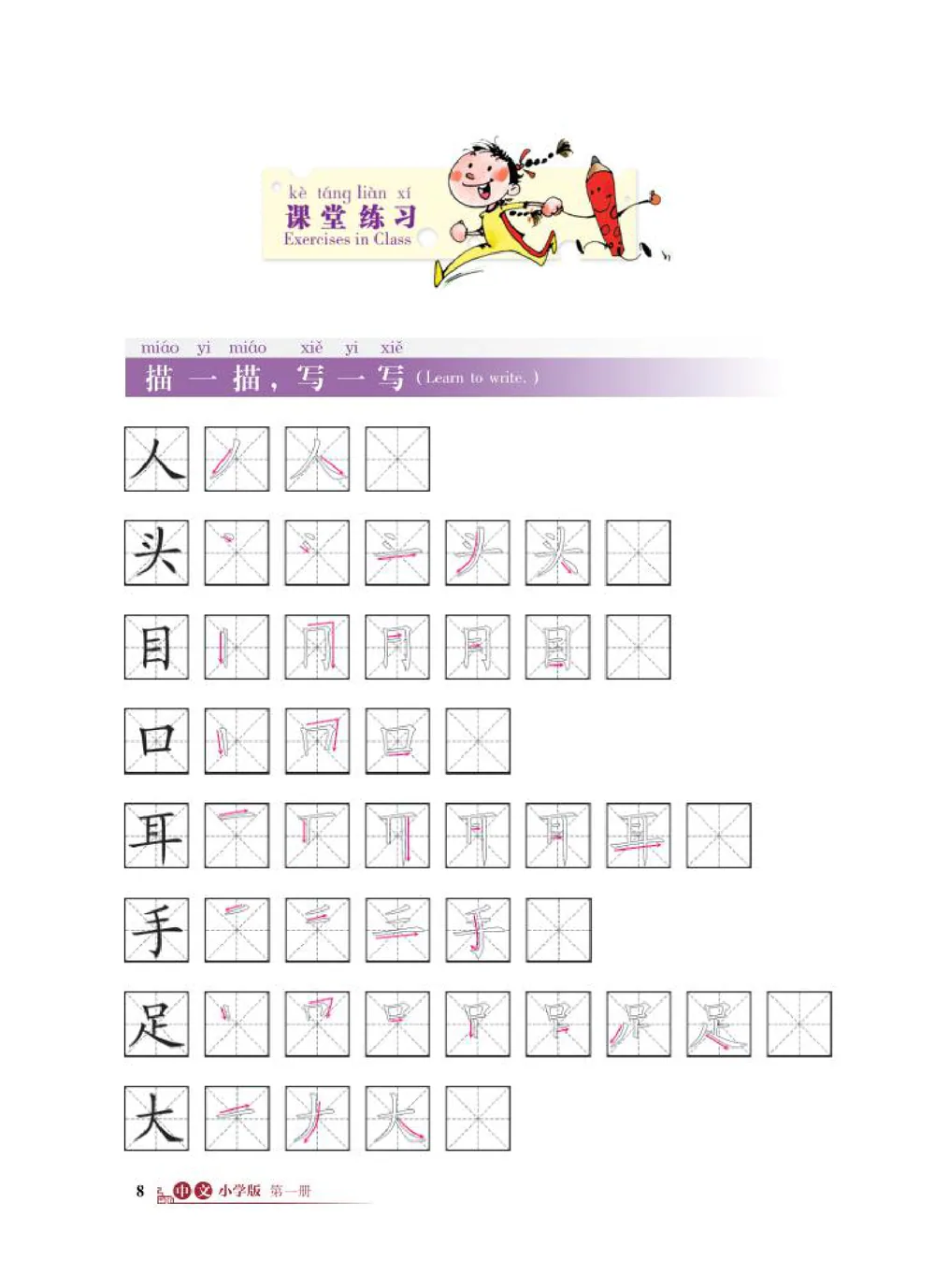
miáo描èr二miáo描,xiě写yī一xiě写Lean towaite.)
dá达kùn困
dú读dú读
wǔ五kǒu口rén人
rén人rén人
rén人tóu头
xiǎo小shǒu手
dà大rén人
dà大xiǎo小
duō多shǎo少
rén人duō多
rén人shǎo少
tīng听tīng听zhǐ指èr二zhǐ指
lǎo老shī师shuō说wǔ五guān官de的míng名chēng称,xué学shēng生zhǐ指zì自jǐ己de的wǔ五guān官,kàn看shuí谁zhǐ指dé得kuài快、zhǐ指dé得zhǔn准。
阅读 Reading
shǔ数shù数shǒu手zhǐ指tou头
Count your fingers
zhǐ只zuǒ左lái来
shǒu手,xiǎo小
liù六,qī七
six, seven
gè个shǒu手
shēng生bǎo宝(Characlers)
Characters
wǒ我yǒu有zuǒ左lái来yòu右gè个
课本的生字表没能从扫描件上读出来,下面是这一课第一次出现的字。 The book's own 生字 list could not be read for this lesson; these are the characters it introduces.
测验 Quiz — 23 questions
做完这些题就算学完这一课。 Finish these to complete the lesson.
-
人 Choose the pinyin
-
眼 Choose the pinyin
-
晴 Choose the pinyin
-
头 Choose the pinyin
-
耳 Choose the pinyin
-
朵 Choose the pinyin
-
kǒu Choose the character
-
zuǐ Choose the character
-
bā Choose the character
-
zú Choose the character
-
jiǎo Choose the character
-
bǎo Choose the character
-
人(rén) What does it mean?
-
眼(yǎn) What does it mean?
-
晴(qíng) What does it mean?
-
头(tóu) What does it mean?
-
耳(ěr) What does it mean?
-
朵(duǒ) What does it mean?
-
目(眼_) Which character belongs in the blank?
-
耳(_朵) Which character belongs in the blank?
-
口(_巴) Which character belongs in the blank?
-
足(_) Which character belongs in the blank?
-
生_(Chareders) Which character belongs in the blank?
-
把汉字和拼音连起来 Match each character to its pinyin
-
Listen and choose the character you hear
-
Listen and choose the character you hear
-
Listen and choose the character you hear
-
Listen and choose the character you hear
-
生字卡片 Flashcards for this lesson's characters
人 rén
person; people眼 yǎn
eye; (often used with 一[yi1]) a look; a glance; small hole晴 qíng
clear; fine (weather)头 tóu
head; hair style; the top耳 ěr
ear; handle (archaeology); and that is all (Classical Chinese)朵 duǒ
flower; earlobe; fig. item on both sides口 kǒu
mouth; classifier for things with mouths (people, domestic animals, cannons, wells etc); classifier for bites or mouthfuls嘴 zuǐ
mouth; beak; nozzle巴 bā
to long for; to wish; to cling to足 zú
(bound form) foot; leg; sufficient; ample; as much as; fully脚 jiǎo
foot; leg (of an animal or an object); base (of an object)宝 bǎo
variant of 寶|宝[bao3]手 shǒu
hand; (formal) to hold; person engaged in certain types of work大 dà
big; large; great; older (than another person); eldest (as in 大姐[da4 jie3])二 èr
two; 2; (Beijing dialect) stupid达 dá
to attain; to reach; to amount to困 kùn
to trap; to surround; hard-pressed多 duō
many; much; more; a lot of; too many; in excess; (after a numeral) ... odd少 shǎo
few; less; to lack指 zhǐ
finger; to point at or to; to indicate or refer to老 lǎo
prefix used before the surname of a person or a numeral indicating the order of birth of the children in a family or to indicate affection or familiarity; old (of people); venerable (person)师 shī
teacher; master; expert官 guān
government official; governmental; official的 de
of; ~'s (possessive particle); (used after an attribute when it modifies a noun); (used at the end of a declarative sentence for emphasis)名 míng
name; noun (part of speech); place (e.g. among winners)称 chēng
to weigh; to state; to name自 zì
(bound form) self; oneself; from; since; naturally; as a matter of course己 jǐ
self; oneself; sixth of the ten Heavenly Stems 十天干[shi2 tian1 gan1]谁 shuí
who; also pr. [shui2]得 dé
to obtain; to get; to gain快 kuài
rapid; quick; speed准 zhǔn
to allow; to grant; in accordance with数 shù
number; figure; several; a few只 zhǐ
only; merely; just左 zuǒ
left; the Left (politics); east来 lái
to come; (used as a substitute for a more specific verb); hither (directional complement for motion toward the speaker, as in 回來|回来[hui2 lai5])
课本原页,点图看大图。 The printed pages this lesson comes from — tap to enlarge.